
 EN
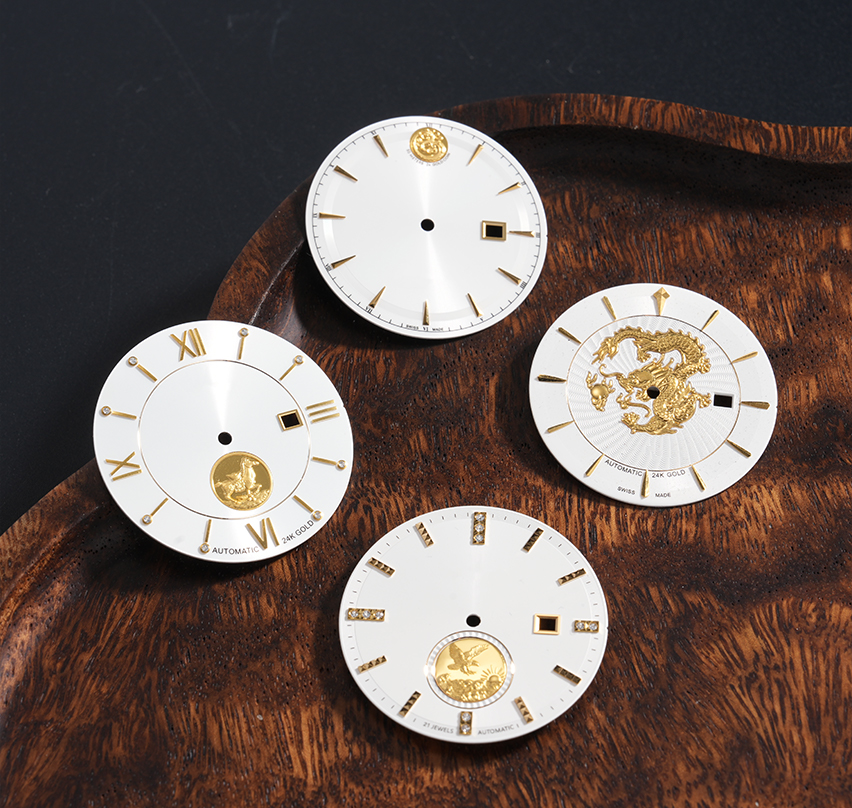
Most brands treat the first purchase order as the beginning of a supplier relationship. In practice, the relationship is already being set by the quotation stage. How a watch dial manufacturer responds to an RFQ tells a lot. A quote that arrives with questions about tolerances, texture route, and color standard is a different partner than a quote that simply returns a price per piece. The first kind is already thinking about dial production as a process. The second is quoting a number and waiting for the problems to show up later.
A long-term partnership with a watch dial manufacturer is built on that early exchange. The brand learns how the supplier thinks about specifications. The supplier learns how serious the brand is about holding a standard. Neither side can fake that for long. A brand that sends a vague brief and expects the supplier to fill in the gaps is setting up a relationship where every batch becomes a negotiation. A brand that sends a clear spec and asks the supplier to challenge it is setting up something that can survive a color drift or a schedule crunch.
The Spec Document Is the Partnership's Constitution
Every long-term supplier relationship in dial work runs through one document: the dial specification. When that document is precise, the relationship has a reference point. When it is vague, every disagreement becomes personal. The spec should name the substrate grade, the blank thickness, the texture route, the plating or coating sequence, the lacquer build, the print method, and the inspection points. It should also name the tolerances that matter and the ones that are cosmetic.
| Spec element | Vague version | Partnership version | Why it matters |
|---|---|---|---|
| Texture route | Brushed | Sunburst, abrasive grade, direction relative to center axis | Prevents process guesswork |
| Color standard | Blue | Retained standard plus ΔE target under defined light | Makes color drift measurable |
| Tolerance callout | Tight | Named fits at ±0.05 mm or tighter, cosmetics separate | Separates function from appearance |
| Inspection plan | Final check | Incoming, in-process, and outgoing stages named | Catches drift before shipment |
| Batch size note | Not stated | Small and large runs held to same standard | Prevents quality shortcuts on small orders |
The table is not a template for every dial. It shows why a watch dial manufacturer can commit to a long-term standard only when the spec gives it something to commit to. A vague spec forces the supplier to guess, and guessing is the opposite of a partnership.
Changeover and Scheduling Are Where Trust Is Tested
A dial production schedule is rarely simple. Brands mix colors, finishes, and batch sizes, and the supplier has to sequence those jobs without letting changeover time eat the delivery date. This is where a long-term partnership earns its keep. A supplier that knows the brand's order pattern can group similar colors, plan booth time, and warn the brand when a mixed schedule is about to push a lead time out. A supplier that treats each order as a one-off will not offer that warning until it is too late.
The brand side of this is transparency about forecasts. A watch dial manufacturer cannot plan changeover around orders it does not know are coming. Sharing a rolling forecast, even a rough one, gives the supplier room to schedule. In return, the brand gets earlier warnings when capacity tightens. That exchange of information is what separates a long-term partnership from a series of transactions.
A Color Drift That Tested the Relationship
A desensitized example from a long-running dial program: a brand had worked with the same dial supplier across several seasons. A new batch of blue sunburst dials came back with a slight purple shift against the approved standard, and the texture read softer at the center. The supplier flagged it before shipping, which was the first sign that the partnership was working. Instead of shipping and waiting for a complaint, the supplier held the batch and sent samples with a measurement report.
The drift traced to a plating bath temperature change and a slightly heavier lacquer coat on that run. The heavier coat filled the finest radial grooves and changed how the color layer reflected light. Because the brand and the supplier had a retained standard and a measured color target, the conversation stayed technical. There was no argument about whether the blue was wrong. There was a measurement, a delta, and a fix. The batch was reworked, and the supplier added a lacquer thickness checkpoint and a gloss reading at a fixed angle to the dial production flow. The long-term partnership did not prevent the drift. It made the drift solvable in days instead of weeks.
Quality Standards Do Not Scale With Batch Size
Small and large batches should be held to the same quality standard. That sentence is easy to agree with and hard to practice. Small runs carry a higher unit price because setup and tooling costs are spread across fewer pieces. That is a price gradient, a commercial reality of dial production. It is not a reason to skip in-process inspection or to relax the color check on a short run.
A long-term partnership with a watch dial manufacturer depends on this principle holding at both ends. A brand that accepts lower quality on small runs teaches the supplier that the standard is negotiable. A supplier that quietly shortcuts inspection on a small batch teaches the brand that the standard is a slogan. The relationship stays healthy when both sides treat the quality standard as fixed and the unit price as the variable.
Sourcing Models and the Long-Term View
Brands usually face two sourcing models when they plan dial production over multiple seasons. A multi-supplier path splits blank forming, texture, coating, and printing across specialized shops, with the brand coordinating the handoffs. That path can offer flexibility and access to specific crafts, but the coordination work sits with the brand, and each interface is a place where a specification can drift. A single-source components path keeps the dial with one partner through the full sequence, which reduces handoffs and makes it easier to lock a standard across seasons. It also concentrates responsibility and often raises the minimum order threshold. Neither model is universally right for a long-term relationship. The choice depends on how much coordination the brand wants to own and how tightly the dial specification needs to be held as the program grows.
Burriva works at the component level on dials, cases, bracelets, and buckles. For long-term dial programs, dial production covers blank machining, texture, plating, lacquer, pad printing, dimensional inspection, and multiple inspection rounds across incoming, in-process, and outgoing stages, with a clean and stable workshop environment supporting the coating steps. Segregated workflows and CAD file access controls keep design files split by job role. Brands building a long-term partnership with a watch dial manufacturer can contact the team to discuss dial specifications, quality control expectations, and the inspection points that matter for their program.