
 EN
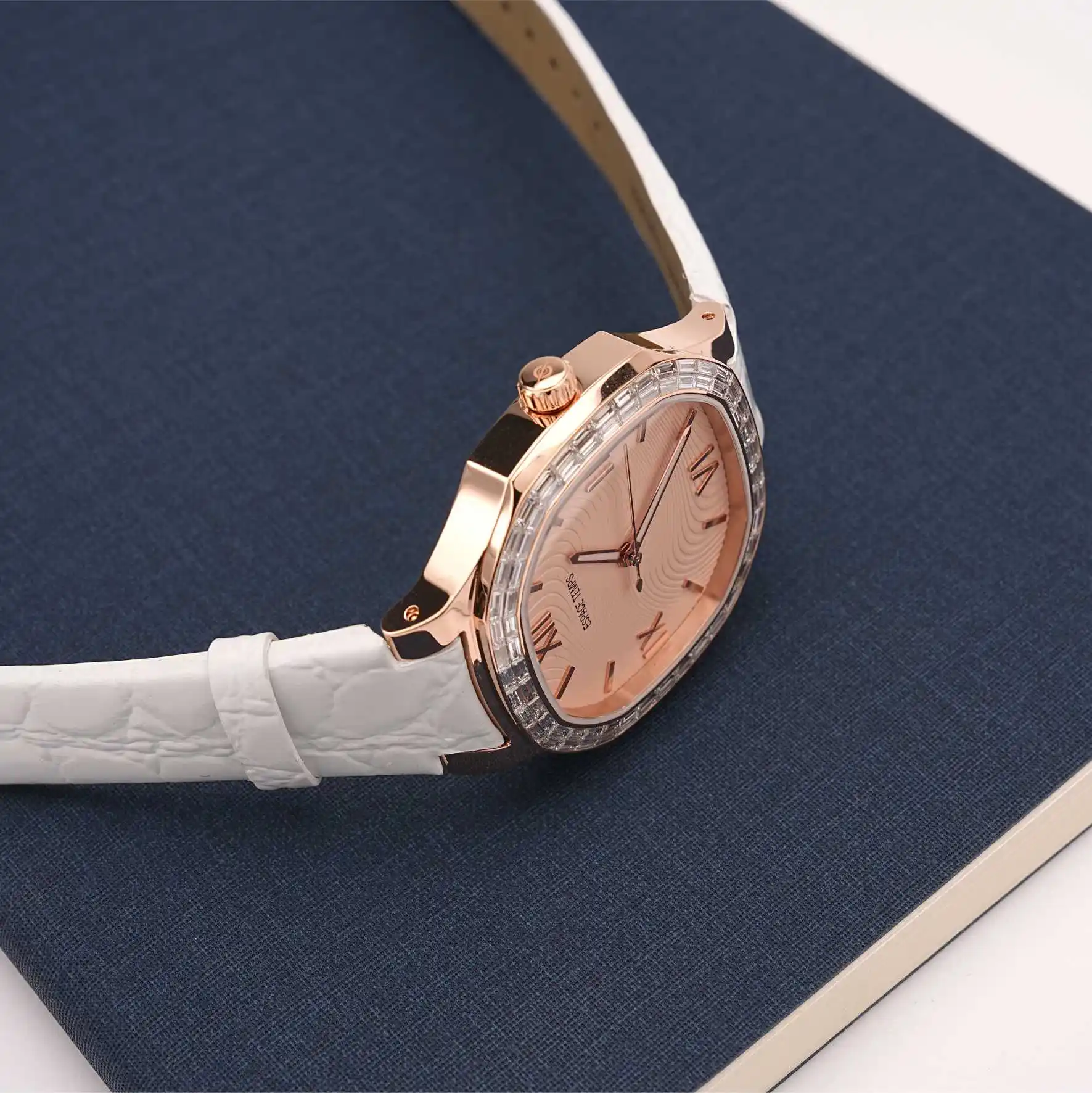
Why a Finish Spec Fails Before the First Part Is Made
A luxury brand can spend months on case geometry and then lose the project at the finishing stage because the spec was written as a look, not as a process. "Brushed top, polished flank" describes an outcome. It does not describe the abrasive grade, the tool presentation angle, the masking method, or the order in which the two surfaces are processed. Without those details, two suppliers can produce the same drawing and deliver cases that read as different products.
The fix is to write the finishing spec as a sequence of operations with acceptance criteria attached to each one. A useful luxury watch case spec names the finish type, the surface roughness target, the direction of the brushing line relative to the case axis, the edge break range at each visible edge, and the light source used for visual approval. That level of detail feels heavy at the sampling stage. It saves far more time at the batch stage, when a direction break or a color shift shows up and nobody can agree on whether it is a defect.
Brushing: The Line Direction Is a Design Callout
Brushing is the most common finish on luxury watch cases, and it is also the one most often under-specified. The reason is that brushing looks simple. A brush runs across a surface and leaves fine parallel lines. What the spec often misses is the direction those lines should run relative to the case geometry, and how that direction should behave when the surface curves.
A luxury case usually specifies brushing that follows the case profile, running along the lugs and continuing through the case band without a visible break. That continuity is harder to achieve than it sounds, because the lugs and the case band sit at different angles and are often processed in separate passes. A brush that runs cleanly on the band can look scattered on the lug tops if the part is not reoriented between passes. The result is a visible direction change at the lug-to-band junction, which reads as a quality break under raking light even when each surface is individually even.
The practical control is to specify the brushing direction on the drawing as a line callout, not just as a note. A line callout gives the finishing team a reference for reorientation, and it gives the inspector a reference for the raking-light check. Brushing hides many things, but it does not hide a direction break at a transition.
Polishing: High Reward, High Exposure
Polishing is the finish luxury buyers associate with value, and it is also the finish that exposes the most. A polished surface reflects, and reflection magnifies every deviation underneath. A tool mark from milling, a slight flat spot from a fixture, or a handling scratch can all sit invisible under a brushed finish and then appear under a polished one. Polishing does not create a flat surface. It makes an existing surface reflective.
That is why polishing belongs downstream of a dimensional check in a luxury case flow, not in place of one. A polished flank that looks flat under a point source can look rippled under a linear source, and a luxury buyer will notice the ripple before they notice the shine. The review setup matters as much as the polishing step. A linear light source across the polished surface shows waviness that a point source hides. Polishing is a high-reward finish and a high-exposure one, because it shows everything the earlier operations left behind.
Sandblasting and Matte: Coverage Is the Whole Spec
Sandblasting and other matte finishes give a luxury case a softer, more technical character. They hide machining marks well, and they read as modern rather than traditional. The failure mode is coverage. A blast pattern that is uneven reads as patchy under diffuse light, and a patchy matte surface looks worse than a brushed one because there is no directional line to distract the eye.
Coverage problems usually come from part orientation and nozzle distance during blasting. Curved surfaces and recessed areas receive different blast intensity, and a part that looks even on the flat areas can show shadowing in the recesses. The check is a diffuse-light inspection across the whole part, not just the main surfaces. Luxury brands often pair matte finishes with polished or brushed accents, which raises the stakes on coverage, because any unevenness shows up against the contrasting finish.
| Finish | Best for | Main risk | Review method |
|---|---|---|---|
| Brushing | Case bands, lug tops, understated looks | Direction break at transitions | Raking light at junctions |
| Polishing | Bezels, flanks, reflective accents | Amplified waviness and scratches | Linear-source reflection check |
| Sandblasting | Matte bodies, technical looks | Patchy coverage in recesses | Diffuse-light full-part check |
| PVD coating | Color consistency, wear resistance | Batch color drift, adhesion blister | Color against standard, adhesion check |
| Electroplating | Base color, corrosion resistance | Bath drift, edge build-up | Thickness and color at edges |
PVD Coating and Plating: Color Is a Batch Property
PVD coating and electroplating are the two main routes for adding color and wear resistance to a luxury watch case. Both can produce a consistent look on a single part. The difficulty is holding that look across a batch. PVD coating color depends on coating thickness, chamber conditions, and surface prep. Electroplating color depends on bath chemistry, current density, and part orientation. Either route can drift between runs without any single part looking obviously wrong.
A desensitized example from a case finishing run: a batch of PVD-coated cases showed a slight color shift against the approved standard, visible only when the parts were compared side by side under a controlled light. No single case looked wrong on its own. The drift traced to a chamber condition change that had not been captured by the visual check. The fix was a color measurement against a retained standard at the start of each run, plus an adhesion check on a sample basis. Visual approval alone will not catch a batch-level color drift, because the human eye adapts to a small shift when there is no reference nearby.
Combined Finishes: The Sequence Decides the Transition
Most luxury cases combine two or more finishes, and the transition line between them is where perceived quality is most exposed. A transition that runs cleanly and consistently reads as intentional. A transition that wanders, or that changes width from one lug to the next, reads as sloppy, even when each individual surface is fine. The transition is the brand signal, because it is the part of the finishing work that is hardest to fake.
Controlling transitions depends on masking, tool presentation, and the order of operations. If the polished surface is finished before the brushed one, the brushing pass can leave stray marks on the polished area. If the brushed surface is finished first, the polishing pass can soften the transition. There is no universal order that works for every design. The order has to be chosen for the specific geometry and held consistently across the batch. That is why luxury brands tend to lock the finishing sequence early, before sampling, rather than adjusting it after the first prototype.
Small Batches and Large Batches Follow the Same Standard
Finishing is labor-intensive, and small batches carry a higher unit price because setup and hand work are spread across fewer parts. That is a price gradient, not a reason to relax the finishing standard. A short run and a long run should be checked against the same brushing direction continuity, the same transition line quality, and the same color acceptance range. The commercial difference is real, but it does not change what counts as an acceptable finish for a luxury case.
Burriva works at the component level on dials, cases, bracelets, and buckles, with watch case production covering CNC milling, stamping, automated polishing, dimensional inspection, and multiple inspection rounds across incoming, in-process, and outgoing stages. Segregated workflows and CAD file access controls keep design files split by job role. Brands planning a luxury case project can contact the team to discuss case specifications, surface finishing combinations, and inspection points.
Table of Contents
- Why a Finish Spec Fails Before the First Part Is Made
- Brushing: The Line Direction Is a Design Callout
- Polishing: High Reward, High Exposure
- Sandblasting and Matte: Coverage Is the Whole Spec
- PVD Coating and Plating: Color Is a Batch Property
- Combined Finishes: The Sequence Decides the Transition
- Small Batches and Large Batches Follow the Same Standard