
 EN
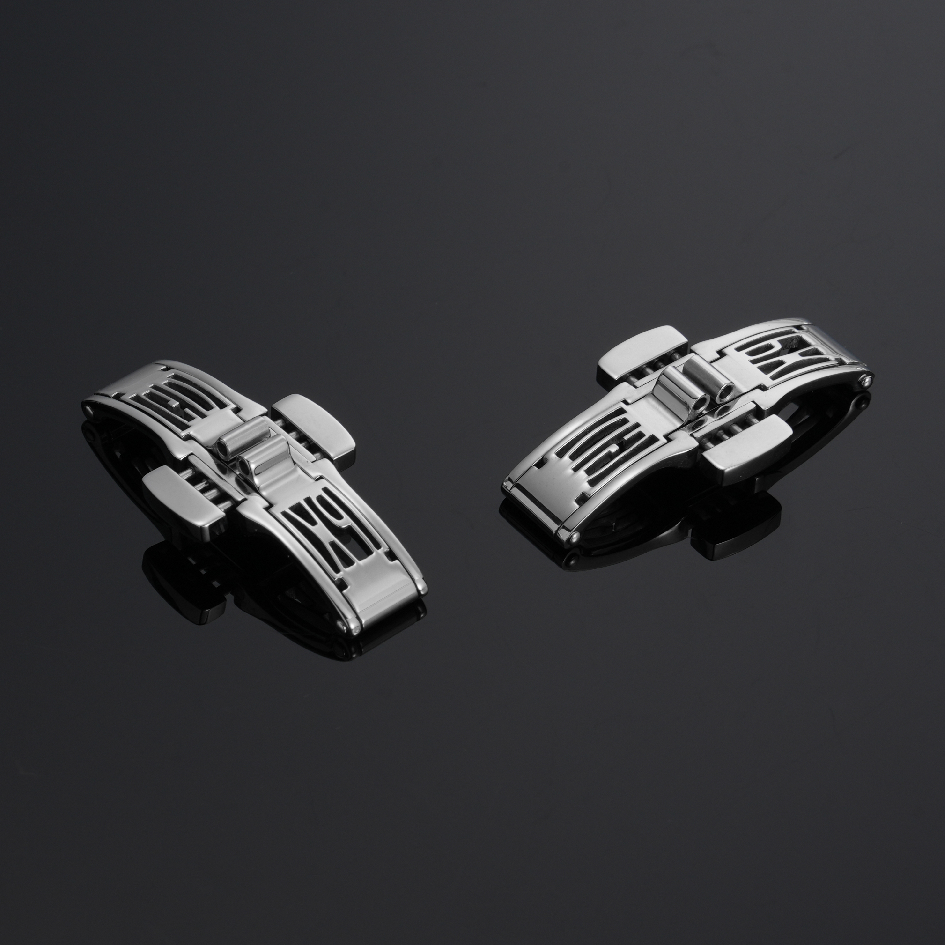
Customization Starts With Function, Not Appearance
A watch clasp is one of the few parts a wearer touches every day. It opens, closes, sits against the wrist, and takes repeated load without being seen for most of the time. That makes custom watch clasps a function-first project. A brand that starts with a shape and a finish will eventually have to work backward to hinge clearance, latch engagement, and spring force. A brand that starts with function gets a clearer path to a part that feels right and holds up.
The practical starting point is a short functional brief. How does the clasp open? Is it a fold-over, a deployant, a butterfly, or a pin buckle? What wrist size range does it need to cover? Does the bracelet taper, and if so, how does the clasp follow that taper? Does the design call for a logo, and where does it sit relative to the release? These questions sound simple, but they decide the tolerances that follow. A custom clasp is not a decoration project with a hinge attached. It is a mechanical part with a cosmetic surface.
Material Choice Changes Weight, Feel, and Machining Route
The material decision affects more than the spec sheet. 316L stainless steel is the common baseline for watch clasps because it machines predictably, offers good corrosion resistance, and takes brushed or polished finishes well. Titanium reduces weight and eliminates nickel in the common grades, but it galls more easily and needs careful cutter and finish control. Grade 5 titanium is stronger than Grade 2, which matters at thin sections, pin areas, and latch contact points.
| Attribute | 316L stainless steel | Grade 2 titanium | Grade 5 titanium |
|---|---|---|---|
| Density | About 7.9 g/cm³ | About 4.5 g/cm³ | About 4.4 g/cm³ |
| Machining behavior | Predictable, moderate tool wear | Gummy, prone to galling | Harder, slower cutting |
| Clasp feel on wrist | Familiar weight, stable balance | Noticeably lighter | Light, strong at thin sections |
| Finish behavior | Takes brush and polish well | Needs careful surface prep | Needs careful surface prep |
| Common clasp use | Broad range of designs | Weight-sensitive designs | Load and pin areas |
The table is not a ranking. It shows why a custom clasp brief should name the material and the forming route. A titanium clasp and a stainless clasp can share a drawing and still need different tooling, cycle time, and finishing attention. Material supply is often referenced against standards such as ASTM A240 for stainless steel and ASTM B348 for titanium bar and forging stock.
Structure Type Sets the Tolerance Stack
The clasp type decides where the tolerances live. A fold-over clasp depends on hinge clearance, latch engagement depth, and the spring that holds the latch. A deployant clasp adds a folding arm and a release button, so the tolerance stack grows. A pin buckle is simpler, but the pin fit and the buckle frame opening still need control. Each type has its own failure points, and the drawing should name them.
Hinge clearance controls binding and rattle.
Latch engagement depth controls release force and security.
Spring rate and preload control how the release feels.
Edge breaks control comfort against the wrist.
Logo position relative to the release controls visual alignment.
Critical fits on a watch clasp are commonly held to ±0.05 mm or tighter, and general tolerances in chronometer submission specifications sit around ±100 μm. Those numbers do not describe the feel directly, but they describe the geometry that the feel depends on. A hinge that is slightly too tight will bind after plating. A latch that is slightly too shallow will release under load. Custom watch clasps live or die on these small numbers.
Machining and Stamping Fit Different Clasp Designs
CNC milling gives direct control over hinge pockets, latch geometry, and stepped surfaces. Complex outlines and tight callouts can be cut in one setup, which reduces handling and re-fixturing. The trade-off is cycle time, and titanium makes that trade-off sharper because it cuts more slowly than stainless steel. Stamping can form clasp components efficiently, but springback and die wear need attention, and very fine latch features are harder to hold than with cutting.
A desensitized example from a clasp project: a batch of stainless fold-over clasps showed inconsistent release force after finishing. The latch geometry was within drawing, and the polishing step looked acceptable on its own. The variation traced to a fixture that had developed small runout across a long cycle. That runout changed how the hinge seated, which changed the latch engagement angle. The fix was a fixture check, a re-centering step before finishing, and a dimensional checkpoint after machining. The lesson is simple. Clasp tolerances are easy to lose at the handoff between cutting and finishing.
Finish and Inspection Decide Daily Feel
A clasp is judged by hand before it is judged by a gauge. Brushed finishes hide small handling marks. Polished finishes show smudges and fine scratches sooner. Plating and PVD coatings add wear resistance, but a coating can blister if surface prep is incomplete, and a blister under plating is a localized loss of adhesion that cannot be reworked. Edge breaks are another finishing variable. Too small a break leaves a sharp corner. Too large a break softens the clasp profile and changes how it sits against the wrist.
Inspection should follow the clasp type. Incoming inspection checks material grade, pin dimensions, and spring force. In-process inspection catches hinge clearance and latch engagement after assembly. Outgoing inspection confirms release force, edge condition, and visual finish. A sample cycling check, where a small number of clasps are opened and closed repeatedly, catches drift in release force before the batch ships. Small batches and large batches should use the same inspection discipline. Small runs carry a higher unit price because setup and tooling costs are spread across fewer parts. That is a price gradient, not a difference in quality standard.
Sourcing Routes and Batch Economics
Brands approach custom watch clasps through two common sourcing models. A multi-supplier path splits blank forming, machining, finishing, and inspection across specialized shops. That can offer flexibility and access to specific processes, but the brand owns the handoffs and the interface risk. A single-source components path keeps the clasp with one partner through machining, finishing, and inspection, which reduces handoffs and makes it easier to lock a finish and tolerance standard across a batch. It also concentrates responsibility and can raise the minimum order threshold because setup work is shared across the run. Neither path is universally correct. The choice depends on how much process coordination the brand wants to own and how tightly the clasp specification needs to be held.
Burriva works at the component level on dials, cases, bracelets, and buckles. For custom watch clasps, the production route covers CNC milling, stamping, automated polishing, dimensional inspection, and multiple inspection rounds across incoming, in-process, and outgoing stages. Segregated workflows and CAD file access controls keep design files split by job role. Brands planning a custom clasp can contact the team to discuss clasp specifications, tolerance requirements, and inspection points.