
 EN
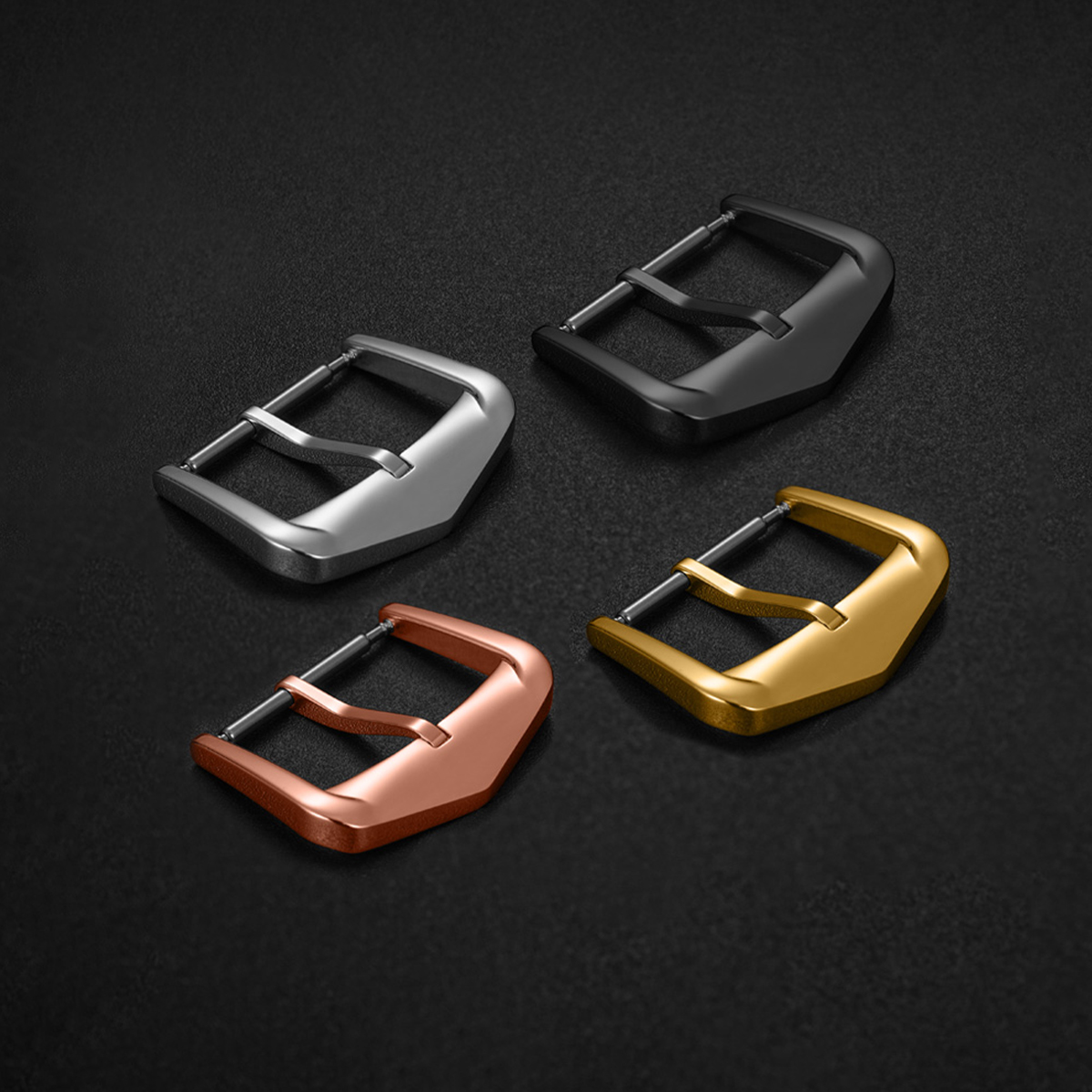
A watch clasp is a small part with a daily job. It opens, closes, sits against the wrist, and takes repeated load without drawing attention. Titanium watch clasps get specified for three practical reasons: lower weight, better corrosion resistance in sweat and humidity, and no nickel in the common grades used for watch parts. Those benefits are real, but they do not come from a simple material swap. Grade choice, forming route, machining behavior, finish, and tolerance stack all decide whether the clasp feels right on the wrist. A titanium buckle that saves grams but opens with a rough edge or shows galling after regular use is not an improvement. The material only helps when the process around it is controlled.
Grade 2 and Grade 5 Are Not Interchangeable
Titanium watch clasps usually work with commercially pure Grade 2 or alloy Grade 5, also called Ti-6Al-4V. Grade 2 is softer and more formable. It suits stamped or formed parts and offers good corrosion resistance. Grade 5 is stronger and harder to machine. It fits thin sections, higher load points, and parts that need to hold shape under repeated handling. Both are lighter than stainless steel, but they behave differently at the bench.
| Property | Grade 2 titanium | Grade 5 titanium | 316L stainless steel |
|---|---|---|---|
| Density | About 4.5 g/cm³ | About 4.4 g/cm³ | About 7.9 g/cm³ |
| Tensile strength | Lower, around 345 MPa minimum | Higher, around 895 MPa minimum | Moderate |
| Machining behavior | Gummy, prone to galling | Harder, slower cutting | More forgiving |
| Corrosion in sweat | Good | Good | Good, but can pit in some conditions |
| Typical clasp role | Formed or stamped parts | Machined load parts | Common baseline |
The table is not a ranking. It shows why a titanium buckle specification has to name the grade. A Grade 2 part and a Grade 5 part can share the same drawing and still need different tooling, cycle time, and finishing attention.
Weight Is Only Half the Benefit
Titanium density sits around 4.4 to 4.5 g/cm³, roughly half that of stainless steel. On a clasp, that difference changes wrist balance more than raw numbers suggest. A lighter clasp can reduce the sense of a watch head pulling to one side, especially on a bracelet with a fold-over buckle. Corrosion resistance matters just as much. Sweat, salt, and chlorinated water attack the small gaps and edges of a clasp, and titanium’s passive oxide layer helps it hold up. Skin comfort is another factor. Grade 2 and Grade 5 titanium do not rely on nickel, which is useful for wearers who react to nickel-releasing alloys.
The limits are worth stating. Titanium is not scratch proof. It can show fingerprints, and some finishes wear visually before the part loses function. It can also gall against itself under dry contact, which is why hinge areas, pins, and sliding surfaces need careful design and finish. Weight savings are welcome, but they are not a free pass on mechanical detail.
Machining and Forming Titanium Takes Different Discipline
Titanium conducts heat poorly, so cutting heat stays near the tool edge. Chips can weld to the cutter, and galling can show up on sliding faces. CNC milling of Grade 5 titanium is slower than milling stainless steel, and tool wear is a real cost line. Stamping Grade 2 is possible, but springback and die wear need attention. A titanium buckle made by stamping and one made by CNC milling will not share the same edge condition or surface character.
A desensitized example from a clasp project: a batch of titanium fold-over clasps showed inconsistent edge breaks after finishing. The milling dimensions were within tolerance, and the polishing step looked acceptable on its own. The variation traced to a fixture that had developed small runout across a long cycle, which changed how the edge met the finishing tool. The fix was not a new material or a new finish. It was a fixture check, a re-centering step before finishing, and a dimensional checkpoint after machining. Clasp tolerances are easy to lose at the handoff between cutting and finishing.
Finish and Tolerance Decide Daily Feel
A clasp is judged by feel. The release should be clean, the fold should sit flat, and the edges should not catch on skin or fabric. Those qualities come from tolerance control, not from the titanium label. Hinge fit, pin clearance, latch engagement, and edge break all stack up. If the mating faces are too tight, the clasp binds. If they are too loose, it rattles. Titanium’s galling tendency makes this balance more sensitive than with stainless steel.
Finishing also changes the read of the part. Brushed titanium hides small handling marks well. Polished titanium can look sharp, but it shows smudges and fine scratches sooner. Anodized color adds another variable, because the oxide layer depends on surface prep and process control. For a titanium watch clasp, the practical specification should include surface roughness, edge break, and the inspection points that match how the clasp opens and closes. Visual approval alone will not hold a batch.
Sourcing Titanium Clasps Without Overclaiming
Titanium costs more than stainless steel at the material level, and it is slower to machine. Small batches carry a higher unit price because setup and tooling costs are spread across fewer parts. That is a price gradient, not a difference in quality standard. The same inspection discipline should apply to a small run and a larger run, even when the unit economics differ.
Sourcing can follow two workable paths. One is a multi-supplier model, where blank forming, machining, finishing, and inspection are split across specialized shops. That can offer flexibility and access to specific processes, but the brand owns the handoffs and the interface risk. The other is a single-source components partner that holds the clasp through machining, finishing, and inspection. That reduces handoffs and makes it easier to lock a finish and tolerance standard across a batch, though it concentrates responsibility and can raise the minimum order threshold. Neither path is automatically correct. The choice depends on how much process coordination the brand wants to own and how tightly the titanium buckle specification needs to be held.
For titanium watch clasps, it helps to specify the grade, the forming route, the edge condition, the surface finish, and the clasp tolerances that control feel. General titanium bar and forging supply is often referenced against ASTM B348, which gives both sides a common language for grade and condition. Burriva works at the component level on dials, cases, bracelets, and buckles, with CNC milling, stamping, automated polishing, dimensional inspection, and multiple inspection rounds across incoming, in-process, and outgoing stages. Segregated workflows and CAD file access controls keep design files split by job role. Brands developing a titanium buckle or clasp can contact the team to discuss clasp tolerances, finish requirements, and inspection points.