
 EN
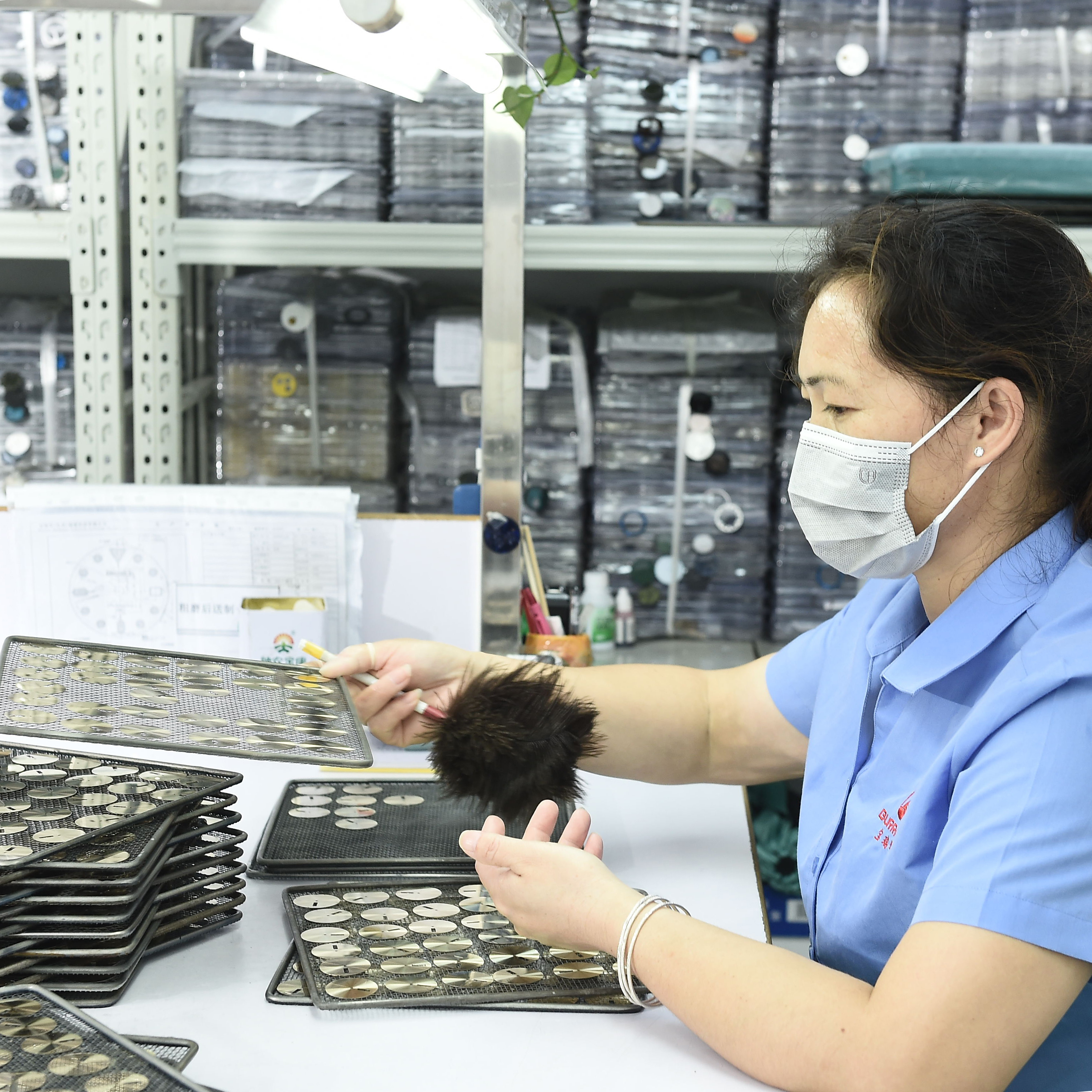
A Concept Needs a Manufacturing Route, Not Just a Sketch
A custom watch dial usually starts as a sketch, a render, or a reference photo. Those are useful inputs, but they do not tell a dial maker how to build the part. The first real step in custom watch dial development is turning the visual idea into a process route. That means naming the substrate, the blank thickness, the texture method, the color layer, the print method, and the inspection points. A concept that stays visual is hard to quote, hard to sample, and hard to hold across a production batch.
Dial production is a stacked process. The base metal sets the geometry. The texture changes how light moves. The color layer sets the tone. Pad printing adds the scale, logo, and fine text. Each step references the same center axis, so a small drift in one operation can show up several steps later. Brands get better results when the drawing names the route and the checkpoints, not just the final look.
Substrate and Blank Geometry Set the Limits
Most metal dials start with a brass blank, often specified against a known alloy grade such as C2680. The blank thickness and flatness matter because later operations build on that surface. A blank that is slightly bowed can survive machining and still cause problems at pad printing or marker setting. The dial feet, center hole, and marker seats are the features that connect the dial to the rest of the watch, and their tolerances decide whether the part sits correctly.
Critical dial features are commonly held to ±0.05 mm or tighter on fits, while general dial tolerances in chronometer submission specifications sit around ±100 μm. Those numbers are not a marketing claim. They are the geometry that dial texture and dial inspection depend on. If the center hole drifts, the sunburst pattern will not run true to the printed track. If the dial feet are off, the dial will not sit flat in the case, and no amount of surface refinement will fix it. Substrate and blank geometry are the quiet foundation of custom watch dial work.
Texture, Color, and Print Are a Stacked Process
Dial texture is rarely one operation. A sunburst finish depends on how an abrasive tool meets a rotating blank. Circular graining depends on concentricity around the functional axis. Guilloché can be cut, milled, or stamped, and each route leaves a different surface character. The color layer then changes how that texture reads. Electroplating, PVD coating, and lacquer each behave differently under light, and pad printing adds its own registration tolerance on top.
| Surface route | What it controls | Common production risk | Useful inspection point |
|---|---|---|---|
| Electroplating | Base color and corrosion resistance | Bath chemistry drift, edge build-up | Color check and plating thickness at edges and holes |
| PVD coating | Uniform color and wear resistance | Fixture marks, batch color shift | Visual check under controlled light, adhesion check |
| Lacquer | Depth, gloss, and color richness | Dust, thickness variation, cure drift | Surface roughness and gloss units at a fixed angle |
| Pad printing | Logos, scales, and fine text | Registration shift between passes | Print position relative to center axis |
The table is not a ranking of routes. It shows why dial production needs inspection points tied to each surface step. A dial that passes visual approval can still fail a dimensional check at the marker seat. A batch that matches color on one day can drift when the plating bath or lacquer viscosity changes. Dial texture and color interact, and pad printing sits on top of both.
The Sampling Loop Is Where Concepts Get Tested
Sample approval is a visual milestone. Production approval is a process milestone. The gap between them is where many custom watch dial projects get uncomfortable. A sample can be hand-finished, inspected under a specific lamp, and approved on a single piece. A batch has to hold color, dial texture, print registration, and dimensional fit across many pieces and several operations.
A desensitized case from a custom watch dial project: a brand approved a blue sunburst dial with a fine radial texture. The first samples looked consistent under the approval lamp. A later production batch showed a slight purple shift in the blue, and the sunburst read softer in the center. The texture tool had not changed, and pad printing was still within tolerance. The drift traced to two linked variables. The plating bath had shifted slightly in temperature, and the lacquer coat had been applied a little heavier on that run. The heavier coat filled the finest radial grooves and changed how the color layer reflected light.
The fix was not a new decoration route. The shop added a color check with a spectrophotometer under controlled lighting, with a target of ΔE ≤ 2 against a retained standard. It also added a lacquer thickness checkpoint and a gloss reading at a fixed angle. A retained sample from the approved run stayed on the bench as a physical reference. The lesson for dial production is simple. A visual standard needs a measured backup, especially when dial texture and color interact.
Inspection Points That Decide Whether a Dial Ships
A single final inspection cannot catch everything on a custom watch dial. Incoming inspection checks the blank grade, thickness, and flatness. In-process inspection catches drift while the part can still be corrected. Outgoing inspection confirms the finished dial meets the drawing and the cosmetic standard. Collapsing these into one final check usually raises the escape rate.
Incoming: material grade, blank thickness, flatness, and dial feet condition.
In-process: critical dimensions after machining, texture consistency, surface prep before plating.
Outgoing: final dimensions, print registration, color match, and visual check under controlled light.
For dial production, the in-process stage deserves attention. A dimension that drifts during machining can be corrected before plating. A texture that starts to fade under lacquer can be caught before pad printing. Small batches and large batches should use the same inspection discipline. Small runs carry a higher unit price because setup and tooling costs are spread across fewer parts. That is a price gradient, not a difference in quality standard. Dial inspection is not a final gate. It is a set of checkpoints that follow the route.
Sourcing Routes and What They Change for the Brand
Brands approach custom watch dial development through two common sourcing models. In a multi-supplier path, blank forming, texture, plating, lacquer, and pad printing are split across specialized shops. The brand coordinates the handoffs and owns the interface risk. This path can offer access to specific crafts and flexibility on small runs, but a dial texture approved at one shop may not survive the next shop’s process window.
A single-source path keeps the custom watch dial with one components partner through machining or stamping, graining, plating, lacquer, and pad printing. That reduces handoffs and makes it easier to lock a finish and tolerance standard across a batch. It also concentrates responsibility and often raises the minimum order threshold because setup work is shared across the run. Neither model is universally correct. The choice depends on how much process coordination the brand wants to own and how tightly the dial specification needs to be held. A one-stop components path is one option among several, not the only route.
Burriva works at the component level on dials, cases, bracelets, and buckles. For custom watch dial projects, dial production covers blank machining, texture, plating, lacquer, pad printing, dimensional inspection, and multiple inspection rounds across incoming, in-process, and outgoing stages. Segregated workflows and CAD file access controls keep design files split by job role. Brands developing a custom watch dial can contact the team to discuss dial specifications, surface requirements, and dial inspection points.