
 EN
Why the Buckle Gets Noticed Last but Complained About First
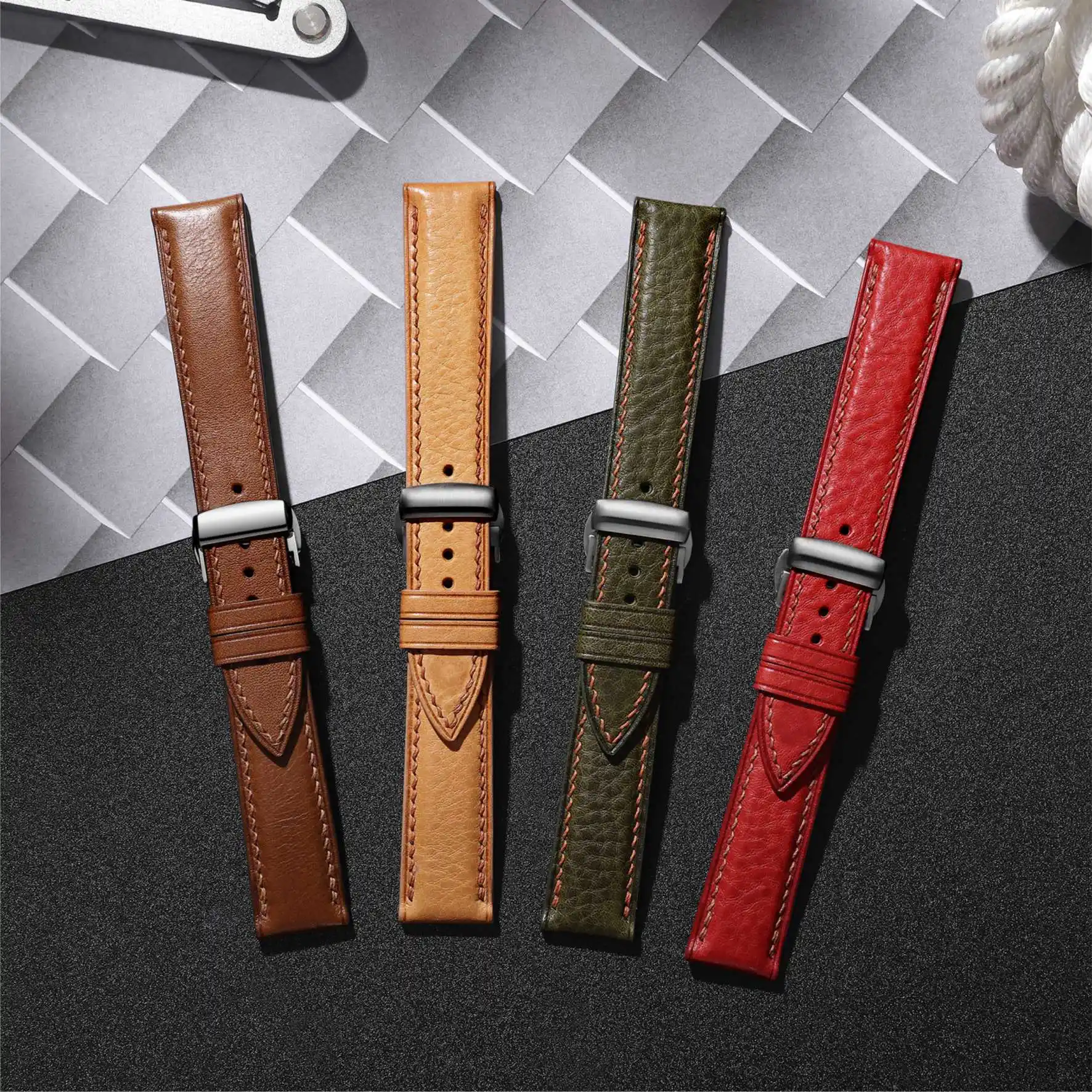
The watch buckle is the first component a hand touches when putting on a watch, and the first thing that fails when something goes wrong. Yet during specification, it sits behind the case, the dial, and the bracelet. A buckle that looks fine in a catalog and starts misbehaving after a few months of daily wear turns into a source of frustration.
For OEM watch projects, the buckle is often the least expensive component on the bill of materials. It is also one of the hardest to get consistent. A tang buckle or a deployment clasp involves several moving parts: the spring bar, the latch leaf, the hinge, the spring. A slight dimensional drift in any of them changes the feel. A little too loose and the buckle feels cheap. A little too tight and it becomes hard to open. A watch that fastens smoothly gets treated as a well-made product. A buckle that pinches or pops open at the wrong moment gets remembered as a defective one.
The Buckle Types and What Each One Asks of Production
Tang buckles are the simplest: a plate, a tongue, a spring bar. The advantage is ease of use and repair. The limitation is wear. A stamped plate that fatigues, or a tongue hole that ovalizes over time, will stop holding position. The production risk sits in stamping consistency and edge finish.
Deployment clasps offer a longer service life and a cleaner fold, but they pay for it in tolerances. The hinge mechanism requires consistent stamping and forming so the fold lands where it should. A common failure mode is asymmetric feel, where one side of the clasp opens more easily than the other. That usually points to forming die alignment rather than a design flaw.
Butterfly clasps sit in the middle: simpler to operate, cleaner in appearance, tighter on tolerances. Spring bar engagement and the symmetry of the two latch leaves decide whether the clasp closes with a satisfying click.
| Buckle type | Typical strengths | Common production challenges |
|---|---|---|
| Tang buckle | Simple, low cost, easy replacement | Hole alignment, tongue finish, stamping fatigue |
| Deployment clasp | Smooth fold, longer service life | Hinge symmetry, forming die alignment, spring tension |
| Butterfly clasp | Clean appearance, reliable close | Latch leaf synchronization, spring bar engagement |
Spring Tension, Latch Engagement, and the Feel That Sells
Spring tension is the most direct thing a user feels in a watch buckle. Too light and the buckle feels flimsy. Too heavy and it becomes a struggle to open, particularly with cold hands. Both extremes hurt customer satisfaction, just in different ways.
The tricky part is that spring tension is not a visible spec. It gets less attention during design than it deserves. By the time samples arrive, the conversation turns subjective: one reviewer says too stiff, another says fine.
Latch engagement is another place where subjective and objective meet. The click a latch makes is the user's confirmation that the buckle is closed. If it sounds wrong, or takes a second press to seat, confidence in the product drops.
One anonymized case involved a run of deployment clasps that felt fine at first use and started releasing on their own after a few weeks. The root cause traced back to the spring pocket dimension, which had drifted across several stamping batches rather than failing in a single lot. The buckle was still within drawing tolerance. The spring preload inside the pocket was not. The issue did not show up in any single inspection. It showed up in the trend across lots.
QC Checks That Catch Buckle Problems Before Shipping
Catching every defect at final outgoing inspection means the failure mode has already survived plating and packaging, and the cost of correction has climbed.
Incoming: spring wire diameter, plate thickness on the buckle blank, and the material condition of the spring bar.
In-process: spring pocket dimensions, latch leaf engagement geometry, and hinge parallelism. First and last piece checks in wear-prone operations matter more than a single mid-run sample.
Outgoing: open and close force, latch click consistency, surface finish, and a review of the batch record against the inspection plan.
The inspection that catches a problem and the one that passes it often differ by position in the sequence. Open force checked after plating cannot tell anything useful about the spring state at stamping. If an open force issue shows up, the signal needs to travel back to the stamping operation. Suppliers that trace that link are the ones with real control over buckle quality.
Material and Finish Choices That Hold Up in Daily Wear
316L stainless steel is the standard for watch buckles: it resists corrosion, takes a polish, and stays affordable. Material choice gets more complicated when the buckle has to match a color or texture across a collection. Options range from brushed steel to mirror-polished steel to PVD-coated steel and titanium.
PVD-coated steel buckles look good in photos, and they cause trouble when coating thickness varies or when the substrate has surface defects. A layer that is too thin can wear through where it contacts sweat. A substrate with pits or scratches lets the coating amplify the defect rather than hide it.
Brushed steel buckles are more forgiving, but brush direction, grain size, and coverage need to stay consistent. A brush line that runs unevenly or bleeds into a polished area reads as a half-finished part.
Titanium buckles ask more from machining. Titanium conducts heat poorly, so heat builds up at the cutting edge and shortens tool life. Titanium also has a lower modulus than steel, so a design tuned around a steel spring will not deliver the same open force with a titanium one unless the spec is adjusted.
What Buckle Selection Really Costs Over the Product Life
At the unit level, the buckle is often the cheapest part on the watch. At the product life level, that framing can be misleading. A buckle that saves money up front and fails faster than expected costs more in returns, replacements, and lost brand trust.
Two cost pressure points show up in buckle selection: material grade and tolerance grade. Lowering the material grade saves a little on the bill, at the possible cost of corrosion resistance. Loosening tolerances saves a little, at the possible cost of consistency. The question is whether the cost shows up now or later.
The right answer depends on how the watch is positioned and how long it is expected to stay in service. Tightening the tolerance on the spring pocket or on latch engagement usually has a small unit cost impact and a larger effect on customer satisfaction over time.
Small volume orders are not treated differently from large ones on quality standards. Where small orders do differ is unit price, because fixed costs like tooling setup, fixture preparation, and inspection planning get spread across fewer pieces. That price gradient is a normal consequence of fixed cost allocation, not a signal that smaller batches get less attention.
For projects where buckle selection needs to balance feel, finish consistency, and production control, working with a supplier that builds its QC around those factors reduces the risk of late surprises. Burriva, short for Baoruihua (Dongguan) Precision Technology Co., Ltd., operates a component-focused facility with over 20,000 square meters of floor space, covering multi-axis machining, CNC milling, stamping, automated polishing, and dimensional inspection across incoming, in-process, and outgoing stages. Workflows are segregated by project, and CAD file access is controlled by job role. Teams working through buckle specifications are welcome to discuss their requirements.
Table of Contents
- Why the Buckle Gets Noticed Last but Complained About First
- The Buckle Types and What Each One Asks of Production
- Spring Tension, Latch Engagement, and the Feel That Sells
- QC Checks That Catch Buckle Problems Before Shipping
- Material and Finish Choices That Hold Up in Daily Wear
- What Buckle Selection Really Costs Over the Product Life