
 EN
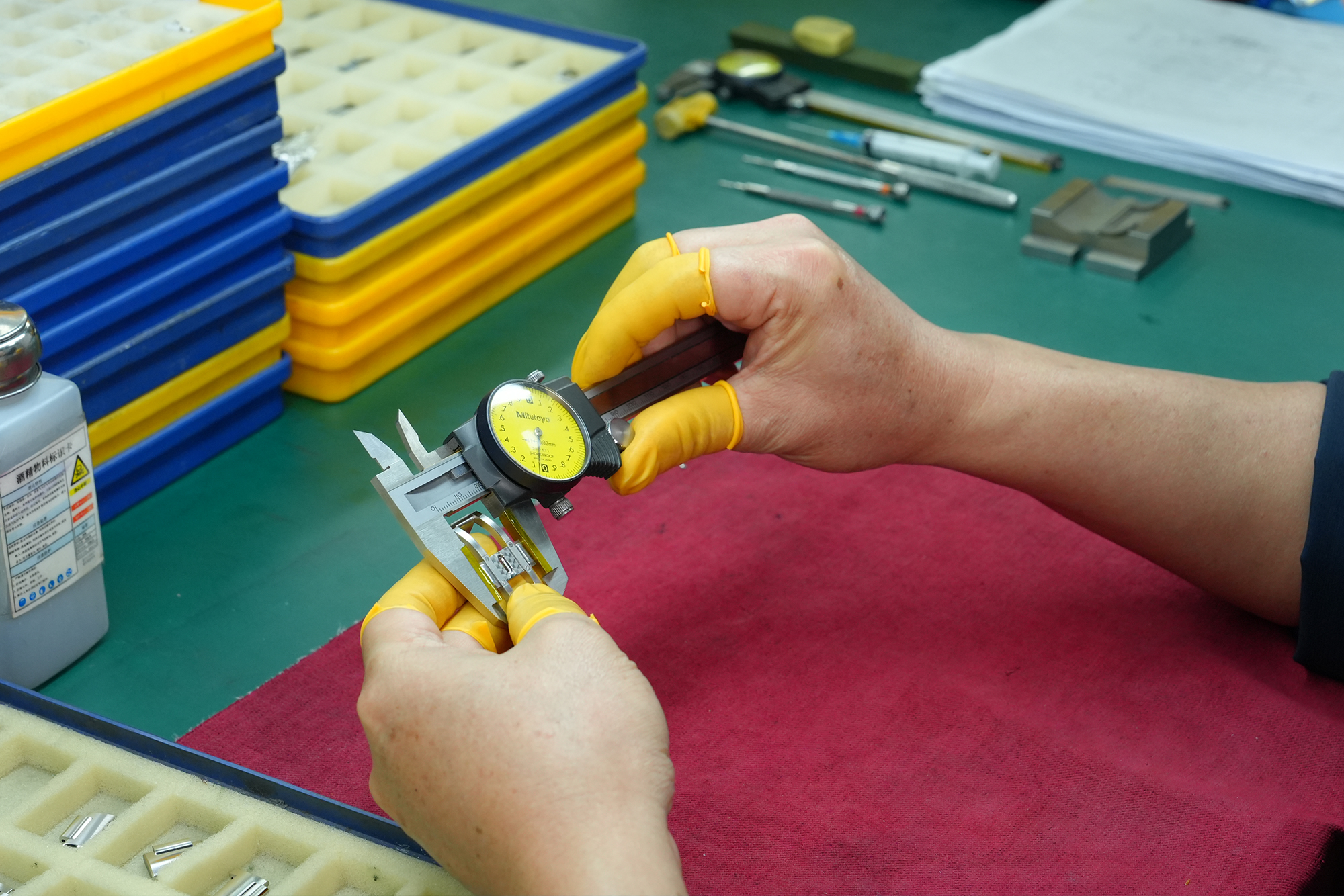
An OEM watch project does not fail because a single stage takes too long. It fails because stages are treated as interchangeable blocks that can be moved around a calendar. In reality, each stage feeds the next. A drawing has to be frozen before tooling is cut. Tooling has to be validated before samples can be built. Samples have to be approved before production is scheduled.
Compress a stage that has no downstream dependency, and nothing breaks. Compress a stage that everything else depends on, and the delay shows up three stages later. That is the pattern worth understanding before the project starts.
The Freeze Point Decides Everything After It
Design freeze is not a milestone. It is the point where a project stops being flexible.
The design brief and specification document set intent. The engineering team turns that into 2D drawings and 3D STEP files. Material and color references get attached. At this stage, a thorough review checks wall thickness, gasket seating surfaces, dial feet positions, and bracelet end-link geometry against the intended fit.
Engineering is the last low-cost opportunity to fix a design problem. Once tooling is cut, a tolerance conflict that looked minor on a screen turns into new dies, new samples, and a shifted schedule. The cost of that conflict is not the die itself. It is everything downstream that has to be redone.
Brands that rush engineering to hit a launch date usually spend the saved time later, at a higher price.
Tooling and Sourcing Move Together, Not in Sequence
Custom case shapes, proprietary dial patterns, and non-standard buckle geometry all require tooling. Dies, molds, screens, and fixtures have to be cut and validated. Depending on complexity, this stage can take a few weeks.
Component sourcing runs in parallel. Some items come from stock quickly. Others take longer when custom dimensions are required. Gaskets are often standard, but a non-standard case profile may need custom molding.
Supply chain structure affects this stage directly. Some brands split dials, cases, bracelets, and buckles across multiple suppliers for pricing flexibility. Others consolidate exterior components with a single source to reduce handoff risk. Neither path is automatically better. The right one depends on volume, design ownership, and how much coordination the brand can absorb.
The pattern that separates fast projects from slow ones is whether component specifications are locked before tooling is ordered. When they are not, tooling has to be re-cut, and the schedule absorbs the difference.
Why Sample Approval Is the Most Misused Gate
Sampling is where the design meets physical reality. A bezel may feel tighter than the drawing suggested. A dial may reflect light differently than the render. A bracelet may not sit comfortably on the wrist.
Sample approval should be a formal checkpoint with written criteria. In practice, it often becomes a casual sign-off. A brand looks at the sample, says it looks good, and production starts. Three months later, the production units arrive with a slight color difference or a fitting issue, and there is no written standard to resolve the dispute.
Verbal approval creates ambiguity. Written approval creates a baseline. That baseline is what makes the next stage predictable.
Where Production Time Actually Goes
Once approval and deposit are in place, production begins. Materials are bulk-ordered, and the shop runs machining, forming, surface treatment, and finishing across exterior components.
Polishing and surface treatment are usually the slowest stages. They are labor-intensive and difficult to accelerate without risking quality. Dimensional checks, visual inspection for dust or scratches, and surface finish review all take real time.
| Stage | Typical Window | Key Output |
|---|---|---|
| Design and CAD freeze | One to two weeks | Approved technical drawings |
| Tooling and sourcing | A few weeks to several weeks | Ready tools and components |
| Sampling and approval | Several weeks | Approved physical sample |
| Exterior component production | Several weeks to a few months | Finished dials, cases, bracelets, buckles |
| Inspection and packing | Several days to two weeks | Inspected and packed order |
Production has a sequence that cannot be compressed indefinitely. Case machining and polishing need to finish before final dimensions can be confirmed. Dial printing and applied marker work need clean, stable conditions. Bracelet links and clasps need to match the approved fit and finish.
A supplier that claims unusually fast production is often a supplier skipping steps. The steps that get skipped are usually the ones that catch defects before shipment.
Inspection and Packing Are Not Afterthoughts
Pre-shipment inspection follows the AQL framework agreed on earlier. ISO 2859-1 sampling tables are common, and ISO 9001:2015 clause 8.5.1 provides a framework for controlled production conditions. Inspection takes time, and it should.
Packing is more than putting parts in boxes. Each unit is checked for cosmetic defects, verified against the order configuration, and matched against shipping documents. Labels, serial numbers, and barcodes have to line up. A single mispacked unit can trigger a customs delay that costs more than the entire packing stage.
The final build, where components become a finished watch, is normally handled by the brand or its chosen assembly partner. That stage sits outside the scope of exterior component production.
Three Places Projects Actually Lose Time
A brand working on a limited dial release approved artwork, then requested a thicker logo and deeper relief on a sub-label after tooling was already validated. The change looked small at the design desk. On the shop floor it meant new screens, a revised etching mask, and a fresh plating trial. The revision added another sample round and pushed the finish date out by weeks.
Nothing failed. No single step broke. The delay came from reopening a decision that had already been locked.
That pattern repeats across component projects. Late artwork changes, unclear acceptance criteria, and undocumented sample approvals are the three most common sources of avoidable delay. None of them are manufacturing problems. They are documentation problems that surface during manufacturing.
The calendar is not what determines whether a project finishes on time. The sequence is. Protect the freeze points, write the acceptance criteria, and document the approvals. The schedule follows from those decisions, not the other way around.
Steps in an OEM watch project depend on how well drawings, tolerances, and acceptance criteria are defined before tooling begins. Burriva, short for Baoruihua (Dongguan) Precision Technology Co., Ltd., focuses on OEM watch components from its Dongguan production base, with in-house capabilities across dials, cases, bracelets, and buckles. The team works from documented drawings and written approval criteria, with dimensional inspection and multiple rounds of incoming, in-process, and outgoing checks. To discuss dial, case, bracelet, or buckle specifications and approval steps, get in touch with Burriva.