 EN
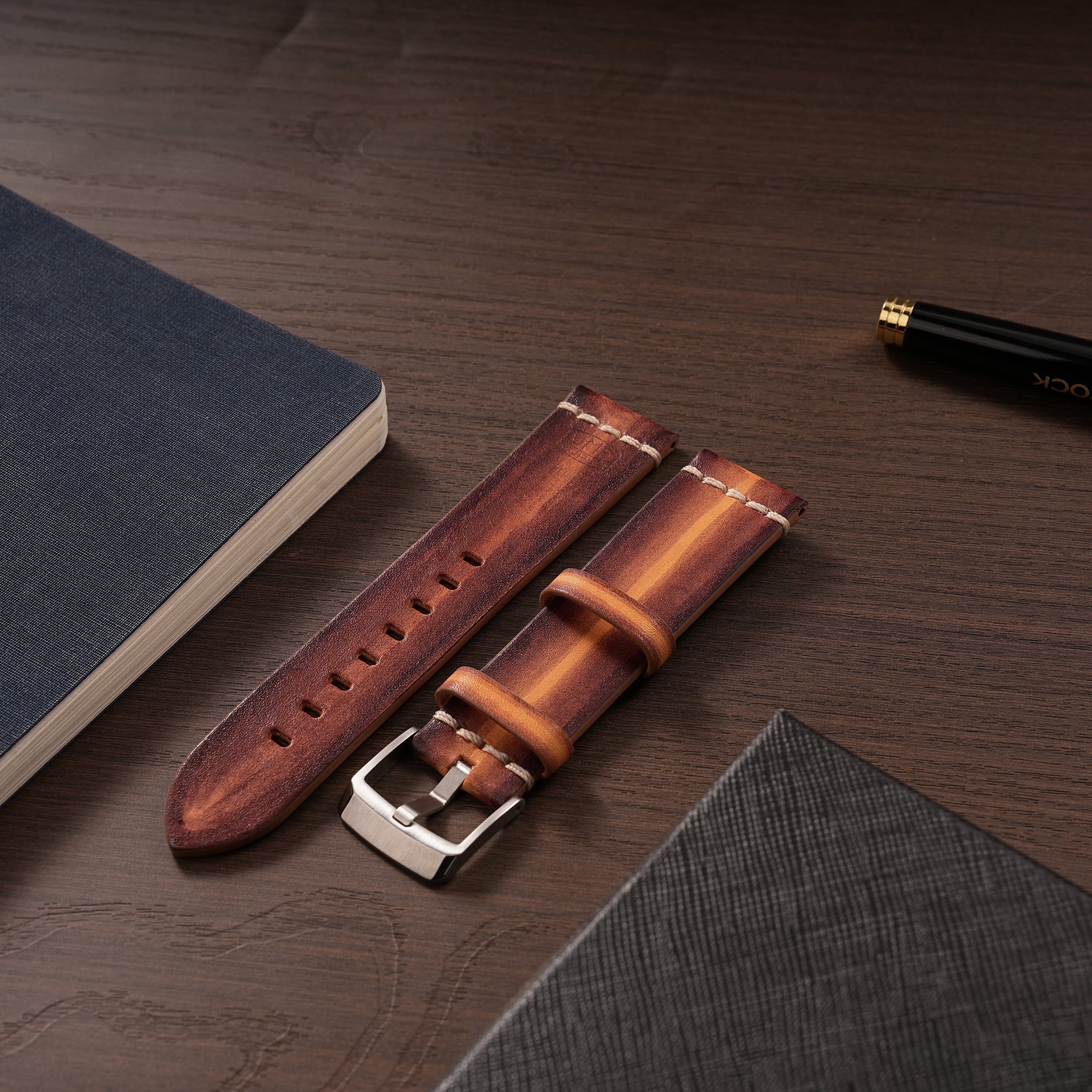
A buckle is small, but it gets touched every time the watch goes on and comes off. That daily contact makes it a quiet brand signal. A plain stock buckle reads as an afterthought. A buckle with a considered shape, finish, and engraving reads as part of the design.
Customization is not only about looks. It is about the repeated moment when a wearer interacts with the hardware. That moment either reinforces quality or undermines it. Buckles that feel consistent with the rest of the watch strengthen the overall impression. Buckles that feel generic weaken it.
Aligning Buckle Design With Brand Positioning
Different brand positions call for different buckle approaches.
Minimalist brands often choose a slender tang buckle with a matte finish and no ornamentation. The restraint is the message.
Heritage-focused brands lean toward engraved logos, subtle hallmarks, or guilloché-style textures that suggest provenance without shouting.
Innovation-driven brands experiment with sculpted butterfly mechanisms, precision-cut geometry, or dark PVD coatings that signal technical ambition.
Sustainability-minded brands use material choice to communicate values, such as recycled stainless steel content or lower-impact alloy formulations.
When form, material, and function align with the brand's visual language, the buckle stops being hardware and becomes part of the identity.
Mechanism Choice Shapes Daily Interaction
The mechanism decides how the wearer interacts with the watch every day. Tang buckles, deployant clasps, and butterfly buckles each serve a different user profile and carry a different brand message.
| Mechanism | Key Experience | Security Level | Common Fit |
|---|---|---|---|
| Tang buckle | Familiar, fast release, minimal bulk | Moderate, relies on hole alignment | Leather or fabric straps, vintage styles |
| Deployant clasp | One-hand operation, protects strap from bending | High, folding arms lock securely | Leather straps, daily and sport styles |
| Butterfly buckle | Low profile, even pressure across the wrist | High, symmetrical folding with double lock | Metal bracelets, comfort-focused designs |
A deployant clasp is often requested by wearers who want quick on and off without repeatedly bending a leather strap. A butterfly buckle suits metal bracelets where a flat profile and even pressure matter more than fast adjustment. A tang buckle remains the choice for brands that prioritize a traditional look over convenience.
The right mechanism comes from mapping wearer behavior, strap type, and the impression the brand wants each time the watch is fastened.
Material and Finish Choices That Support Brand Values
Material selection on a buckle does more than hold the strap. It communicates quality and intent.
Recycled stainless steel content is one area where brands can make a visible commitment. Recycled content reduces the environmental footprint compared to virgin ore-based production, and modern recycled formulations match conventional grades in hardness, corrosion resistance, and polishability. Lower-impact alloy formulations offer similar benefits for brands exploring alternatives to traditional brass or zinc alloys.
Surface finish carries equal weight. A mirror polish reads as formal. A brushed finish reads as technical or understated. A bead-blasted surface reads as matte and modern. Two-tone finishes, where polish and brush sit side by side, create a deliberate contrast that the eye reads as designed rather than accidental.
PVD and DLC coatings add color options and surface hardness. Their durability depends heavily on pre-treatment. Brushing, polishing, or electropolishing before deposition decides how well the coating adheres and how long it resists scratching and fading.
What Customization Actually Requires Before Tooling
Customization has a cost structure, and it is worth understanding before committing.
Simple changes, like laser engraving on an existing buckle shape, usually require no new tooling. The buckle itself comes from an existing mold, and the engraving is applied afterward. This path has the lowest entry cost and the shortest lead time.
A fully custom buckle shape requires a new mold or die. The tooling investment sits at the front of the project and raises the effective minimum order quantity because the cost has to be spread across units. Lead time extends because the tool has to be cut and validated before the first sample.
Coating additions fall between the two. PVD or DLC plating requires fixture design and process validation, but not a full new mold. The lead time depends on how the coating interacts with the substrate and how many test cycles are needed to confirm adhesion.
Proactive conversations about capability, capacity, and communication rhythm matter more than a single price quote. A supplier that can explain the trade-offs between these paths is more useful than one that quotes the lowest number.
A Field Case Where Buckle Customization Went Wrong
A brand ordered a custom-engraved tang buckle using a supplier's existing mold. The engraving depth was specified loosely, and the first batch showed inconsistent depth across units. Some logos looked crisp; others looked shallow and washed out.
The root cause was not the engraving process. It was the missing specification. The brand had not defined engraving depth, edge definition, or inspection criteria. Without a written standard, the supplier had no way to know when the batch was drifting.
The fix required a written engraving specification, photo references, and a first-article inspection before each batch. The rework cost more than the original spec work would have.
That pattern is common in customization. The design conversation gets attention. The specification conversation gets skipped, and that is where the delays come from.
What to Confirm Before Committing to a Custom Buckle
A few items belong in the project file before tooling starts.
Buckle type, mechanism, and material grade.
Surface finish by area, including high-contact zones.
Engraving depth, edge definition, and reference photos.
Functional criteria for opening force, button travel, and play.
Inspection criteria and AQL level.
Tooling ownership and IP terms.
Buckle customization outcomes depend on how well design intent, tolerances, finish, and inspection criteria are defined before tooling. Burriva, short for Baoruihua (Dongguan) Precision Technology Co., Ltd., focuses on OEM watch components from its Dongguan production base, with in-house capabilities across dials, cases, bracelets, and buckles. Buckle production combines CNC milling, stamping, automated polishing, dimensional inspection, and functional checks on assembled clasps, with over 20,000 square meters of production space. To discuss buckle specifications, engraving requirements, and approval criteria, get in touch with Burriva.