
 EN
Define the Dial Identity Before Talking to Suppliers
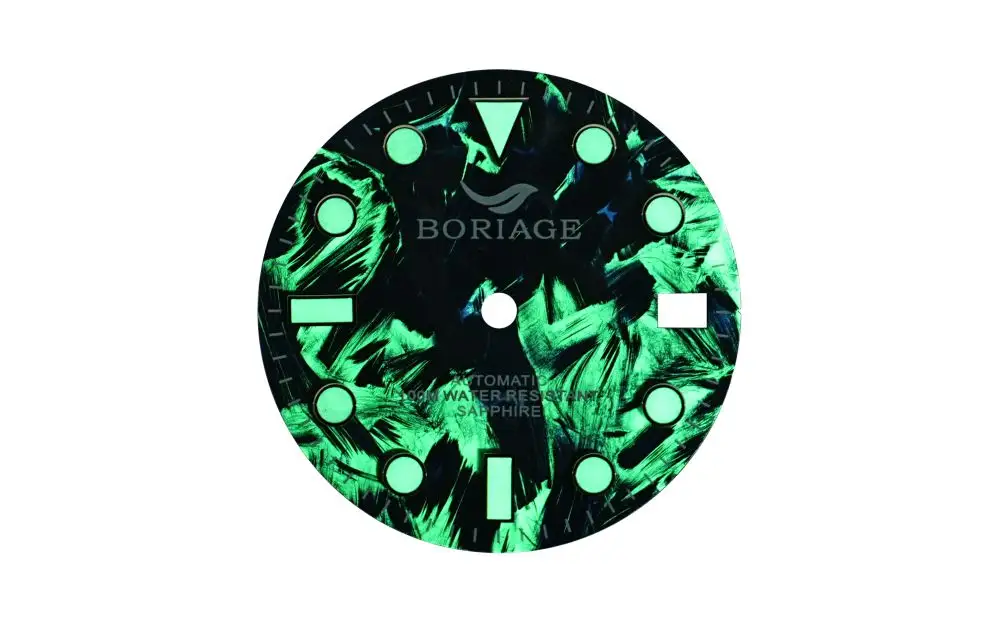
The dial carries more brand weight than any other component. It sits at eye level, gets read at a glance, and communicates the product story before anyone touches the watch. Walking into a supplier conversation without a defined identity usually leads to revision cycles, sample rounds, and a final result that no one fully owns.
Before engaging a dial manufacturer, lock down a few things. Logo geometry at small scale. Typeface choice. Color references. Index style. Finish direction. These decisions shape every downstream step, from artwork preparation to tooling and inspection.
Check How Brand Assets Survive at Dial Scale
A logo that looks strong on a business card can disappear on a dial. Thin strokes vanish after printing or etching. Fine serifs lose definition at small sizes. Letter spacing that works in a document can crowd when transferred to a curved surface.
A practical audit checks the following:
Logo and wordmark legibility at typical dial diameters.
Typeface weight against the chosen printing or etching method.
Color references under different lighting conditions.
How the design reads after surface finish is applied.
Color is where many first-time dial projects run into trouble. A signature navy on paper does not automatically translate to enamel, lacquer, or sunray finish. Substrate reflectivity changes how the color reads. Physical samples under varied lighting show what a Pantone chip cannot.
Translate Brand Values Into Dial Elements
Brand values only reach the wearer when they show up in details. A minimalist brand usually pairs clean indices with a restrained finish. A heritage-focused brand may lean toward applied markers, deeper relief, or a guilloché pattern. A sport-oriented brand often favors high-contrast lume and matte surfaces.
Hands carry the same message. Syringe hands read as technical. Dauphine hands read as classic. Baton hands read as clean and modern. Surface finishes add another layer. Vertical brushing gives a technical feel. Opaline lacquer gives a softer look. A sandblasted base with polished applied indices can hold two ideas at once.
During sampling, a few checks matter:
Does guilloché stay crisp under the crystal?
Does lume fill spread evenly along each index?
Does the applied marker sit flush with the dial surface?
Does the printed element survive adhesion testing?
Those details separate a generic dial from one that carries the brand.
| Element | What to Verify | Why It Matters |
|---|---|---|
| Logo | Legibility at small scale | Brand recognition |
| Typography | Weight and spacing | Readability at dial size |
| Color | Match under varied lighting | Brand consistency |
| Surface finish | Even sheen and texture | Perceived quality |
| Applied indexes | Alignment and seating | Cosmetic acceptance |
Evaluate Technical Capability Without Guessing
Dial manufacturing rewards process control more than equipment lists. A supplier with good machines but weak process discipline can still produce inconsistent batches. A few capability areas are worth probing.
Color matching is the first. Dial colors need to hold across batches, not just in the first sample. Ask how color is verified and what reference standards are used. Enamel and lacquer work is the second. Coating consistency depends on controlled process windows, and small drifts can cause haze, pinholes, or uneven gloss.
Hand-applied detailing is the third. Lume application, index polishing, and numeral work all depend on operator skill, and that skill has to be reproduced across production. Tooling precision is the fourth. Etched patterns, stamped features, and CNC details all shape tactile quality, and tooling wear has to be monitored over longer runs.
ISO 9001:2015 provides a framework for controlled production, which in dial work means documented process parameters and inspection criteria. Certificates matter, but the real question is whether the system is used on dials every day.
Keep Art Direction Inside the Brand
Dial production is a manufacturing service, not a creative lead. Successful brands supply design control documents before tooling begins. CAD files, material swatches, and approved color references form the shared baseline.
The manufacturer contributes by proposing producibility improvements, such as a more durable coating or a slightly adjusted print file that holds better at small scale. Those suggestions are useful. They should not change the aesthetic intent. Any change to the design belongs in the sample review, with brand approval documented in writing.
A partner that respects this boundary adds value. A partner that oversteps, or treats the design as a starting point for their own ideas, dilutes the identity the brand worked to build.
Protect Design and Tooling Rights in Writing
Dial designs, artwork, proprietary index shapes, and custom guilloché patterns belong to the brand. Without explicit assignment clauses, a manufacturer could reuse those elements for other clients, which erodes exclusivity.
Tooling rights matter just as much. Custom dies, stamps, screens, and finishing fixtures should be defined as brand property, even when stored at the manufacturer’s facility. Tooling ownership keeps the brand from being locked into a single production site if the relationship changes.
Agreements should also address future dial evolution. Whether the brand moves to a new material, a different finish, or updated hands, the contract should allow design modification without renegotiation. Locking these terms early avoids disputes later.
Measure How Dial Quality Affects Brand Perception
Dial quality shows up in consumer perception, even when buyers cannot name the specific detail they are responding to. Index alignment, color consistency, and finish evenness all read as craftsmanship signals. When those signals are consistent, the brand reads as intentional. When they drift, the product reads as inconsistent.
Tracking a few metrics helps. Defect rates by dial lot. Finish consistency across batches. Sample approval turnaround. Those numbers link dial quality to brand perception, and they give the brand a way to make sourcing decisions based on evidence rather than feel.
FAQ
Why does dial identity need to be defined before supplier talks?
A defined identity prevents revision cycles and keeps the final dial aligned with the brand, rather than shaped by production convenience.
What should a visual audit cover?
Logo legibility at small scale, typeface weight, color references under varied lighting, and how the design reads after surface finish is applied.
Why do applied indexes and hands matter so much?
They carry brand messaging through small details. Alignment, seating, and finish consistency all affect how the dial reads.
How can a brand judge a dial manufacturer without a factory visit?
Ask how color is verified, how tooling wear is monitored, what inspection steps happen before packing, and whether sample approval criteria are documented.
Why is tooling ownership important?
Tooling ownership keeps the brand from being tied to a single production site and protects the ability to move production if needed.
Dial outcomes depend on how well identity, artwork, tooling, and inspection are controlled from the first file review to the final carton. Burriva, short for Baoruihua (Dongguan) Precision Technology Co., Ltd., focuses on OEM watch components from its Dongguan production base, with in-house dial capabilities that cover material selection, tooling, printing, plating, applied indexes, inspection, and packing. Brands planning a custom dial program can reach out to discuss identity requirements, sample approval criteria, and production scheduling.
Table of Contents
- Define the Dial Identity Before Talking to Suppliers
- Check How Brand Assets Survive at Dial Scale
- Translate Brand Values Into Dial Elements
- Evaluate Technical Capability Without Guessing
- Keep Art Direction Inside the Brand
- Protect Design and Tooling Rights in Writing
- Measure How Dial Quality Affects Brand Perception
- FAQ