The bracelet is the most physically intimate component of any watch. It touches the skin for hours every day, endures sweat, friction, and impacts, and carries the weight of the case. The material chosen for a gold watch bracelet is therefore not just an aesthetic decision—it's an engineering choice with real consequences for durability, wearability, and long-term value retention.
The differences between 18K solid gold, gold alloy, and gold-plated bracelets are significant, and they go far beyond the price tag. Each material category has its own manufacturing processes, durability profile, and appropriate use case. Understanding these distinctions matters for any brand planning a precious metal collection.
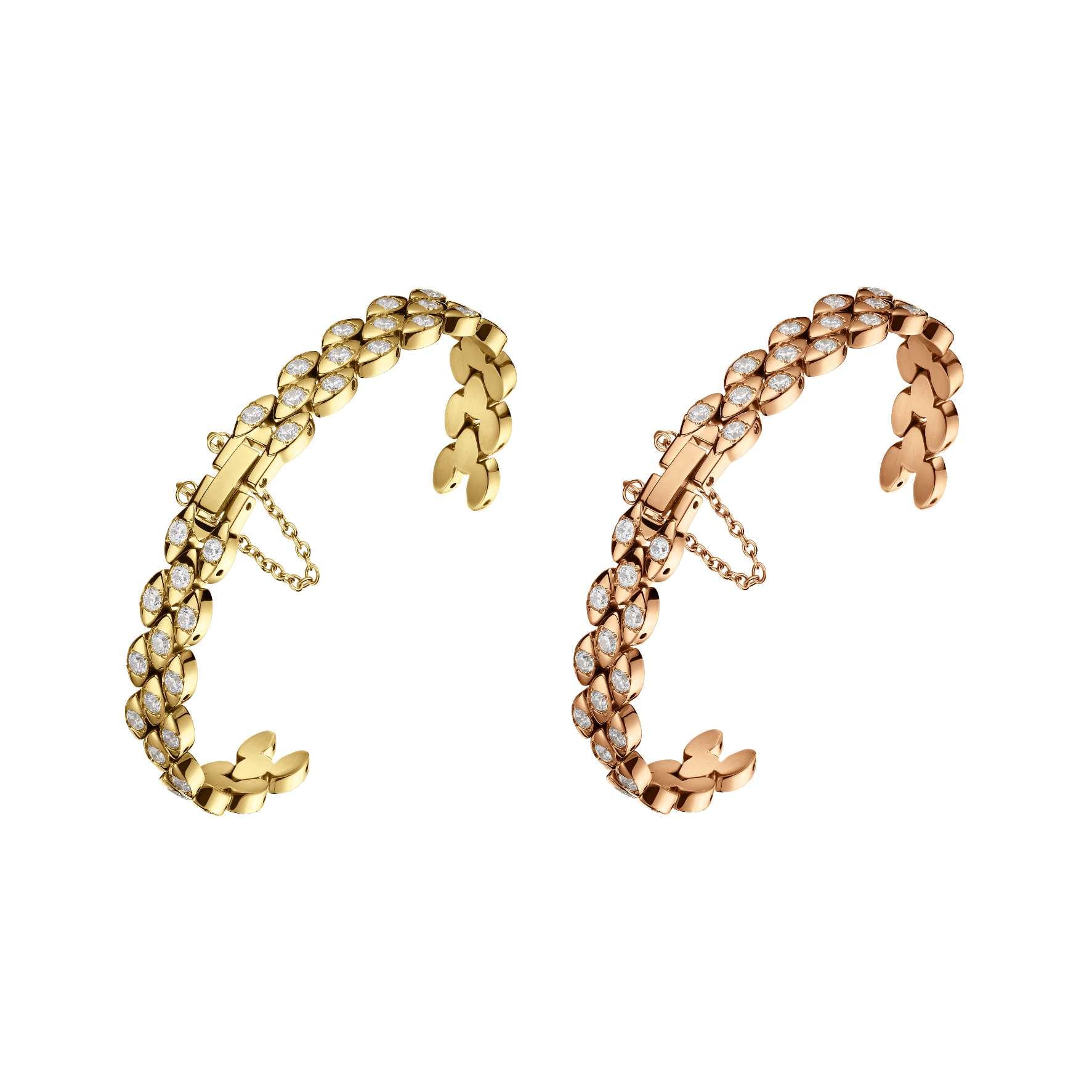
18K solid gold bracelets are made from an alloy that contains 75% pure gold by weight, with the remaining 25% composed of other metals—typically copper, silver, palladium, or zinc—that provide structural strength and color variation. The standard color variants are yellow gold, white gold (alloyed with palladium or nickel and rhodium-plated), and rose gold (higher copper content).
The key advantage of solid gold is longevity. Because the gold content runs throughout the material, the bracelet can be polished and refinished repeatedly over decades without wearing through a surface layer. A well-maintained 18K gold bracelet can last multiple lifetimes. The density of the material—approximately 19 g/cm³—also gives solid gold bracelets a substantial weight and feel that many collectors associate with quality.
The manufacturing process begins with casting or forging the alloy into ingots, which are then rolled into sheets or rods of precise thickness. The individual links are stamped or machined from these materials, then assembled with gold pins or screws. Each link requires multiple finishing steps—filing, polishing, brushing—to achieve the desired surface quality.
Gold alloy bracelets use a lower karat gold—typically 9K, 10K, or 14K—meaning the gold content ranges from 37.5% to 58.5%. The remainder is base metals that provide increased hardness and durability at a lower cost.
The advantage of gold alloy over plated options is that the gold runs through the entire material thickness. Scratches and wear over time will not reveal a different-colored substrate, as they would with plated bracelets. The material can be polished and refinished, though with some limitations compared to 18K.
The main market for gold alloy bracelets sits in the accessible luxury segment—watches priced between $1,000 and $5,000. Brands operating in this tier often choose 14K gold alloy to signal a precious metal product while maintaining a price point that the target customer can reach.
Manufacturing gold alloy bracelets follows a similar process to 18K production, with one key difference: the reduced gold content makes the material slightly harder and more machinable. This can simplify certain finishing operations.
Gold-plated bracelets feature a thin layer of gold applied over a base metal substrate—most commonly stainless steel or brass. Under ISO Standard 3160, a watch is legally considered gold-plated only when the gold coating is at least 5 microns thick. High-end plated bracelets may use coatings of 7 to 20 microns.
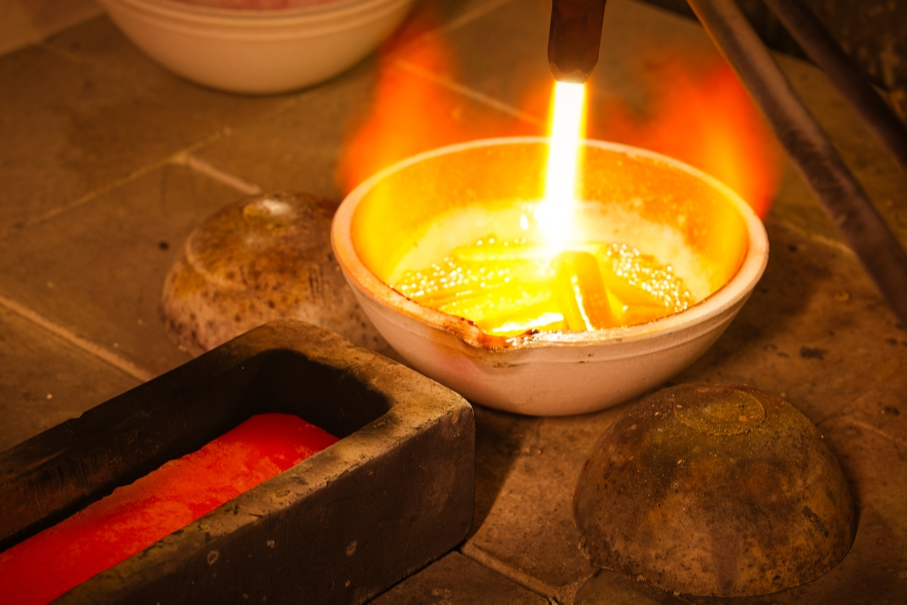
The electroplating process involves suspending the base metal components in a chemical bath and passing an electric current through the solution, causing gold ions to deposit onto the surface. The thickness of the coating is controlled by the duration of the plating process and the gold concentration in the bath.
The primary advantage of gold-plated bracelets is affordability. They offer the visual appearance of a gold bracelet at a fraction of the cost. The trade-off is durability. The thin gold layer will wear through over time, particularly at points of friction—the clasp, the inside surfaces of the links, and areas that contact the wrist. Once the base metal is exposed, the bracelet shows its age in a way that solid gold never does.
Here's a side-by-side comparison of what each material category offers:
Characteristic |
18K Solid Gold |
14K Gold Alloy |
Gold-Plated (5-20 microns) |
Pure Gold Content |
75% |
58.5% (14K) |
<0.1% of total weight |
Density |
~19 g/cm³ |
~15-17 g/cm³ |
~8-9 g/cm³ (base metal) |
Refinishing Capacity |
Unlimited |
Multiple times |
Once or twice max |
Wear Pattern |
Patina develops evenly |
Patina develops evenly |
Gold wears through to base metal |
Price Range (per unit) |
Highest |
Mid-range |
Lowest |
For brands looking to develop custom gold bracelets, the manufacturing options vary by material choice.
With 18K solid gold, custom options include tailor-made alloy compositions to achieve specific color temperatures—a slightly warmer yellow gold, a cooler white gold, or a deeper rose gold. Link geometry can be fully customized, including integrated lug designs that flow seamlessly from the case to the bracelet. Custom clasp development, with brand-specific engravings and deployment mechanisms, is also common.
With gold alloy, the custom possibilities are somewhat narrower but still substantial. Link designs, clasp configurations, and finishing styles can all be customized to align with brand identity. The key limitation is that lower-karat alloys have less color consistency across batches, so suppliers need to demonstrate alloy formulation controls.
With gold-plated bracelets, custom options focus primarily on plating thickness and base metal selection. Some brands choose to spec thicker plating—15 to 20 microns—to extend the bracelet's useful life.
The most reliable gold bracelet manufacturers share several characteristics. First, they maintain transparent gold pricing tied to the daily spot market, with separate line items for material cost and fabrication fees. Second, they have in-house assay capabilities to verify karat content independently. Third, they can provide color reference standards to ensure color consistency across production batches.
A manufacturer that can't document its alloy formulation, can't demonstrate color consistency across batches, and can't provide independent karat verification is a supplier to avoid. Gold bracelets represent too large a cost component to leave to chance. ODM Watch offers custom gold bracelet manufacturing with transparent material pricing and documented alloy traceability, supporting brands across the 18K, alloy, and plated segments.

Baoruihua (Dongguan) Precision Technology Co., Ltd. is a precision watch manufacturer specializing in OEM and ODM watch components, including cases, dials, bracelets, and buckles. We provide stable production, strict quality control, and reliable supply for global watch brands. Contact us to discuss your project.
Building5, No.459 Xiecao Road, Xiegang town, Dongguan, Guangdong
Copyright © 2025 by Baoruihua (Dongguan) Precision Technology Co., Ltd. Privacy Policy
 EN
EN
 Hot News