
 EN
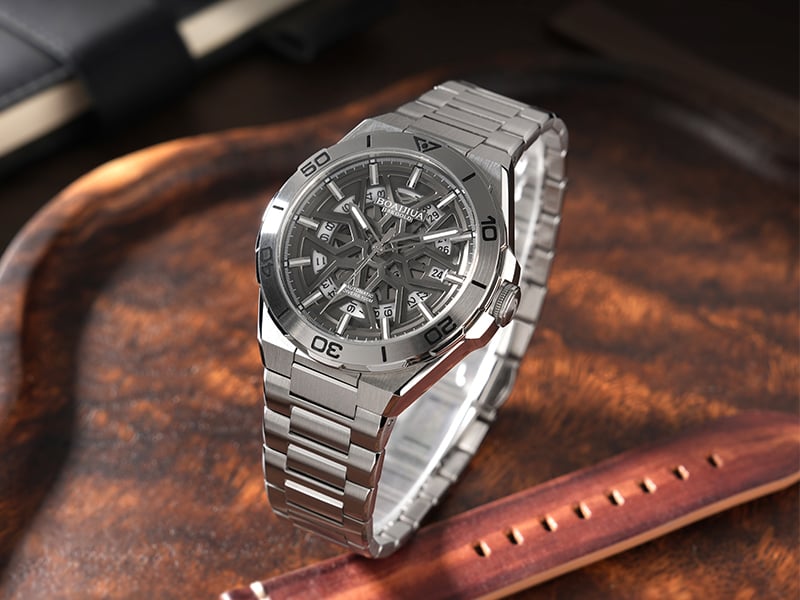
Why Titanium Is Not a Drop-In Replacement
Titanium bracelets have a reputation for lightweight comfort and corrosion resistance. That reputation is earned, but it comes at a cost that many brands underestimate. Titanium is not simply a drop-in replacement for stainless steel on a production line. Its mechanical and thermal properties force factories to rethink cutting speeds, tooling, and even room temperature. A bracelet that looks straightforward in a CAD file can turn into a production headache when the first bars hit the mill. Understanding these challenges before committing to a titanium design saves months of trial and error.
Material Properties That Complicate Machining and Forming
Titanium's strength-to-weight ratio is excellent, but that strength works against machinists. The metal has low thermal conductivity, so heat generated during cutting does not dissipate quickly. It concentrates at the cutting edge, which accelerates tool wear and can cause surface burning. Titanium also has a relatively low elastic modulus, meaning it deflects more under cutting forces. That deflection leads to chatter, poor surface finish, and dimensional drift. Both pure titanium and common alloys demand slower speeds and sharper tools than stainless steel.
| Property | 316L Stainless Steel | Grade 5 Titanium |
|---|---|---|
| Thermal conductivity | Moderate | Low |
| Elastic modulus | Higher | Lower |
| Machining speed | Faster | Slower |
| Tool wear | Normal | Accelerated |
| Galling tendency | Low | High |
The Battle Against Galling and Wear During Assembly
Galling is one of the most persistent problems in titanium bracelet assembly. When two titanium surfaces slide against each other under pressure, they can micro-weld and tear, creating rough spots that worsen with movement. This is especially problematic at link joints and clasp mechanisms.
Stainless steel bracelets rarely suffer the same degree of galling because the material forms a stable oxide layer that reduces friction. Titanium's oxide layer is thinner and more easily disrupted. Manufacturers often use dry film lubricants, anodized coatings, or dissimilar metal inserts to mitigate galling. Each solution adds cost and complexity. A bracelet that passes initial assembly tests can still develop stiffness after weeks of wear if the wrong pairing of materials is used.
Surface Finishing Titanium Without Losing Its Character
Finishing titanium is a different craft from finishing steel. Brushing and polishing can produce attractive results, but titanium tends to smear rather than cut cleanly. Polishing compounds that work well on stainless steel may leave a hazy appearance on titanium.
Sandblasting creates a uniform matte texture that hides small scratches, but it also traps contaminants if not cleaned properly. Anodizing is a popular option for adding color, but the oxide layer is thin and can be worn away by abrasion. PVD coatings adhere well to titanium, though the coating color may shift depending on the substrate preparation. Each finishing step must be validated on actual production parts, because lab samples often behave differently from parts that have been machined, tumbled, and assembled.
Quality Control Challenges Unique to Titanium
Quality control for titanium bracelets requires extra attention to dimensions and surface integrity. Titanium's springback after bending means that formed links may not hold the intended angle. Inspectors must check not only final dimensions but also residual stresses that could cause distortion later.
Salt spray testing per ASTM B117 is less relevant for titanium because it resists chloride attack well, but that does not mean titanium is immune to all corrosion. Galvanic corrosion can occur when titanium contacts other metals in the presence of an electrolyte, such as sweat. A bracelet that mixes titanium links with stainless steel pins creates a galvanic couple that can accelerate corrosion of the less noble metal. Factories that understand this risk will specify insulating washers or compatible materials.
A useful example comes from a bracelet production run in southern Europe. Titanium links passed dimensional checks but failed after assembly. The pins came from a different supplier with slightly different tolerances. The mismatch caused play, galling, and complaints. The root cause was incoming inspection, not the titanium itself.
Balancing Cost, Performance, and Brand Expectations
Titanium bracelets cost more to produce than stainless steel equivalents. The raw material is more expensive, machining takes longer, tooling wears out faster, and finishing yields are lower. Brands that choose titanium for its weight and corrosion resistance must accept these trade-offs or risk disappointing customers with a product that looks premium but feels rough.
Specifying titanium for the entire bracelet without considering the clasp is a common mistake. Clasps endure high friction, so a titanium clasp may need extra design features. The most successful titanium projects start with a clear understanding of which parts benefit most from titanium and which parts can remain steel or another alloy. That kind of decision-making is where experienced manufacturing partners add value.
Titanium bracelet outcomes depend on how well material properties, machining parameters, galling prevention, finishing, and inspection criteria are matched from the first drawing to the final carton. Burriva, short for Baoruihua (Dongguan) Precision Technology Co., Ltd., focuses on OEM watch components from its Dongguan production base, with in-house capabilities across dials, cases, bracelets, and buckles. Bracelet production combines CNC milling, stamping, automated polishing, and dimensional inspection, with functional checks on assembled bracelets. To discuss titanium bracelet specifications, tooling requirements, or approval criteria, get in touch with Burriva.
Table of Contents
- Why Titanium Is Not a Drop-In Replacement
- Material Properties That Complicate Machining and Forming
- The Battle Against Galling and Wear During Assembly
- Surface Finishing Titanium Without Losing Its Character
- Quality Control Challenges Unique to Titanium
- Balancing Cost, Performance, and Brand Expectations