
 EN
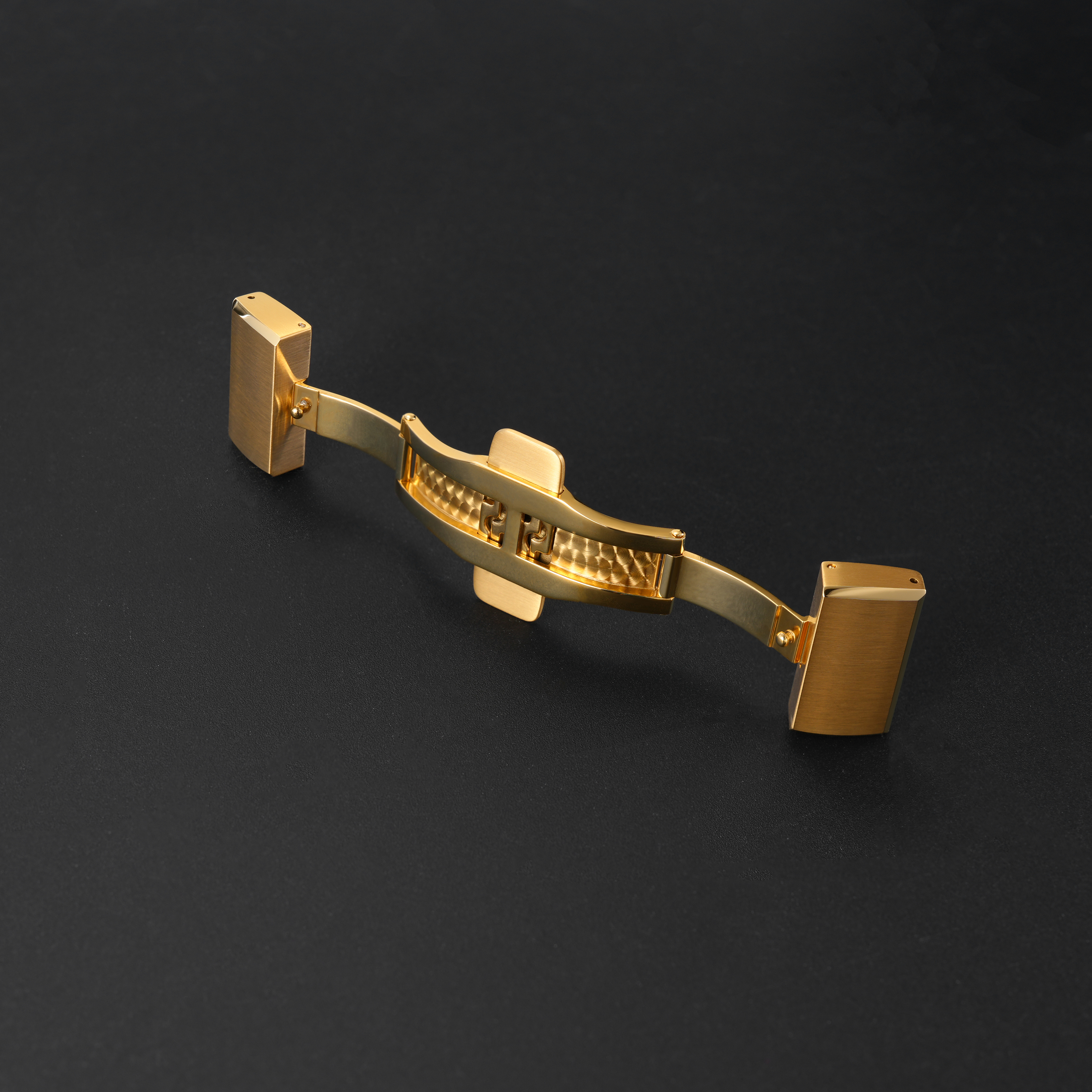
Watch buckles take more abuse than almost any other component. They get opened and closed dozens of times a day, pressed against desks, snagged on sleeves, and exposed to sweat and lotions. Yet buckles often receive less scrutiny during production than cases or dials. A brand might reject a case for a tiny scratch and still accept a batch of clasps with inconsistent spring tension. The result shows up weeks later as customer complaints about a buckle that pops open or a button that sticks. Understanding the common defects in buckle production helps brands set better incoming inspection criteria and communicate more precisely with manufacturing partners.
Dimensional Deviations That Cause Fit and Function Problems
Dimensional errors are the most frequent source of buckle defects. A folding clasp consists of multiple stamped or machined plates, pins, and springs that must fit together within tight tolerances. If the distance between the button and the release lever is off by a fraction of a millimeter, the clasp may feel mushy or refuse to latch. Pin holes that are slightly misaligned cause binding. Plate thickness variation leads to uneven gaps when the buckle is closed. Stamping dies wear over time, so dimensions drift as a production run progresses. Factories that check only the first and last pieces of a batch can miss the middle, where tool wear is most pronounced.
| Defect Type | Common Cause | Detection Method | Wearer Impact |
|---|---|---|---|
| Latch misalignment | Die wear, assembly tolerance stack | Go/no-go gauges, functional test | Buckle opens unexpectedly |
| Pin hole offset | Drilling drift, fixture wear | Pin gauge, visual inspection | Stiff operation, binding |
| Uneven plate gap | Thickness variation in raw strip | Micrometer measurement | Pinching, cosmetic gap |
| Spring seat depth error | Machining depth variation | Depth gauge, force test | Weak or inconsistent snap |
Surface Finishing Flaws That Undermine Appearance
Buckles are handled constantly, so their finish quality matters. Electroplating can blister if the base metal is not cleaned properly before plating. PVD coatings may flake at edges where the coating is thin. Polished surfaces can show swirl marks if the buffing compound is contaminated. Brushed finishes may have inconsistent grain direction, which becomes obvious when light hits the buckle from different angles. Color mismatch between the buckle and the bracelet is another common complaint, especially when they are finished in separate batches. Salt spray testing per ASTM B117 or ISO 9227 can reveal plating weaknesses, but it does not catch cosmetic issues like uneven brushing. Visual standards with approved samples are essential for finish consistency.
Spring and Mechanical Failures in Folding Clasps
Folding clasps rely on small springs to provide the snap that keeps the buckle closed. Spring failures are among the most frustrating defects because they often appear after the product has been worn for a while. Common problems include spring fatigue, where the spring loses tension over repeated cycles, and spring breakage caused by poor wire quality or excessive stress during assembly. Button mechanisms can also fail if the spring is not seated correctly or if debris enters the button channel. A workshop in southern China once assembled a run of folding clasps that passed initial testing but developed slow button return after a few hundred cycles. The investigation traced the issue to a spring supplier that had changed wire diameter slightly without notifying the factory. Incoming inspection had not included a spring force check. Adding a simple load test at receiving caught the problem on the next batch.
Material and Casting Defects Hidden Inside the Metal
Not all buckle defects are visible on the surface. Die-cast buckles can contain internal porosity, which weakens the part and can cause breakage under stress. Sand casting may leave inclusions that create stress risers. Even stamped parts can suffer from micro-cracks if the steel strip has edge defects or if the stamping force is too high. These internal flaws often escape visual inspection and only appear when the buckle is subjected to load. Destructive testing on sample pieces, such as bending or tensile tests, helps validate material integrity. Non-destructive methods like dye penetrant inspection can reveal surface-breaking cracks on critical areas like the clasp hook.
Assembly and Incoming Inspection Gaps
Many buckle defects originate before assembly even begins. Incoming inspection of purchased components, such as springs, pins, and plates, is often less rigorous than it should be. A supplier might ship a batch of pins with slightly different hardness, causing premature wear. Cleaning processes between manufacturing steps can leave residues that interfere with plating adhesion or cause corrosion. Assembly fixtures that are worn or misaligned introduce stress into the buckle, leading to distortion or weak operation. Factories that treat incoming inspection as a formality rather than a critical control point set themselves up for batch-wide failures that only surface at final testing or after shipping.
Reducing Defects Through Process Control
Defect reduction in buckle production comes down to process discipline. Sampling inspection following ISO 2859-1 helps catch lot-wide issues, but it works best when combined with in-process checks at critical stages. Spring force should be verified at receiving and again after assembly. Plating thickness and adhesion should be checked per batch, not just at the start of a production run. Functional testing that simulates real-world use, such as cycling the buckle several hundred times, reveals weaknesses that a single open-and-close test misses. For brands sourcing buckles and other external components, BURRIVA has built its manufacturing and quality systems around these exact challenges. With in-house machining, finishing, and inspection capabilities, the company supports OEM projects that demand consistent buckle performance across every batch. That focus on component-level detail gives brand owners a partner who understands where defects hide and how to keep them out of the final product.