
 EN
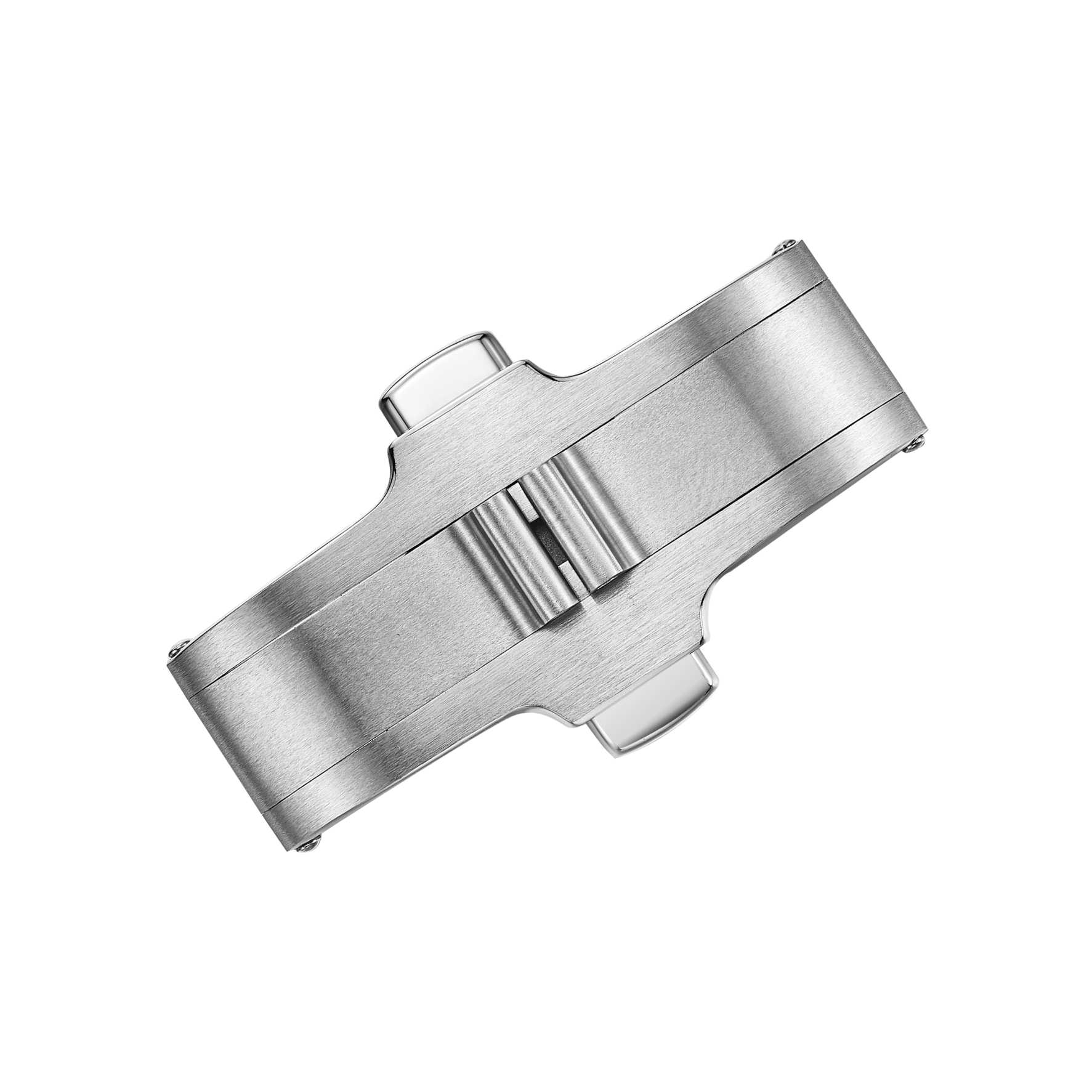
Why the Clasp Gets More Daily Contact Than Any Other Part
The clasp is the part of a watch many wearers touch more than any other. It gets handled in the morning, opened at lunch, and released at night. A bracelet may carry the design story and a case may carry the brand mark, but the clasp decides how the bracelet sits and whether that fit holds up over years of use.
A clasp that is slightly misaligned, slightly loose, or slightly sticky becomes the most irritating detail on the entire watch. It is rarely the part that draws attention in a photo. It is the part a wearer interacts with most. That is why clasp design deserves a place near the top of any bracelet specification list.
Tang Buckles: The Simple Standard That Still Needs Precision
The tang buckle is the default on many straps. A strap passes through the frame, a pin drops into a hole, and a keeper holds the tail. It has been in use for more than a century for a simple reason: it works, it is easy to replace, and it has few moving parts.
Simple does not mean loose. Pin tip geometry, hole spacing, and keeper tension all shape comfort. A pin that is too sharp can tear leather. A pin that is too blunt is hard to push through. Hole spacing that is too wide limits fine adjustment. On metal bracelets, a tang buckle relies on a stamped or machined frame whose opening must match the bracelet link width and leave enough clearance for the bracelet to pass through cleanly.
The limitation of a tang buckle is tightness. A wearer can only adjust within the range the strap holes allow. On leather, that is usually fine. On metal, it can mean removing or adding links to get a close fit, which takes tools and patience.
Deployment Clasps: Convenience With More Moving Parts
A deployment clasp changes how the bracelet closes. Instead of threading a pin through a hole, the wearer folds a mechanism that locks the bracelet at a set length. Fine adjustment is often built into the clasp through a slider or push pins on the inner side, letting the wearer tune the fit in small increments.
The convenience is obvious. A deployment clasp makes the bracelet faster to put on and take off, reduces daily wear on leather or metal, and gives a cleaner look on the wrist. The trade-off is complexity. A deployment clasp may include a folding arm, a locking plate, a button mechanism, or a spring bar. Each part adds one more point that can wear, stick, or loosen over time.
Fit also depends on how the bracelet length and clasp geometry match. If the angle at which the bracelet leaves the clasp does not match the wrist curve, the clasp can lift or dig in. That is not a design flaw. It is a specification mismatch between bracelet, clasp, and wrist geometry.
Butterfly and Push-Button Clasps: Hidden Hardware, Visible Quality
A butterfly clasp folds closed on itself to create a low profile. It shows up on metal bracelets and higher-end leather straps. Two arms meet at the center, and the closed shape looks almost seamless. The appeal is aesthetic and comfort. There is no bulky hardware under the wrist, and the bracelet line stays smooth.
Push-button release adds a security layer to the butterfly design. Two buttons must be pressed at the same time to open, which lowers the risk of accidental release. The cost is that the button mechanism itself needs precise tolerances. Buttons that are too soft can open under normal tension. Buttons that are too hard feel awkward or difficult to operate. Button travel and spring force both need to be specified, not left to feel.
Another consideration with butterfly clasps is bracelet length adjustment. Many butterfly clasps offer fine tuning through small screws or a sliding mechanism, but the range is usually narrower than a deployment clasp. For the wearer, that means bracelet length needs to be planned before production, not adjusted after delivery.
How Clasp Type Affects Wear, Fit, and Service Life
Each clasp type carries a different mix of durability, adjustment range, and wearing feel. The table below compares common types.
| Clasp type | Main structure | Adjustment range | Common trade-off |
|---|---|---|---|
| Tang buckle | Frame with pin and holes | Limited to hole spacing | Simple, but fit depends on strap holes |
| Deployment clasp | Folding arm with lock | Fine tuning via slider or push pins | Convenient, but more moving parts |
| Butterfly clasp | Two folding arms | Narrow, often screw or slide | Low profile, limited adjustment |
| Push-button deployant | Folding arm with buttons | Moderate, depends on design | Secure, but button feel needs control |
Wear patterns differ by type as well. A tang buckle wears mainly at the pin, holes, and keeper. A deployment clasp wears at the hinge and locking surfaces. A butterfly clasp wears at the center pivot and button mechanism. Knowing where wear concentrates helps set inspection points during sample evaluation.
A Field Case Where Clasp Fit Drove Returns
A brand launched a metal bracelet with a push-button deployment clasp. The sample was inspected and approved. Production began, and the first batches passed routine checks before shipment. A few weeks later, reports started coming back that the clasp felt slightly loose after a period of wear. The issue was not that the clasp opened. It was that the buttons felt slack and the locking plate showed slight movement.
The root cause was not a single part out of specification. It was the combined effect of button travel, spring preload, and locking plate thickness sitting within their individual tolerance ranges. Separately, each part passed. Together, they produced a clearance beyond what the sample had shown.
The fix required tightening the button travel tolerance and adding a functional check on the assembled clasp, not just dimensional checks on individual parts. The brand also asked for future sample reviews to include repeated open and close cycles that mimic normal use. The issue was caught before more units shipped, but the timing made a larger point: clasp quality depends on assembled function, not only part dimensions.
What to Specify Before a Clasp Goes Into Tooling
Clasp specifications are best locked before tooling is cut, when changes are still cheap. A few items are worth confirming early.
Clasp type and intended wearing feel. Whether the wearer wants fast on and off or a traditional tang feel shapes the whole structure.
Fit and clearance. The clasp must match bracelet width and thickness, with enough clearance for the bracelet to pass through or fold cleanly.
Locking mechanism. Buttons, folding arms, or snap fits all need defined travel, spring force, and release effort.
Surface finish. A clasp often shares the bracelet finish, but areas that see concentrated wear may need a different polish or brush specification.
Inspection criteria. Clasps should be function tested after assembly, not only dimensionally checked. Opening force, feel, play, and appearance all belong on the approved sample record.
Those details are expensive to change after tooling, which is why they belong in the clasp engineering review rather than in a production fix later.
Clasp quality depends on how well type, tolerance, surface finish, and assembled function are controlled from the first drawing. Burriva, short for Baoruihua (Dongguan) Precision Technology Co., Ltd., focuses on OEM watch components from its Dongguan production base, with in-house capabilities across dials, cases, bracelets, and buckles. Buckle production combines CNC milling, stamping, automated polishing, and dimensional inspection, with functional checks on assembled clasps. Brands planning a custom bracelet and clasp program can reach out to discuss specifications, adjustment requirements, and approval criteria.
Table of Contents
- Why the Clasp Gets More Daily Contact Than Any Other Part
- Tang Buckles: The Simple Standard That Still Needs Precision
- Deployment Clasps: Convenience With More Moving Parts
- Butterfly and Push-Button Clasps: Hidden Hardware, Visible Quality
- How Clasp Type Affects Wear, Fit, and Service Life
- A Field Case Where Clasp Fit Drove Returns
- What to Specify Before a Clasp Goes Into Tooling