
 EN
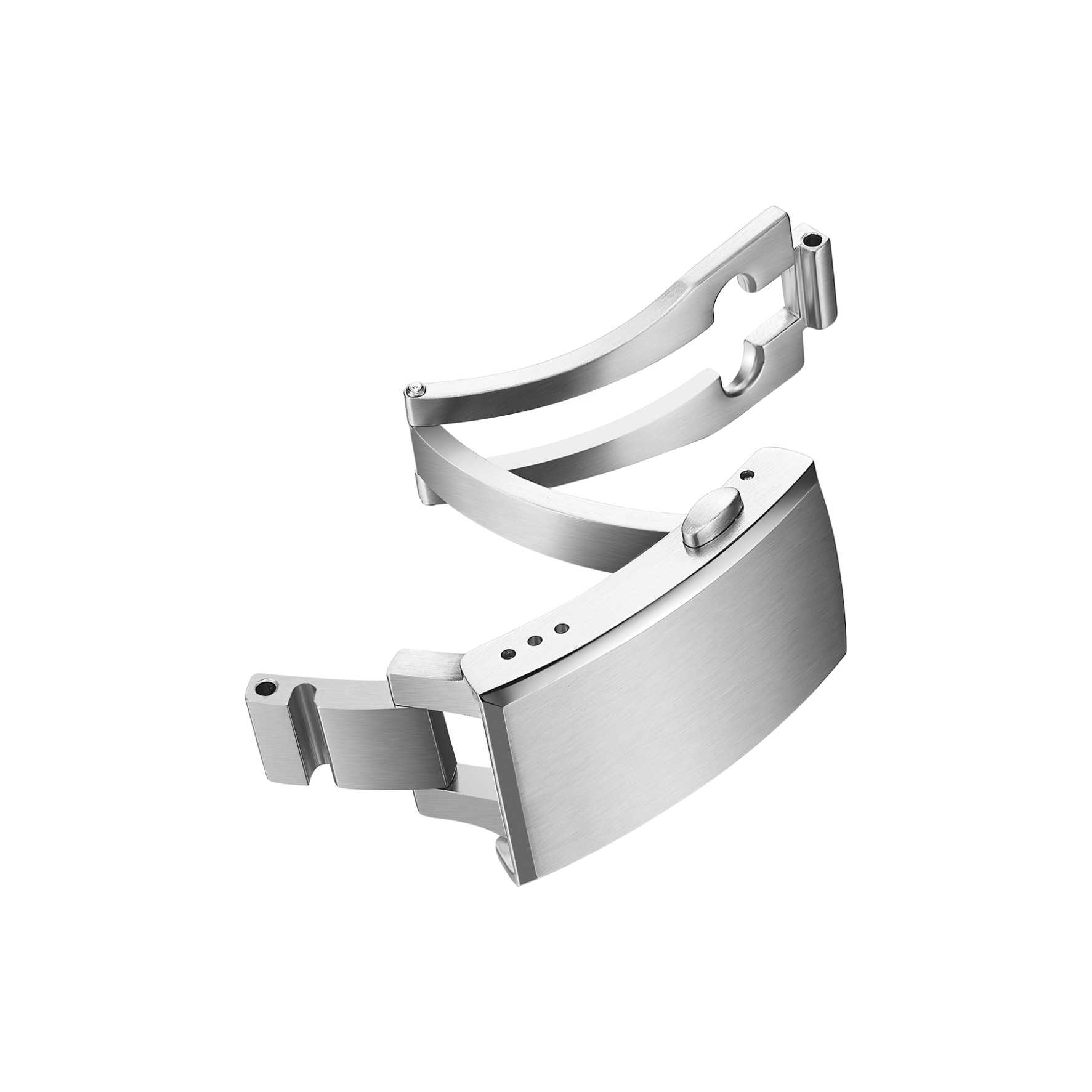
The clasp is the one part of a watch that gets touched constantly, several times a day when the watch goes on and comes off. It is also the single component most often linked to returns, not because it fails functionally, but because it feels wrong.
A button that feels slack, a lock plate that shifts slightly when closed, or a hinge that sounds dry on opening gives the wearer doubt. Most buyers do not send a watch in for repair over a clasp that feels off. They return it. For a brand, that means reverse logistics, inspection, reconditioning, and sometimes scrap.
It is tempting to blame the design when clasp returns climb, but on the manufacturing floor the root cause is usually narrower: individual parts sitting inside their specs, yet combining into a problem. That gap between part-level acceptance and assembly-level performance is where most clasp returns are born.
The Hidden Gap Between Part Tolerance and Assembly Feel
Tolerance stack-up matters more in clasp manufacturing than most people expect. A button may sit on the high side of its travel range, another on the low side, and a lock plate may add a few hundredths of a millimeter in thickness. Each part passes on its own. Together, button travel and engagement feel drift away from the approved sample.
This pattern shows up often in push-button deployment clasps, where button travel, spring preload, and lock plate clearance all interact. It also appears in butterfly clasps, where the center pivot alignment decides whether the clasp feels solid or slightly loose.
The fix is not tighter specs across the board. It is smarter specs. Tolerance windows that account for the worst-case combination perform better than windows that only tighten around nominal. Clasp performance is an assembly function, not a part attribute.
| Defect Pattern | Common Root Cause | Wearer Impact |
|---|---|---|
| Button feels slack | Button travel and spring preload mismatch | Insecure, unsafe feeling |
| Lock plate shifts | Cumulative thickness tolerance | Rattle, noise |
| Hinge binds | Pin and hole fit inconsistency | Hard to open, wear |
| Sharp edge | Burr left after polishing | Discomfort, scratches |
That table is not theory. It reads like a return report.
What Dimensional Inspection Catches and What It Misses
Coordinate measuring machines (CMM) are essential for part verification. They catch hole diameter, pin diameter, and surface profile deviations early in the production run. Without CMM checks, batch-to-batch drift goes unnoticed until assembly, and by then the parts are already made.
But dimensional inspection cannot catch feel. A clasp that passes every dimensional check can still feel loose because feel depends on how mating surfaces interact under load, which static measurement does not reveal.
That is why functional checks on assembled clasps matter. Repeated open and close cycles, measured button travel, and a trained inspector evaluating engagement force catch what dimensional inspection misses. The two inspection steps work together. Neither one alone is enough.
How Surface Finish and Feel Shape Consumer Perception
A clasp is a small part, but it gets touched constantly. A burr, a sharp chamfer, an uneven brush grain, or a polish that looks off under light sends a signal to the buyer about the whole watch.
Feel matters just as much. A button should move with predictable force. Opening should feel crisp. Closing should produce a clear click with no play. These details are not luxuries. They are consumer expectations, and they belong in the approved sample record.
For clasp surfaces, the high-contact areas are edges, buttons, and contact faces. Surface roughness specifications for those areas matter more than an overall cosmetic pass. A clasp can look fine on a display stand and still feel wrong in the hand, and that gap is where returns come from.
A Field Case Where Clasp Returns Traced Back to Stack-Up
A brand launched a metal bracelet with a push-button deployment clasp. The sample was inspected and approved. Production batches passed routine pre-shipment checks. Within a few weeks, returns started arriving with a consistent comment: the clasp felt loose after a period of wear.
The investigation found that no single part was out of specification. Button travel, spring preload, and lock plate thickness were all inside their individual tolerance windows. The combined clearance, however, exceeded what the sample had shown.
The fix required tightening the button travel tolerance and adding a functional check on the assembled clasp rather than relying on part inspection alone. The brand also asked for repeated open and close cycles on every new sample. The added steps took a few minutes per batch, but they caught the issue before more units shipped.
That case points to a broader pattern. In clasp manufacturing, assembled function is the real quality signal, and part-level inspection alone will not surface it.
Process Controls That Lower Return Rates
Clasp returns come down not because of a single fix, but because of a complete process. A few controls are worth putting first.
Define tolerance windows on worst-case combinations, not only around nominal.
Add functional checks on assembled clasps, not only part inspection.
Apply surface roughness specifications to high-contact areas, not just overall appearance.
Document sample approval with measurable and observable criteria.
Schedule in-process dimensional audits during longer production runs.
These steps are not complicated, but they require consistent execution. The factories that hold them steady are usually the ones with quality systems built for production reality rather than theoretical production. Returns drop when the clasp feels the same on day one and day three hundred, and that consistency is a manufacturing outcome, not a design promise.
Clasp return rates depend on how well tolerances, surface finish, and assembled function are controlled from the first drawing to final inspection. Burriva, short for Baoruihua (Dongguan) Precision Technology Co., Ltd., focuses on OEM watch components from its Dongguan production base, with in-house capabilities across dials, cases, bracelets, and buckles. Buckle production combines CNC milling, stamping, automated polishing, dimensional inspection, and functional checks on assembled clasps. Brands planning a custom buckle program can reach out to discuss tolerances, feel requirements, and approval criteria.