
 EN
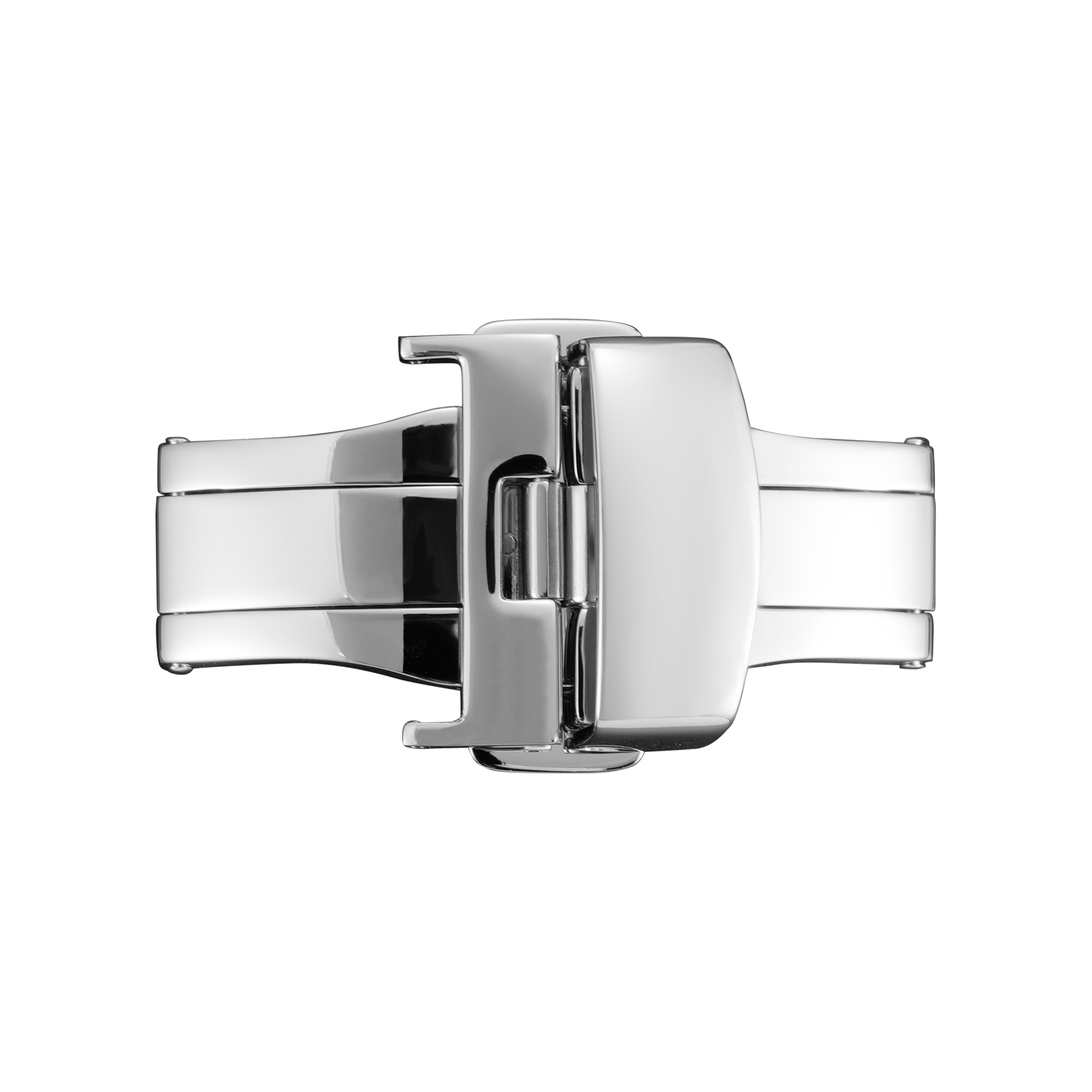
Why Buckle Finishing Deserves a Closer Look
Watch buckles get handled more than any other part of a watch. They open and close dozens of times a day, rub against desks, and collect sweat and skin oils. The finish on a buckle determines how it looks after a few months of wear. A mirror polish shows every scratch. A brushed surface hides them better. A coating that flakes at the edges makes the whole watch feel cheap. Finishing is not just about appearance. It affects corrosion resistance, tactile feel, and how well the buckle ages. Brands that treat finishing as an afterthought often pay for it in customer complaints.
Polishing Techniques That Create Mirror Surfaces
Polishing is the classic high-gloss finish. It starts with abrasive grinding to remove tool marks, then moves to progressively finer compounds. The final step uses a soft buffing wheel with a fine polish. The result is a mirror surface that reflects light sharply. Polishing works well on flat and gently curved surfaces. Deep recesses and sharp internal corners are harder to polish uniformly. Over-polishing can round off edges and blur crisp design lines. Polished buckles look premium out of the box, but they show fingerprints and micro-scratches quickly. This finish suits dress watches and display pieces more than daily beaters.
Brushed and Satin Finishes for Everyday Wear
Brushing creates a directional grain that scatters light. It hides scratches better than polish because the texture breaks up reflections. There are different brushing patterns. Straight-line brushing runs parallel to the buckle edges. Circular brushing creates a softer look. The grain direction matters. A change in direction between the buckle and the bracelet is immediately visible. Brushed finishes feel smooth but not slippery. They work well on sport watches and everyday wear. One limitation is that deep scratches can cut across the grain and stand out. Repairing a brushed finish is easier than repairing a polish, but matching the original grain takes skill.
PVD and Electroplating for Color and Durability
PVD, or physical vapor deposition, deposits a thin film of metal or ceramic onto the buckle surface. Common colors include black, gold, rose gold, and gunmetal. PVD coatings are harder than electroplated layers and resist wear better. Electroplating uses an electric current to deposit metal, usually gold or chrome. It is cheaper but softer. Both processes require thorough cleaning before coating. Any oil, dust, or oxide on the surface causes poor adhesion. Edge coverage is a common problem. Coatings tend to be thinner on sharp edges, which is where wear starts. Salt spray testing per ASTM B117 or ISO 9227 can reveal coating weaknesses before shipment.
| Finishing Option | Appearance | Scratch Resistance | Corrosion Resistance | Relative Cost |
|---|---|---|---|---|
| Mirror polish | High gloss | Low | Moderate | Low |
| Brushed satin | Matte with grain | Moderate | Moderate | Low |
| Sandblast | Flat matte | Moderate | Moderate | Low |
| Electroplating | Colored, shiny | Low to moderate | Moderate | Moderate |
| PVD coating | Colored, durable | High | High | Higher |
| Combination | Contrast | Varies | Varies | Higher |
Sandblasting and Matte Textures
Sandblasting uses compressed air to propel fine particles against the buckle surface. The result is a uniform matte texture with no directional grain. It hides scratches well and feels dry to the touch. Sandblasted surfaces can show oils from fingers, but they clean up easily. One risk is that the blasting media can embed in soft metals if the pressure is too high. Another is inconsistent texture if the nozzle distance or travel speed varies. Sandblasting is often used on tactical or outdoor styles. It pairs well with PVD coatings because the rough surface gives the coating something to grip.
Combining Finishes and Quality Checks
Many buckles use two or more finishes to create contrast. A polished release button on a brushed body. A sandblasted center with polished edges. Combining finishes adds visual interest but also complexity. Each additional step increases the chance of contamination or misalignment. The boundaries between finishes must be sharp. Polish bleeding into a brushed area looks sloppy. Quality checks for finishing include visual comparison against approved samples, coating thickness measurement, and adhesion testing. A case from a buckle production run in southern China shows why process control matters. A batch of PVD-coated buckles passed initial inspection but showed flaking at the edges after a few weeks of simulated wear. The cause was not the coating itself. The cleaning line had a worn rinse nozzle, leaving a thin residue on the edges. The PVD layer adhered to the residue instead of the metal. Replacing the nozzle and adding a plasma clean step solved the problem. The fix was cheap, but only because the factory tested before shipping.
For brands that need consistent finishing across buckles, bracelets, and cases, BURRIVA has built its production around these external components. With in-house polishing, brushing, sandblasting, and PVD lines, along with documented inspection routines, the company supports OEM projects that demand repeatable results. That focus on finishing detail helps brand owners avoid the small flaws that undermine a product's perceived quality.