
 EN
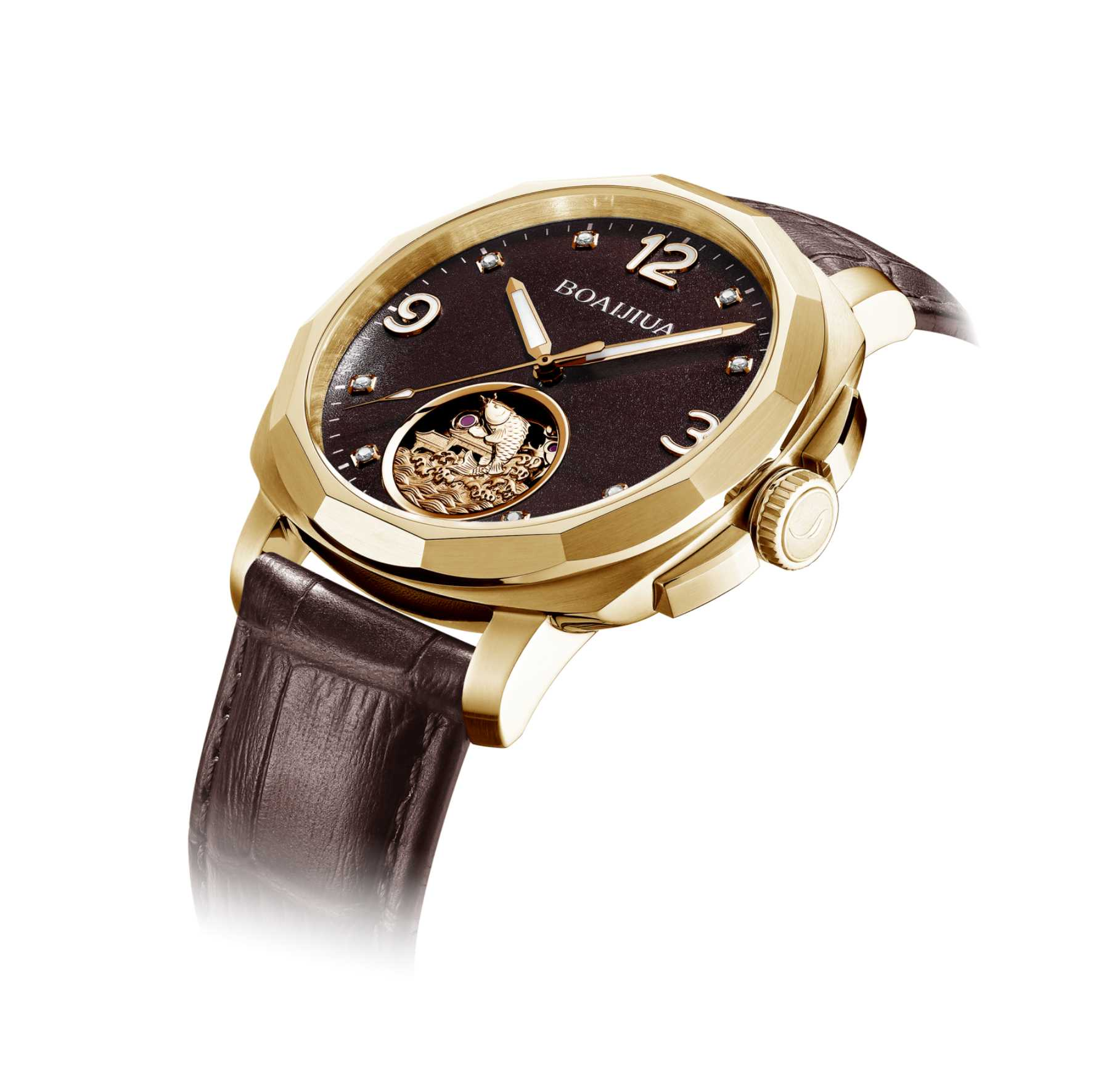
A highly polished clasp produces specular reflection, the mirror-like effect that intensifies incident light and creates a bright, sharp highlight. Brushed or satin-finished metal behaves differently. It scatters light across multiple angles, producing diffuse reflectance and a softer, more uniform glow. A polished surface can reach high reflectivity, while fine brushing reduces direct glare considerably. That optical difference shapes how a clasp is perceived before anyone touches it.
Crisp, distortion-free reflections suggest careful surface preparation and consistent material. The quieter luster of a brushed finish reads as contemporary and understated. Many watchmakers pair both finishes on the same clasp to create contrast, using polish on raised areas and brushing on flat or high-contact faces. The eye reads that contrast as intentional design, not accident.
Why Brushed Surfaces Hide Scratches Better Than Polished Ones
Micro-topography decides how visible a scratch becomes. Brushed steel has parallel micro-grooves that scatter light in many directions, which masks shallow scratches because the eye integrates the irregular reflections rather than fixating on one narrow defect. Scratches that run along or across those grooves tend to disappear into the texture. That makes brushed clasps more forgiving in daily wear.
Mirror-polished surfaces sit at the opposite extreme. They approach a very flat surface, so any disruption breaks the continuity of the reflection and shows up as a sharp, high-contrast line. That sensitivity demands careful execution at every stage, which is part of why mirror polish is treated as a mark of precision. For high-friction zones like folding tongues, brushing often remains the practical choice because it preserves visual integrity over time without frequent refinishing.
| Finish type | Light behavior | Scratch visibility | Common use on clasps |
|---|---|---|---|
| Mirror polish | Specular, sharp reflection | High, flaws stand out | Raised logos, bevels, display faces |
| Brushed or satin | Diffuse, scattered light | Lower, texture masks marks | Tongues, flat faces, high-contact zones |
| Bead blast | Even matte scatter | Moderate, hides fine marks | Accent panels, recessed areas |
| Combination | Contrast between zones | Depends on placement | Full clasp assemblies with mixed finishes |
Coating Technologies and Long-Term Appearance Stability
A clasp is a primary contact point, so its coating has to survive daily friction without losing its original look. Two common technologies are PVD, or physical vapor deposition, and DLC, or diamond-like carbon. Each offers a different balance between decorative appeal and long-term performance.
PVD deposits a thin film that delivers rich, saturated color and strong initial visual impact. Under mechanical stress, though, PVD can struggle. Constant rubbing against skin or the folding mechanism can create micro-abrasions that scatter light and produce a cloudy haze. Uneven wear on sharp edges can lead to visible color shift, and adhesion can weaken under repeated load. When the PVD layer fails, the raw substrate shows through, and the clasp loses its refined appearance quickly.
DLC addresses some of those weaknesses. A carbon-based film with high hardness improves scratch resistance and holds a deep, uniform dark finish over extended use. Its dense structure resists the micro-abrasions that cause hazing, which helps maintain a low-friction, optically consistent surface. DLC also offers good chemical inertness, which helps against corrosion from sweat and environmental exposure. The trade-off is cost and process complexity, so DLC is usually specified where appearance stability matters most.
Geometric Challenges in Achieving Uniform Surface Texture
Complex clasp geometry limits finish consistency in ways that are easy to underestimate. Pivot pins, tongue arms, and micro-bevels sit in recessed or angled positions that block direct access for brushing tools or line-of-sight PVD deposition. Standard fixturing cannot expose every surface at the same angle, so shadowed zones appear where brushing pressure drops or coating thickness thins.
On micro-bevels, small misalignments change how the abrasive contacts the surface, which produces inconsistent grain patterns. During PVD, hidden areas may receive uneven coverage and look hazier or more translucent than fully exposed faces. That visual mismatch between components undermines the overall impression, even when each part passes its own inspection. Achieving uniformity across a full clasp assembly requires custom fixturing and tight batch-to-batch repeatability, which is especially demanding in smaller production runs where setup accuracy has to be reproduced consistently.
Durability Trade-offs Between Gold Plating and Hardened Finishes
Gold-plated clasp components wear faster than dials, even when the plating thickness is the same, because the mechanical demands are completely different. The clasp tongue endures concentrated contact pressure and repeated sliding against the buckle body, which generates far more micro-abrasion than the passive exposure a dial sees. Decorative gold plating is typically thin, and high-friction zones erode that layer quickly, exposing base metal underneath.
A clasp tongue can cycle many more times per day than a dial surface is ever touched. To manage this, selective hardening and localized thickening of plating are often applied to high-wear zones. That approach balances appearance with functional durability. It is not a perfect solution, and gold plating on high-contact areas will still show wear over time. The realistic goal is to slow the visible degradation and keep the wear pattern even, rather than pretend the coating will last indefinitely.
What These Trade-offs Mean for Clasp Specifications
Surface treatment decisions on a clasp are never purely aesthetic. They involve a trade-off between light behavior, scratch visibility, coating durability, geometry, and cost. A mirror polish looks striking but shows every flaw. A brushed finish hides wear but reads quieter. PVD offers color options but can haze under friction. DLC holds its look longer but adds process cost.
Match the finish to the contact zone, not to a single overall look.
Specify surface roughness for high-contact areas, not just overall appearance.
Confirm coating adhesion on the actual substrate before full production.
Test assembled clasps under repeated open and close cycles.
Document finish criteria with photo references and measurable limits.
Clasp appearance depends on how well finish type, coating choice, geometry, and wear zones are planned from the first drawing. Burriva, short for Baoruihua (Dongguan) Precision Technology Co., Ltd., focuses on OEM watch components from its Dongguan production base, with in-house capabilities across dials, cases, bracelets, and buckles. Buckle production combines CNC milling, stamping, automated polishing, and dimensional inspection, with surface finish review and functional checks on assembled clasps. Brands planning a custom buckle program can reach out to discuss finish specifications, wear zone requirements, and approval criteria.