
 EN
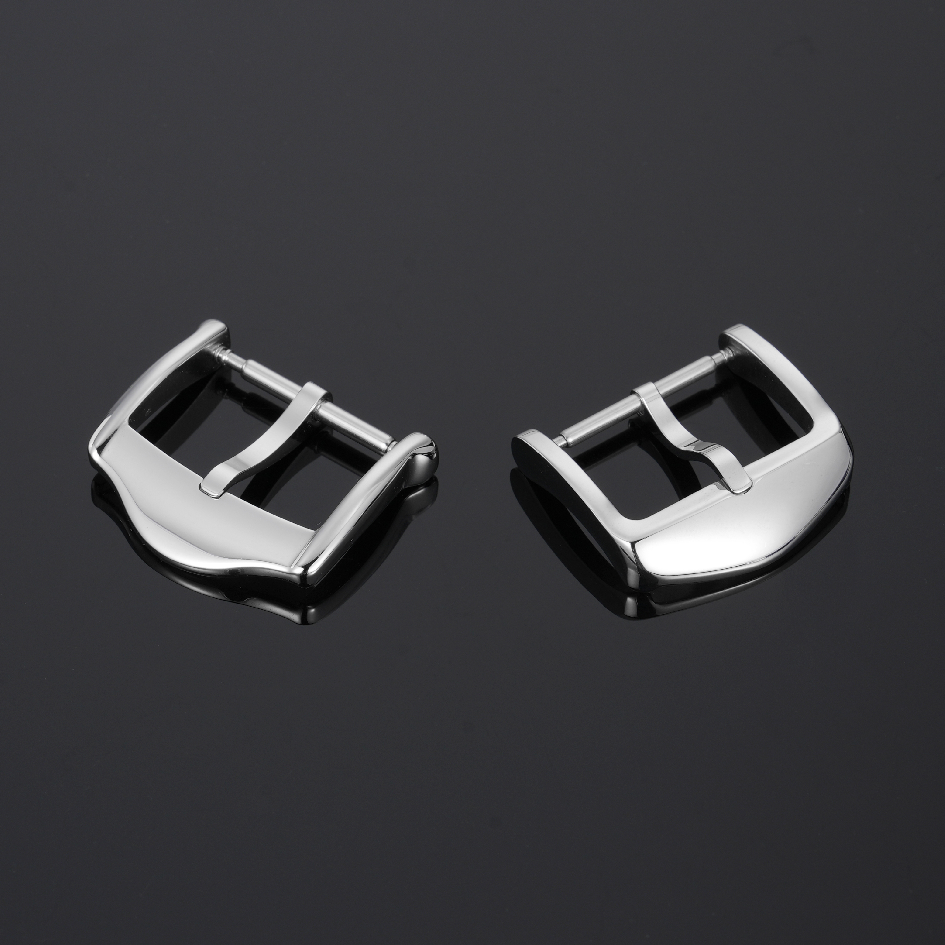
Material selection decides how a buckle ages, how it feels against skin, and how well it holds its finish. 316L stainless steel remains the common standard, valued for corrosion resistance, biocompatibility, and predictable machining behavior. Its low carbon content limits carbide precipitation during welding, which helps maintain structural consistency over time.
Grade 5 titanium appeals to brands chasing weight reduction and hypoallergenic properties. It offers a strong strength-to-density ratio, but its lower ductility demands more careful CNC tooling and tighter process control. Holding tolerances on titanium buckle components takes experience, and not every supplier has it.
PVD coating adds another layer of decision-making. The process deposits a thin, wear-resistant film that can deliver gold, black, or rose-gold tones while raising surface hardness. The durability of that coating depends heavily on pre-treatment. Brushing, polishing, or electropolishing before deposition decides how well the film adheres and how long it resists scratching and fading. A PVD finish applied over a poorly prepared surface will look fine at first and show problems later.
How Production Regions Compare for Buckle Sourcing
Global sourcing hubs each carry a different mix of cost, precision, and design capability.
China, especially the Greater Bay Area, leads in cost-efficient production with vertically integrated supply chains. Scaling is fast and pricing is competitive, but supplier tiers vary in communication and consistency, so vetting matters.
Japan excels in micro-mechanical precision. Decades of fine metalworking experience show up in dimensional accuracy, mirror-like finishes, and reliable spring mechanisms. Japanese workshops handle titanium and thin-gauge stainless steel well.
Switzerland remains the benchmark for luxury integration. Swiss-made buckles follow strict finishing standards and are engineered to match high-end cases, often with precious metals or custom engravings.
Italy brings design-led craftsmanship, emphasizing ergonomic innovation and hybrid constructions like leather-integrated clasps or sculptural folding mechanisms.
Each region has trade-offs. Chinese efficiency may require tighter QA oversight. Swiss and Italian output commands premium pricing. Japanese capacity can tighten during sudden volume surges. Aligning brand priorities with the right hub is the foundation of a sourcing decision.
| Region | Main strength | Common trade-off |
|---|---|---|
| China | Cost efficiency, fast scaling | Supplier tier variance |
| Japan | Micro-precision, fine finishing | Capacity limits at peak |
| Switzerland | Luxury finishing standards | Premium pricing |
| Italy | Design-led craftsmanship | Higher cost, smaller runs |
Certifications and Testing That Actually Matter
A supplier’s compliance framework affects safety, longevity, and regulatory readiness. ISO 9001 certification signals a mature quality management system covering raw material inspection, traceability, and final finishing. It correlates with lower defect rates through standardized process controls.
For skin-contact hardware, material safety is not optional. REACH compliance verifies the absence of restricted substances like nickel, lead, and cadmium in base alloys and plating layers. RoHS applies where smart-module integration is involved. Certifications should be validated through third-party databases, not just accepted from supplier-provided logos.
In-house testing protocols matter just as much. Common checks include salt-spray corrosion testing per ASTM B117, pull-strength assessment on deployants, and repeated open-close cycles that simulate real use. Ask for documentation outlining test methodology, pass/fail criteria, and sample reports tied to the specific design. Transparency here reflects engineering discipline, not marketing.
Red Flags That Show Up Before a Part Ships
Even certified manufacturers can reveal operational weaknesses early.
Inconsistent communication is the first signal. Delayed responses, unexplained contact changes, or vague timelines suggest internal disorganization that will scale with order size. Sample defects are the second. Uneven brushing, micro-burrs on edges, color variation in PVD coatings, or misaligned spring pins are not first-run quirks. They reflect weak process control. Always insist on pre-production samples made with the actual production tooling, plating line, and finishing setup intended for the bulk run. Hand-finished prototypes are misleading.
Unverifiable facility claims are the third. Refusal to share a live video walkthrough, a virtual-office address, or an inability to produce export records should pause the conversation. Reputable manufacturers welcome responsible audits, whether in person or guided remotely.
Matching Sourcing Strategy to Order Scale
Sourcing strategy should align with production scale, and each tier carries different cost and flexibility implications.
Small-batch orders often carry higher per-unit costs because fixed setup expenses are spread across fewer units. Custom tooling is the largest line item, and shared tooling pools can reduce entry barriers at the cost of design exclusivity. Lead times may be shorter when existing molds are used, but fully custom designs still need tool fabrication and validation before production.
High-volume orders unlock economies of scale through lower unit costs, dedicated tooling, and optimized process flow. They also demand stronger forecasting discipline. Initial tooling lead times extend, and bulk inventory requires shelf-life planning, especially for plated components prone to tarnish. Phased delivery schedules aligned with assembly timing can reduce overstock risk without compromising launch dates.
Success hinges less on order size than on partnership maturity. Manufacturers who treat a project as a collaborative engineering effort, not a transaction, tend to deliver more predictable results.
What to Confirm Before Committing to a Buckle Supplier
A few checks belong on every sourcing checklist before a purchase order is issued.
Confirm which materials are sourced from regular partners and which are spot bought.
Verify that sample approval criteria include measurable surface and dimensional limits.
Ask how PVD or plating adhesion is tested on the actual substrate.
Request documentation of in-process inspection steps, not just final inspection.
Confirm how tooling wear is monitored during longer production runs.
Buckle sourcing outcomes depend on how well material choice, regional capability, certification, sampling, and process control are matched to the project. Burriva, short for Baoruihua (Dongguan) Precision Technology Co., Ltd., focuses on OEM watch components from its Dongguan production base, with in-house capabilities across dials, cases, bracelets, and buckles. Buckle production combines CNC milling, stamping, automated polishing, dimensional inspection, and functional checks on assembled clasps. Brands planning a custom buckle program can reach out to discuss material options, finish requirements, and approval criteria.