
 EN
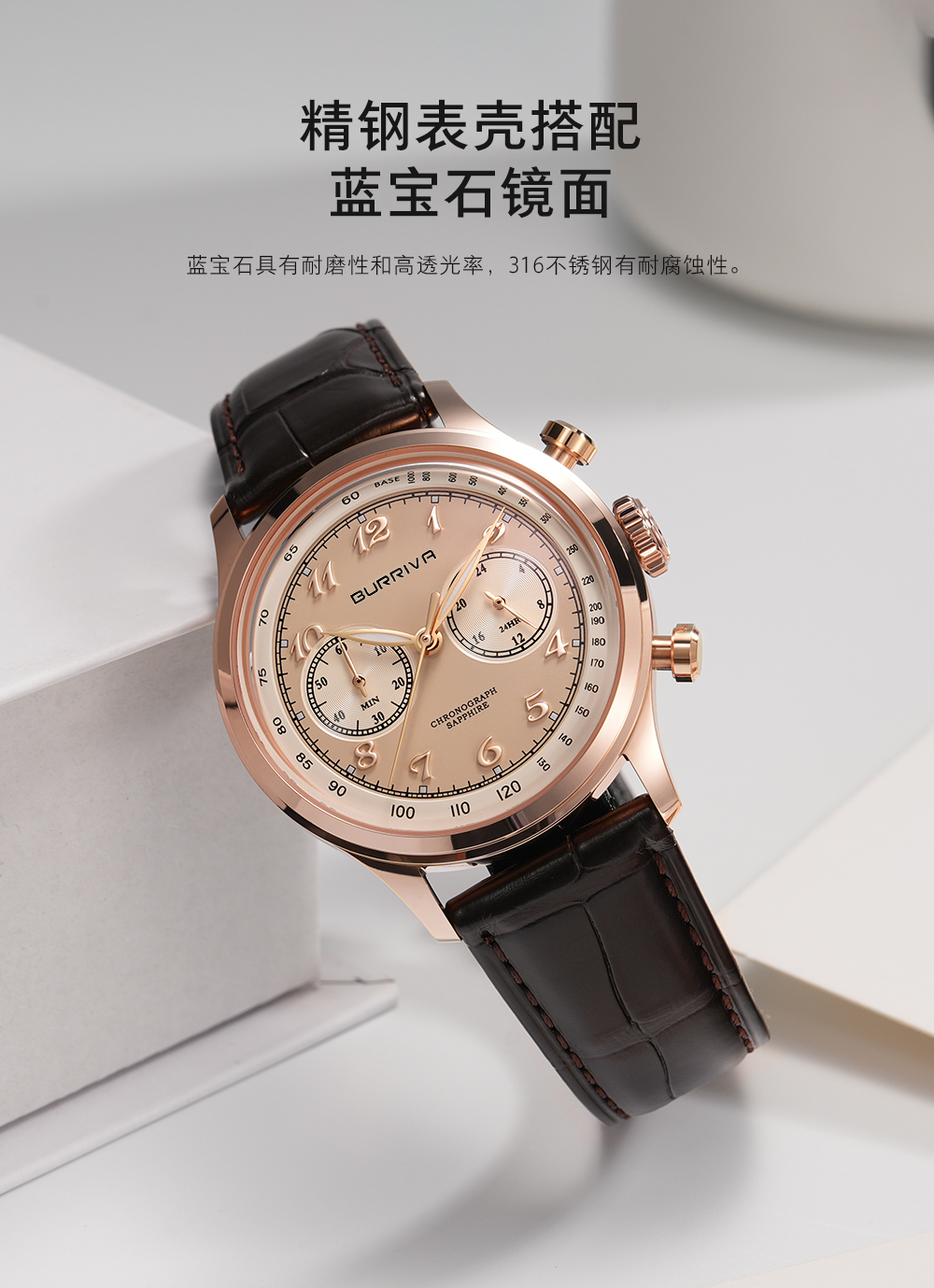
A bracelet takes constant abrasion, perspiration, and environmental exposure. Stainless steel like 316L is popular for good reason: it resists corrosion, machines predictably, and takes surface treatment well. But its surface hardness is limited. Daily contact with desk edges, clothing, and cleaning cloths can produce fine scratches that gradually dull the finish.
For a premium watch, that dulling matters. It changes how the bracelet reads, and it can affect how the watch is valued over time. Surface treatment is the layer that decides whether a bracelet keeps its appearance or shows wear within the first year.
How Coatings Raise Surface Hardness
Hard coatings such as PVD and DLC change the surface behavior of the metal. PVD, or physical vapor deposition, deposits a thin film that can raise surface hardness several times above untreated stainless steel. DLC, or diamond-like carbon, goes further by combining diamond-like hardness with graphite-like lubricity, which is why it is often specified for high-use bracelets.
Both processes bond at the atomic level rather than sitting on the surface like traditional electroplating. That bonding is what keeps the coating from flaking or peeling under normal wear. A properly applied coating does not just look durable. It changes how the bracelet responds to friction.
The trade-off is process sensitivity. A coating applied over a poorly prepared surface will look fine at first and show problems later. Pre-treatment, including brushing, polishing, or electropolishing, decides how well the film adheres and how long it holds.
Why Passivation and Electropolishing Matter Beneath the Surface
Coatings protect the outside. Corrosion defense starts underneath.
Electropolishing is an electrochemical process that removes a thin layer of metal from the surface. Unlike mechanical buffing, it targets surface peaks, eliminating crevices, pits, and embedded contaminants that can become corrosion initiation sites. As the current flows, iron atoms are preferentially dissolved, leaving a chromium-enriched surface.
Passivation follows. A citric or nitric acid treatment strips residual free iron and helps the passive chromium oxide layer reform. The result is a denser, more uniform oxide barrier than an untreated surface. In chloride-rich environments such as coastal air or perspiration, that barrier is what slows pitting corrosion.
For a bracelet exposed to salt, skin acids, and constant friction, the combination of electropolishing and passivation extends the window before visible corrosion appears. It is not a permanent shield. It is a delay that buys years of appearance stability.
| Treatment | What It Does | Main Benefit | Main Limitation |
|---|---|---|---|
| PVD coating | Deposits a thin hard film | Higher surface hardness, color options | Adhesion depends on pre-treatment |
| DLC coating | Carbon-based hard film | High scratch resistance, dark finish | Higher process cost |
| Electropolishing | Removes surface peaks and contaminants | Fewer corrosion initiation sites | Requires process control |
| Passivation | Rebuilds chromium oxide layer | Better corrosion resistance | Not a coating, no color change |
Real-World Wear and What It Shows
Hardness numbers matter, but field behavior matters more. A bracelet with a properly applied coating tends to hold its original color and sheen longer under clothing friction, salt exposure, and mild acid contact. The visible difference shows up in the edges and high-contact zones first, which is where an untreated surface starts to show wear earliest.
That is why the higher upfront cost of surface treatment often pays back through fewer appearance complaints. A bracelet that keeps its finish reduces after-sales issues and protects the watch's perceived quality. The gain is not infinite. Coatings wear at the edges, and any surface will eventually show use. The realistic goal is to slow visible degradation and keep the wear pattern even.
A common mistake is to treat coating as a substitute for good base material or good process control. It is not. A coating applied over a poorly finished substrate will fail faster than a coating applied over a well-prepared one, even when the coating thickness is the same.
A Field Case Where Pre-Treatment Decided the Outcome
A brand ordered a batch of DLC-coated bracelet links. The first samples looked strong, and production began. A few weeks after shipment, reports came back that some links showed hazing and edge wear earlier than expected.
The investigation found that the coating process itself was fine. The problem was the substrate preparation. Some links had been polished to a slightly different surface profile before coating, and the coating had bonded less evenly on those surfaces. The difference was invisible at the sample stage and only showed up after wear.
The fix required tightening the pre-treatment specification, adding a surface profile check before coating, and running a functional wear test on coated samples. The coating stayed the same. The process around it changed.
That pattern is common. The coating gets the attention. The preparation steps that determine its performance get skipped.
What to Specify Before Committing to a Surface Treatment
Surface treatment specifications belong in the project file before tooling and production scheduling.
Coating type and target color, with a physical reference sample.
Surface preparation steps and the surface profile they must produce.
Adhesion test method and acceptance criteria.
Scratch and wear test method applied to coated parts.
Corrosion test method for passivated and coated surfaces.
Inspection criteria and AQL level for appearance.
Testing coated samples under realistic wear conditions is the step most often skipped. Sample appearance under clean lighting does not predict how a coating behaves after weeks of contact with clothing, perspiration, and desk surfaces.
Bracelet durability depends on how well base material, surface preparation, coating choice, and inspection criteria are matched from the first drawing. Burriva, short for Baoruihua (Dongguan) Precision Technology Co., Ltd., focuses on OEM watch components from its Dongguan production base, with in-house capabilities across dials, cases, bracelets, and buckles. Bracelet production combines CNC milling, stamping, automated polishing, and dimensional inspection, with surface finish review and functional checks on assembled bracelets. To discuss bracelet surface treatment specifications, testing requirements, and approval criteria, get in touch with Burriva.