 EN
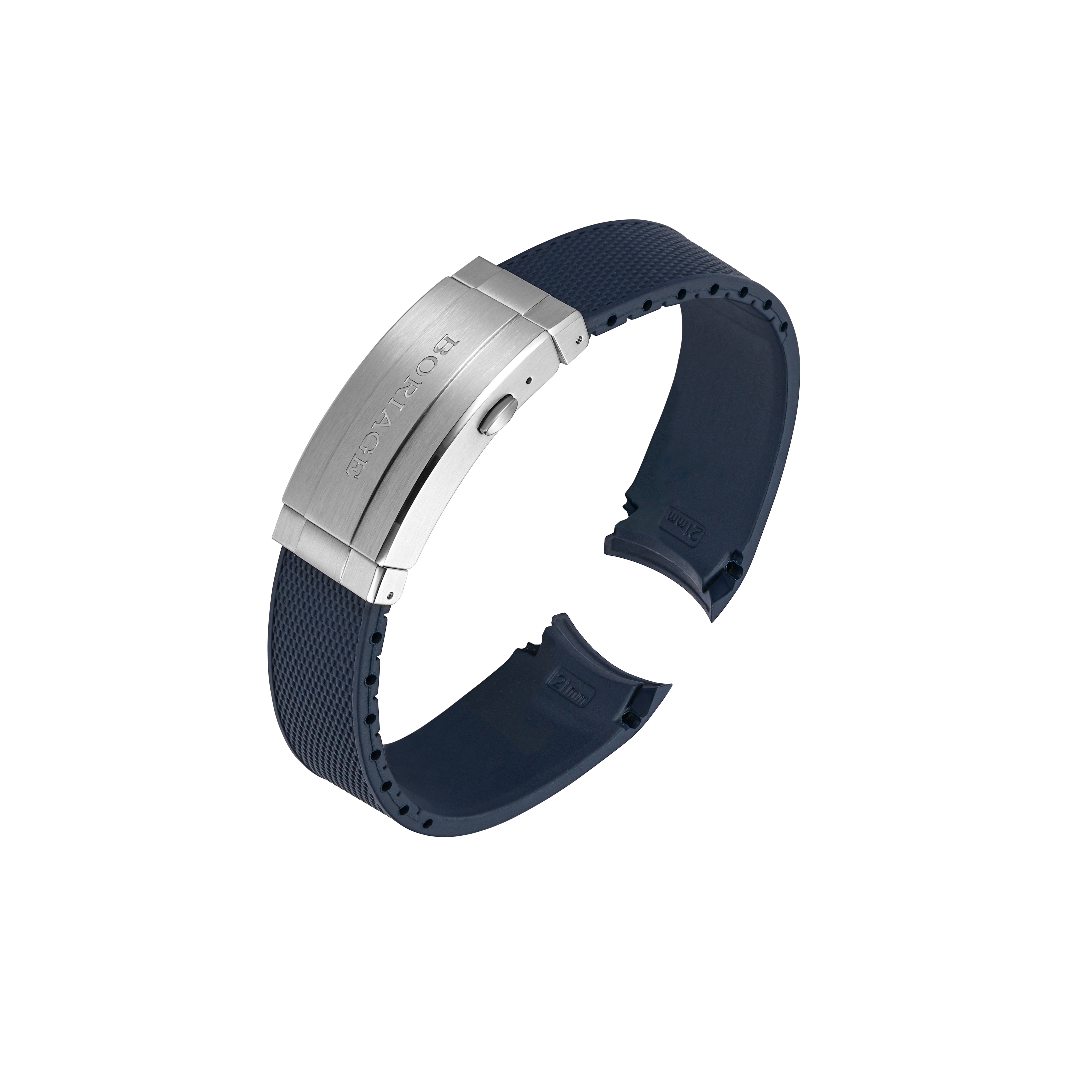
A logo on a buckle is not decoration. It is one of the few brand marks a wearer touches directly. A dial logo gets seen. A buckle logo gets felt. That tactile connection makes placement, depth, and finish more important than the surface area would suggest.
A logo that sits too shallow looks washed out under grazing light. A logo that cuts too deep can collect dirt, show burrs, and weaken the surrounding surface. A logo that is not aligned consistently across a production batch undermines the whole point of using it as a brand signal.
The Main Methods for Putting a Logo on a Buckle
Buckle logo customization usually follows one of four paths. Each has a different cost structure, tooling requirement, and appearance outcome.
Laser engraving is the most flexible. A focused beam removes material from the surface, producing a mark that can be shallow or deep depending on power and passes. It requires no new mold when the buckle shape already exists, which makes it the lowest-entry option for brands testing a design.
Stamping uses a die to press the logo into the metal during forming. The tooling cost is higher, but the per-unit cost drops at volume, and the mark sits at the same depth every time. Stamping suits high-volume production where consistency matters more than flexibility.
CNC engraving cuts the logo with a rotating tool. It holds fine detail well and handles complex logo geometry without a dedicated die. The trade-off is speed. CNC is slower per part and more expensive at high volume.
Chemical etching uses a mask and an acid bath to remove material. It handles intricate shapes and fine lines that stamping cannot easily produce. The process requires careful control of bath chemistry and mask alignment, and edge definition depends on how well those variables are managed.
| Method | Tooling Requirement | Best For | Main Limitation |
|---|---|---|---|
| Laser engraving | None if shape exists | Low to mid volume, flexible designs | Depth can vary across units |
| Stamping | Dedicated die | High volume, consistent depth | Higher upfront tooling cost |
| CNC engraving | Fixture only | Fine detail, complex logos | Slower per part |
| Chemical etching | Mask and bath setup | Intricate shapes, fine lines | Process control sensitive |
How Buckle Type Shapes Logo Placement
Different buckle types offer different surfaces for a logo, and each has its own constraints.
A tang buckle usually places the logo on the frame face or the tongue. The frame face is visible when the buckle is closed, which makes it the preferred location for most brands. The tongue is smaller and gets more contact, so a logo there may wear faster.
A deployant clasp has more surface area. The logo can sit on the top plate, the release buttons, or the folding arms. Top plate placement is common because it stays visible when worn. Button placement is used when the brand wants the logo to appear during operation, but button surfaces are small and high-contact, which limits how fine the logo can be.
A butterfly buckle folds in the center, so the logo is often placed on one of the outer plates. The center pivot area is not suitable because it moves and wears against the opposite arm.
For all types, the logo needs to sit where the surface is flat enough to hold consistent depth. Curved or angled areas cause uneven engraving, and that unevenness shows up as inconsistent legibility across the batch.
What Defines Good Logo Engraving Quality
Logo quality on a buckle comes down to a few measurable and observable factors.
Depth consistency. The logo should sit at the same depth across the entire mark and across all units in a batch.
Edge definition. The boundary between the engraved area and the surrounding surface should be clean, without burrs or rolled edges.
Fill and contrast. Depending on the finish, the logo may be left raw, filled with paint, or contrast-coated. The fill should be even and should not bleed beyond the engraved boundary.
Alignment to the buckle geometry. The logo should sit centered or positioned per the drawing, with no rotation or offset.
Surface finish surrounding the logo. The engraving process can affect the surrounding finish, especially on polished surfaces. The finished area should match the approved sample.
Documenting these criteria with photo references and measurable limits prevents the ambiguity that leads to disputes later.
A Field Case Where Logo Depth Drift Caused a Batch Issue
A brand ordered laser-engraved tang buckles using a supplier's existing mold. The sample looked correct. Production began, and the first batches passed.
Several weeks later, a customer complaint came back showing a logo that looked faint compared to earlier units. The investigation found that the laser power had drifted over a long production run, and the engraving depth had gradually become shallower. The supplier had no in-process depth check, so the drift went unnoticed until the complaint surfaced.
The fix required adding a depth measurement at defined intervals during the run, plus a first-article inspection against the approved sample. The laser settings themselves did not need to change. The missing step was verification.
That pattern shows up often in logo customization. The process works. The monitoring does not.
What to Specify Before Logo Tooling Begins
Logo specifications belong in the project file before any tooling or production scheduling starts.
Logo file in vector format with defined line weights.
Engraving method and target depth range.
Fill or contrast treatment, if any, with a color reference.
Placement location on the buckle, with a marked-up drawing.
Alignment tolerance relative to the buckle centerline.
Inspection criteria with photo references and depth measurement method.
First-article approval requirement before full production.
These items are cheap to define at the start. They are expensive to resolve after a batch has shipped with inconsistent engraving.
Buckle logo outcomes depend on how well method, depth, placement, and inspection criteria are defined before tooling. Burriva, short for Baoruihua (Dongguan) Precision Technology Co., Ltd., focuses on OEM watch components from its Dongguan production base, with in-house capabilities across dials, cases, bracelets, and buckles. Buckle production combines CNC milling, stamping, automated polishing, dimensional inspection, and functional checks on assembled clasps. To discuss buckle logo specifications, engraving depth requirements, and approval criteria, get in touch with Burriva.