The global independent watch landscape in 2026 is no longer a niche corner of horology. It is a structurally mature, multi-hundred-million-dollar market segment with its own supply chain logic, consumer demographics, and competitive frameworks. Watch microbrands have grown from Kickstarter-era catalog assemblers into serious challengers occupying the $300 to $3,000 retail bracket.
Understanding the current market structure, mapping the full supply chain, and identifying where China's manufacturing advantage fits into this ecosystem is essential strategic intelligence for any founder, investor, or supply chain manager operating in this space.
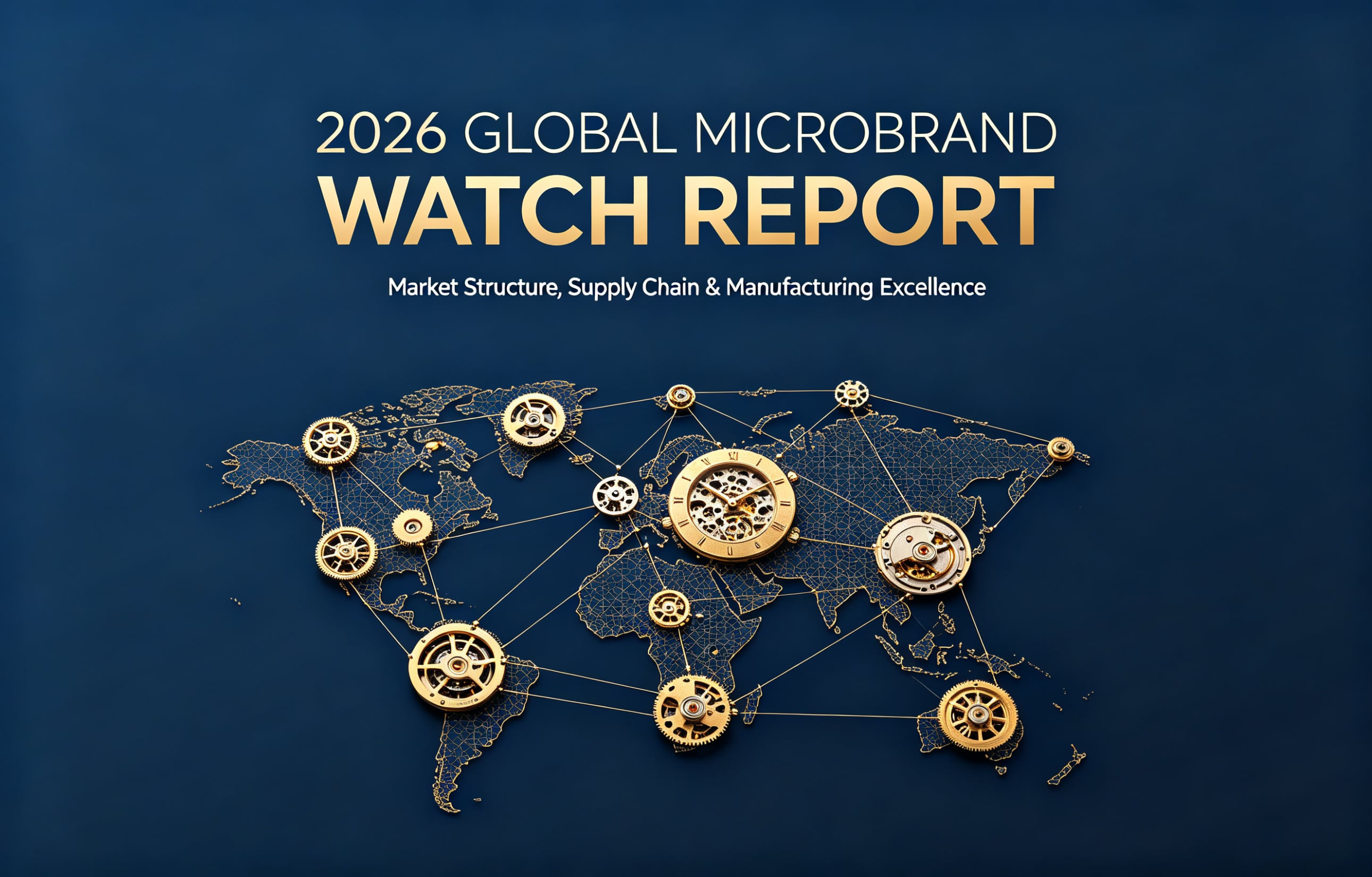
The current market cycle reflects a clear segmentation across three independent brand archetypes that each operate with distinct supply chain logic.
At the top tier, Scale Independents have surpassed $40 million to $50 million in annual revenue by consolidating exterior component production under a single high-tier Asian manufacturing anchor. Their competitive moat is built not on movement exclusivity but on the dimensional precision of every case bevel, the uniformity of every sunburst dial, and the tactile resistance of every bracelet clasp.
In the mid-tier, Capsule Droppers use time-gated pre-order mechanics to eliminate inventory carrying costs, funding production upfront and relying on offshore precision manufacturing for component complexity while maintaining localized assembly for regulatory compliance.
At the entry-to-growth tier, Neo-Classical Revivalists compete by replicating mid-century case profiles with verifiable manufacturing authenticity, sourcing from OEM partners with deep decade-long expertise in manual finishing disciplines.
The defining supply chain shift of 2026 is the decisive migration from movement-centric to exterior-centric differentiation. As ETA, Sellita, and Miyota movements have become commoditized across the independent market, the manufacturing sophistication of the Habillage — the case, dial, hands, bracelet, and clasp assembly — now determines a brand's market positioning ceiling.
Fragmented multi-vendor sourcing, the standard approach for early watch microbrands, has proven catastrophically vulnerable to tolerance stack-up. A case machined in one factory, a dial produced in a second, and a bracelet manufactured in a third invariably introduces micro-dimensional variances that result in loose end-links, mismatched steel surface tones, and dial foot misalignments.
The 2026 benchmark is end-to-end exterior integration: all Habillage components engineered and quality-controlled under a single unified manufacturing umbrella.
China's role in the global microbrand supply chain has undergone a fundamental repositioning. The narrative of China as a source of low-cost, catalog components is factually obsolete in 2026.
The true competitive advantage now resides in a specific cluster of precision manufacturing facilities — many carrying two decades of continuous horological production heritage — with documented capability in Grade 5 titanium CNC machining, high-brightness 904L mirror polishing, dust-free dial cleanroom production, and standardized 100-meter water resistance testing infrastructure.
These are not commodity capabilities. They represent the cumulative output of sustained capital investment in multi-axis CNC equipment, quality management systems, and engineering talent development that cannot be replicated by lower-cost supply chains in Southeast Asia on a short timeline.
For microbrand founders evaluating manufacturing partners in 2026, the decision framework must extend well beyond per-unit pricing.
In-house DFM engineering capability is the first critical filter: a factory that can review a structural sketch, simulate dial clearance and handset stack tolerances in 3D CAD, and deliver a production-ready DXF within days compresses the prototype-to-production cycle by months.
tandardized quality control infrastructure is the second criterion: factories with calibrated spectral material analyzers, automated torque-testing equipment for crown and caseback integrity, and documented IQC-to-OQC traceability systems provide the audit chain that protects a D2C brand's return rate metrics.
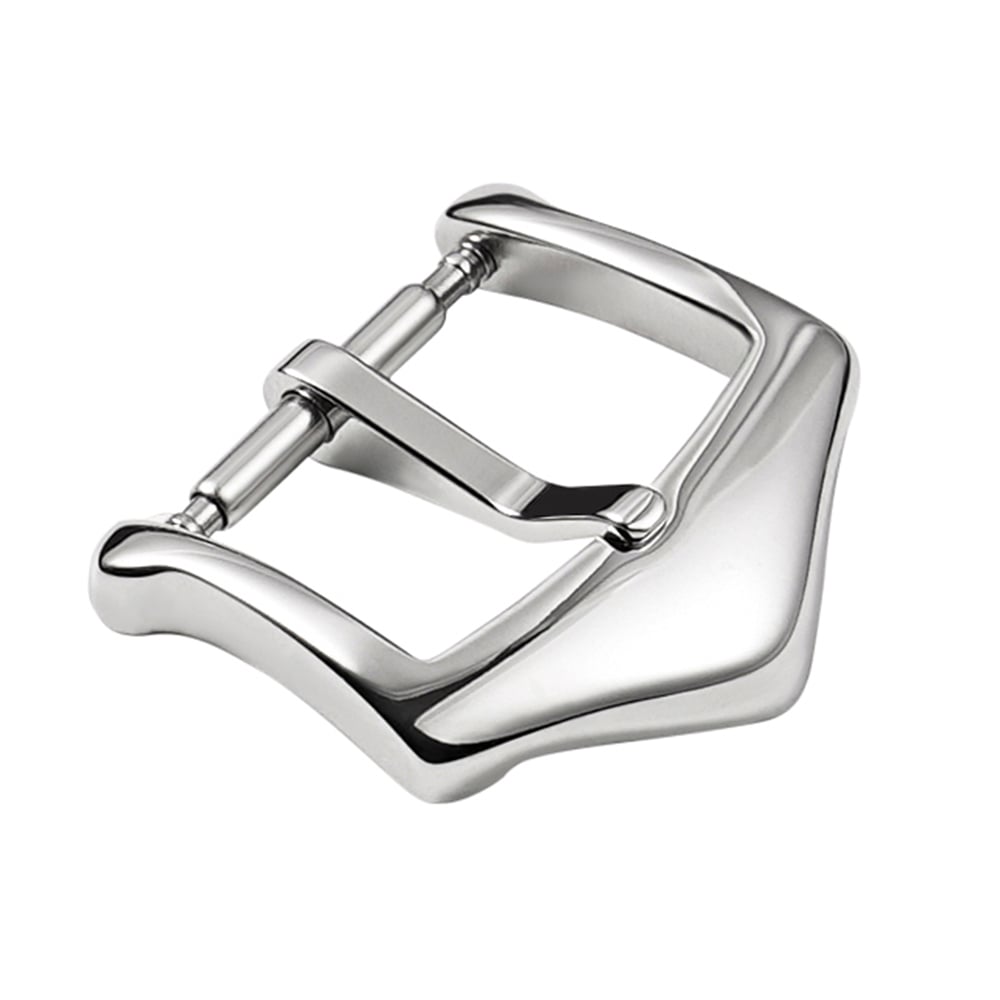
Integrated exterior component manufacturing is the third pillar: a partner capable of producing and quality-matching the case, dial, bracelet, buckle, and strap within a unified tolerancing environment eliminates the single greatest source of product failure in the independent watch category.
A representative sourcing evolution in 2026 begins with a Capsule Dropper producing 300-unit runs using a hybrid offshore-local model.
The inflection point arrives at the 800-unit production threshold when inter-vendor dimensional mismatches begin driving return rates above 4 percent. The structural solution is consolidating the case, dial, and bracelet supply chain to a single manufacturing anchor with full DFM engineering support, standardized water resistance validation, and documented material certification.
This consolidation typically reduces prototype cycle time from 14 weeks to 6 weeks and reduces aftermarket return rates by 60 to 80 percent within two production runs — a decisive operational improvement that directly compounds into margin expansion.
The 2026 microbrand watch market rewards manufacturing discipline above all else. Brands that have matured beyond catalog assembly and engaged precision-manufacturing partners with genuine two-decade horological heritage are outperforming competitors on both retail positioning and operational margin. The China manufacturing advantage in this context is not a cost narrative — it is a technical capabilities narrative, anchored in engineering depth, integrated supply chain management, and standardized quality systems that are now the non-negotiable entry requirements for the independent watch market's top tier.
Q: What makes China's watch manufacturing ecosystem uniquely competitive for microbrands in 2026?
A: The competitive advantage is concentrated in a specific tier of precision manufacturers with multi-decade horological expertise, advanced multi-axis CNC infrastructure, and in-house DFM engineering teams. This combination of technical depth and scale flexibility is not replicated elsewhere at comparable cost efficiency.
Q: How does supply chain integration reduce product return rates for independent watch brands?
A: Fragmented multi-vendor supply chains introduce tolerance stack-up between components manufactured to different dimensional references. Integrated manufacturing under a single quality management system ensures that case-to-bracelet fit, dial foot alignment, and surface tone matching are controlled to unified micro-tolerances, directly reducing assembly defects that drive aftermarket returns.
Q: What is the minimum technical infrastructure a watch OEM partner should demonstrate before a microbrand commits to production?
A: At minimum: documented multi-axis CNC capability for complex case geometries, in-house DFM engineering review capacity, calibrated water resistance testing equipment, and multi-stage IQC-to-OQC inspection traceability. Factories lacking standardized testing infrastructure represent a long-term liability for D2C brands dependent on low return rates.

Baoruihua (Dongguan) Precision Technology Co., Ltd. is a precision watch manufacturer specializing in OEM and ODM watch components, including cases, dials, bracelets, and buckles. We provide stable production, strict quality control, and reliable supply for global watch brands. Contact us to discuss your project.
Building5, No.459 Xiecao Road, Xiegang town, Dongguan, Guangdong
Copyright © 2025 by Baoruihua (Dongguan) Precision Technology Co., Ltd. Privacy Policy
 EN
EN
 Hot News