The independent watch sector has undergone a remarkable transformation over the past five years. What was once a landscape dominated by a handful of Swiss movement suppliers and a fragmented network of component makers has evolved into something far more sophisticated. The global watch market was valued at approximately $69.1 billion in 2025 and is projected to reach $96.8 billion by 2033, with independent brands capturing an increasing share of that growth.
Independent watch manufacturers now have options that didn't exist a decade ago. The rise of specialized movement producers has created a more competitive and accessible supply ecosystem. But access to movements is only part of the story.
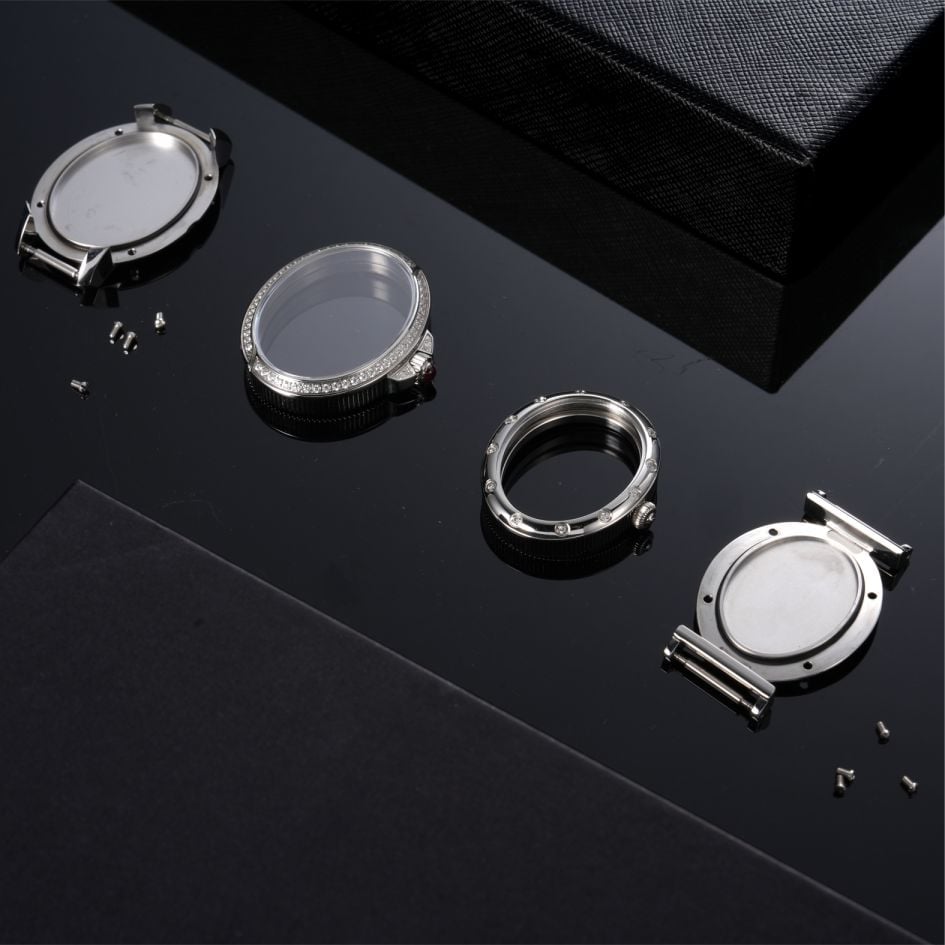
The traditional independent brand model involved juggling multiple suppliers across different countries and time zones. A typical operation might source movements from Switzerland, cases from China, dials from Germany, hands from France, and straps from Italy. Assembly might happen in yet another location.
This approach created three persistent problems. First, quality control was nearly impossible to standardize across suppliers with different inspection protocols. Second, lead times became unpredictable—a delay at any single point in the chain pushed everything back. Third, communication across multiple suppliers in multiple languages introduced constant friction.
A British micro-brand that launched in 2021 spent 18 months on its first collection largely because of supplier coordination issues. By the time the watches shipped, the brand had burned through most of its initial funding and had to raise additional capital just to fulfill orders. That experience is not unique.
What's emerging as the new standard is what might be called integrated full-scope development. Instead of sourcing components separately and coordinating assembly across multiple locations, brands are working with single manufacturing partners that handle everything from case production to final assembly.
The Shenzhen-Dongguan manufacturing hub has become the epicenter of this shift. Within a 50-kilometer radius, manufacturers access stainless steel case stamping, sapphire crystal lamination, laser engraving, and waterproof testing chambers. This concentration reduces logistics delays and cuts lead times by up to 30% compared to decentralized regions.
The integrated model doesn't just save time. It improves quality because a single partner oversees the entire production chain. Issues that might have been discovered at final assembly—when fixing them is most expensive—are caught earlier in the process.
The shift from fragmented to integrated sourcing isn't instantaneous. It typically unfolds in three stages.
Stage One involves consolidating component sourcing within a single geographic region. A brand might still work with multiple factories, but they're all located within the same manufacturing hub. This reduces logistics complexity and improves communication.
Stage Two means moving to a lead factory model, where one manufacturer coordinates the entire supply chain on the brand's behalf. The brand works primarily with one point of contact, even if multiple factories are involved in production.
Stage Three is full integration, where a single manufacturing partner handles all production internally. This is the model that offers the fastest turnaround and tightest quality control, but it requires finding a partner with genuinely comprehensive capabilities.
An independent watch brand based in Australia went through this transition between 2022 and 2025. Their first collection used five suppliers across three countries. The second collection consolidated to three suppliers within the Pearl River Delta. By the third collection, they had moved to a single manufacturing partner that handled everything.
The results were measurable. Development time for the first collection was 14 months. The second collection took 10 months. The third collection went from brief to delivery in 7 months. The failure rate on incoming quality control dropped from 14% on the first collection to 3% on the third. The brand's founder later noted that the biggest benefit wasn't just speed—it was having one team that understood the entire product rather than five teams that each understood only their component.
The economics of full-scope development work differently than fragmented sourcing. Yes, the per-component cost might be slightly higher with a single integrated partner. But the total cost of development—including project management, communication overhead, shipping, customs clearance, and rejected batches—is consistently lower.
Here's a comparison based on actual brand data:
Cost Category |
Fragmented (5+ suppliers) |
Integrated Full-Scope (1 partner) |
Project Management Hours |
400–600 hours per collection |
150–200 hours per collection |
Logistics & Shipping Costs |
8–12% of total component cost |
2–3% of total component cost |
QC Rework Rate (first batch) |
15–22% |
3–5% |
Total Development Cost |
100% baseline |
60–70% of baseline |
The integrated model doesn't eliminate the need for brand oversight. But it dramatically reduces the friction that eats up margins and kills timelines in fragmented supply chains.
The next phase of supply chain evolution will likely focus on even tighter integration. Some manufacturers are already offering what could be called "collection-in-a-box" services—handling not just production but also packaging, documentation, and logistics coordination for direct-to-consumer fulfillment.
For independent brands, the implications are clear. The era of piecing together a watch from five different countries and hoping everything fits is fading. The brands that succeed in 2026 and beyond will be those that treat their manufacturing partner as a true extension of their product team—not just a vendor to be managed. ODM Watch has built its manufacturing capabilities around this exact premise, offering independent brands a single point of accountability from case development through final assembly.

Baoruihua (Dongguan) Precision Technology Co., Ltd. is a precision watch manufacturer specializing in OEM and ODM watch components, including cases, dials, bracelets, and buckles. We provide stable production, strict quality control, and reliable supply for global watch brands. Contact us to discuss your project.
Building5, No.459 Xiecao Road, Xiegang town, Dongguan, Guangdong
Copyright © 2025 by Baoruihua (Dongguan) Precision Technology Co., Ltd. Privacy Policy
 EN
EN
 Hot News