Home > News > INDUSTRY NEWS
Entering 2026, the global horological landscape is undergoing a profound structural redefinition. Traditional luxury conglomerates, long insulated by high distribution barriers, face persistent and precise disruptions from a dynamic echelon of market players: Independent Brands and Microbrands.
Driven by the advancement of Direct-to-Consumer (D2C) ecosystems and the radical transparency of global high-precision manufacturing, the microbrand industry in 2026 has outgrown the early paradigms of "catalog-parts assembly." The sector has firmly entered a "Lean Maturity Phase," characterized by an uncompromising pursuit of high-tier component finishing and rigorous structural engineering. This report breaks down the underlying operational mechanics, global supply chain structures, and emerging growth vectors defining the independent horological sector in 2026.
In the current 2026 market cycle, pioneering independent brands established over the last decade have successfully completed their evolution from internet cult favorites to institutional mid-market challengers.

To optimize working capital efficiency and completely mitigate the carrying costs of stagnant inventory, the 2026 marketplace is heavily dominated by "Time-Gated Pre-Orders" and "Capsule Drops." This demand-led operational model ensures that production is fully capitalized before manufacturing commences, maintaining immense secondary-market desirability and robust cash-flow elasticity.
Product development in 2026 is anchored by the definitive return of 36mm to 39mm golden unisex proportions. Shrinking the physical architecture of a timepiece requires extreme volumetric compression of the internal movement cavity, handset clearance, and dial tracking. Consequently, brands must engage in proactive Design for Manufacturing (DFM) alignment with elite OEM partners early in the sketching phase.
The battleground for independent watch brands in 2026 is fought entirely in the back-end of supply chain tolerance control. Depending on market positioning, the competitive landscape maps across three highly successful manufacturing blueprints:
Brand Archetype |
Core Design Language & Identity |
Primary Operational Model |
Supply Chain & OEM Infrastructure |
The Scale Independent |
Integrated luxury sports aesthetics, multi-layered complications, and micro-rotor engineering. |
Focuses on extreme product value. |
Utilizes a centralized, end-to-end supply chain loop. Exterior components (high-tolerance cases, multi-faceted dials) are assigned to a single, high-tier Asian precision manufacturing giant to eliminate multi-vendor variance. |
The Capsule Dropper |
High-saturation palettes, graphic-forward chronographs, and bold visual storytelling. |
Relies on striking aesthetic differentiation and tight time-limited drops to secure 100% upfront production capital, preserving a lean corporate footprint. |
Deploys a hybrid "Offshore Component Manufacturing + Localized Assembly" blueprint. Intricate case faceting and specialized dial lacquering are handled by an advanced offshore OEM, while components are shipped back to regional headquarters for final regulation and inspection. |
The Neo-Classical Revivalist |
Neoclassical dress watch profiles, multi-stepped step cases, and complex cow-horn lug profiles. |
Appeals directly to seasoned horological collectors by replicating mid-century artisanal finishes at a accessible value bracket. |
Exterior hardware relies completely on advanced OEM factory with nearly two decades of machining heritage. Achieves absolute edge retention via advanced multi-axis CNC profiling balanced with highly disciplined manual finishing. |
For brands or emergent capital looking to scale within the 2026–2027 cycle, structural competitive advantages are achieved exclusively through manufacturing excellence:
For a D2C independent brand operating in Western markets with a manufacturing base in Asia, international return logistics is the single greatest threat to net margins.
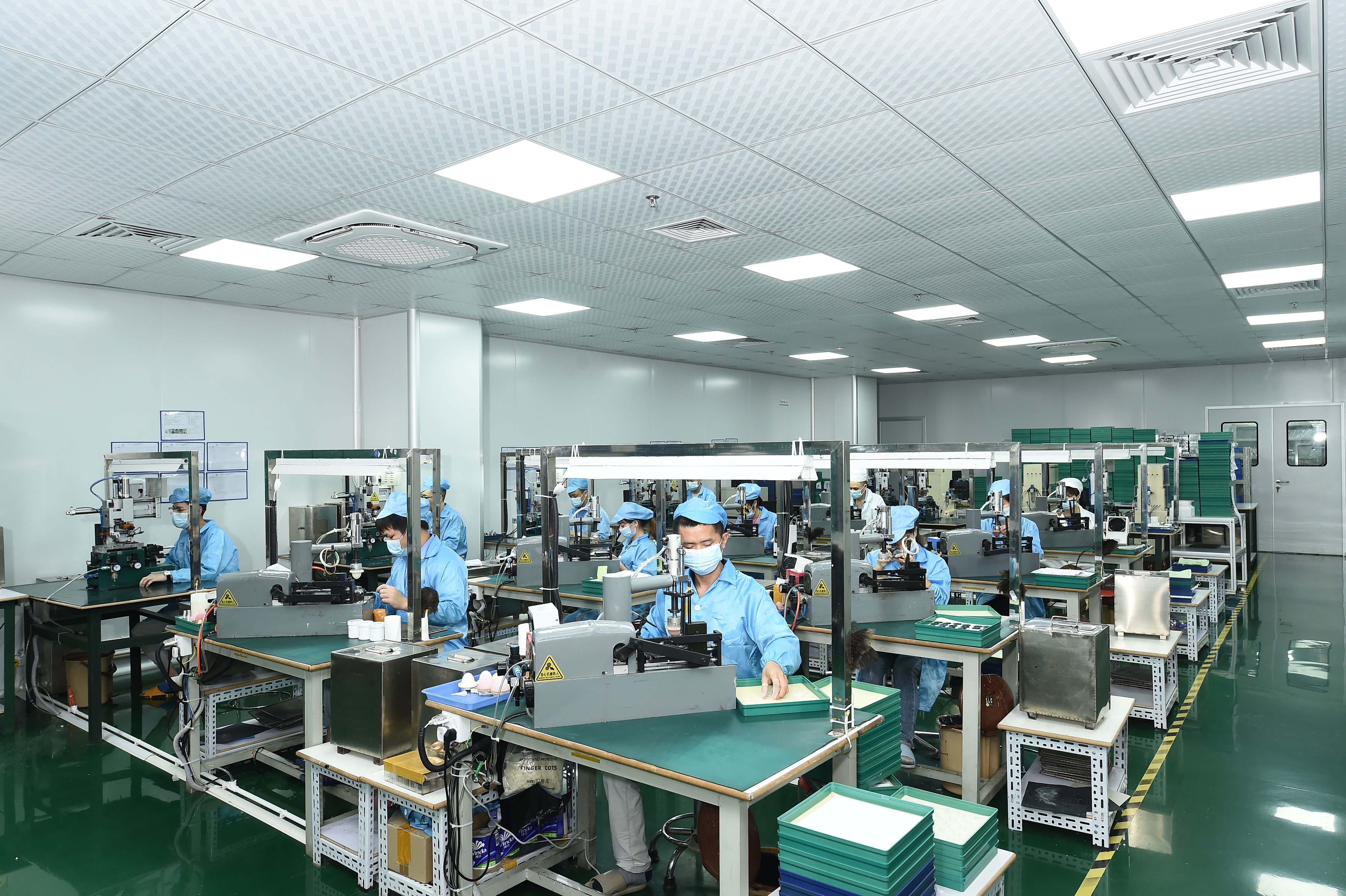
Modern collectors are increasingly immune to generic marketing narratives, actively seeking out verifiable technical execution. A brand’s willingness to detail 5-axis CNC operational constraints, natural mineral stone dial yield statistics, or advanced hand-finishing transitions within their whitepapers serves as a massive sales driver.
An elite OEM partner that proactively provides its clients with rich, empirical quality-control data and manufacturing footage directly empowers the brand to build unassailable authority in the consumer market.
The global independent watch sector in 2026 proves a fundamental horological axiom: creative vision establishes the brand's identity, but supply chain precision dictates its longevity. Long-term market dominance belongs to brands that successfully anchor their design languages within structured, scientific, and empirically validated end-to-end manufacturing frameworks managed by partners with nearly twenty years of technical heritage.

Baoruihua (Dongguan) Precision Technology Co., Ltd. is a precision watch manufacturer specializing in OEM and ODM watch components, including cases, dials, bracelets, and buckles. We provide stable production, strict quality control, and reliable supply for global watch brands. Contact us to discuss your project.
Building5, No.459 Xiecao Road, Xiegang town, Dongguan, Guangdong
Copyright © 2025 by Baoruihua (Dongguan) Precision Technology Co., Ltd. Privacy Policy
 EN
EN
 Hot News