Home > News > INDUSTRY NEWS
In the independent horological landscape, dive watches undoubtedly represent the most fiercely competitive and crowded market.
A defining dive watch that breaks through the market noise does not achieve authority through paper parameters; it wins on structural engineering insight. This report stands firmly from the perspective of a high-end exterior component OEM with two decades of manufacturing heritage to dissect the technical realities that dictate a brand's long-term survival.

A pervasive misconception suggests that securing a certified 300m (30 ATM) water resistance rating requires a watch case to mimic a clunky, unwearable hockey puck. In 2026, this lack of refinement has lost all market competitiveness. Modern collectors demand extreme tool-watch capability paired with sleek, sleeve-friendly wrist ergonomics.
In professional Design for Manufacturing (DFM) mapping, the ultimate goal is not blindly increasing steel mass, but mathematically calculating the micro-deformation of sapphire glass under extreme load.
At a depth of 300 meters, the theoretical hydrostatic force targeted at the crystal face is immense. Governed by fluid mechanics:30 ATM. The physical crystal face must withstand a sustained down-force of approximately 2100 Newtons (equivalent to over 214 kg of direct mass).
The Manufacturing Insight: Under this immense burden, high-clarity sapphire crystal does not instantly fracture; instead, it undergoes a micron-level downward concave deflection. If an unseasoned OEM tightly minimizes the structural vertical clearance between the handset and the inner crystal face, this compressed glass will press directly onto the center pinion, grinding the movement to a halt.
Elite engineering maintains a total case thickness below 12.5mm by micro-calibrating the crystal's domed radius and the durometer profile of the surrounding I-ring gasket. This forces the physical stress to redirect outward into the case bezel walls, achieving a perfect equilibrium of rugged resistance and low-profile wearability.

Traditional processing often assume that waterproof security is a simple matter of cranking down thread torque and oversaturating the case with random rubber components. In high-precision horology, this brute-force approach is a fundamental engineering failure.
The crown system is the primary point of vulnerability in a dive watch. A premium OEM structure rejects reliance on a single over-compressed gasket, deploying an institutionalized dual-barrier sealing architecture:
When sealing a threaded caseback, the physical elastomer deformation rate of the primary O-ring must be perfectly locked within a golden window of 25% to 35%.
Under-compression permits high-pressure fluid tracking;
Over-compression induces permanent plastic deformation, tearing the compound and causing absolute seal failure within months of real-world use.
In 2026, bare 316L stainless steel commands fractional market margins. Lightweight titanium alternatives, marine-grade bronze patination, and advanced scratch-resistant hardening coatings serve as the defining catalysts for independent brands looking to scale their retail margins.
While microbrands heavily covet Grade 5 Titanium for its immense tensile strength and mirror-polishing capability, they are routinely bottlenecked by poor factory yield rates. Grade 5 features exceptionally low thermal conductivity combined with a high elasticity modulus. During multi-axis CNC routing, this induces severe "tool deflection," rounding off sharp facet lines and leaving microscopic burrs along case edges.
An expert supply chain anchor overcomes this by optimizing custom toolpaths and employing specialized cryogenic cooling fluids, ensuring that titanium cases emerge with razor-sharp mirror bevels and flawlessly uniform satin-grained brushing.
To eliminate unsightly desk-diving scratches, premium dive references apply high-energy ionic surface hardening treatments that elevate surface scratch resistance from a baseline 200HV to above 1200 Vickers without compromising raw base-metal core structural integrity.
The OEM must maintain flawless process sequencing here: this treatment must occur exclusively after 100% of precision machining, mirror polishing, and satin brushing are completed, yet prior to cleanroom assembly. Any minor micro-scratch left unchecked before coating is frozen permanently into the metal, completely rendering the component unworkable for post-production refinishing.
While case finishing governs the static visual presence of a timepiece, the definitive tactile resistance and acoustic feedback of a rotating bezel instantly establish the customer’s mental valuation of the product's overall build quality. This is the ultimate "invisible failure point" where many emergent microbrands stumble during prototype validation.
Many basic microbrand dive bezels either exhibit erratic backplay or feel incredibly gritty, emitting an acoustic signature akin to cracking brittle plastic.
Elite manufacturing benchmarks dictate that every single component ring undergoes manual damping lubrication calibration and targeted acoustic review prior to casing, ensuring a crisp, heavy, perfectly metered mechanical cadence that sounds and feels genuinely premium.
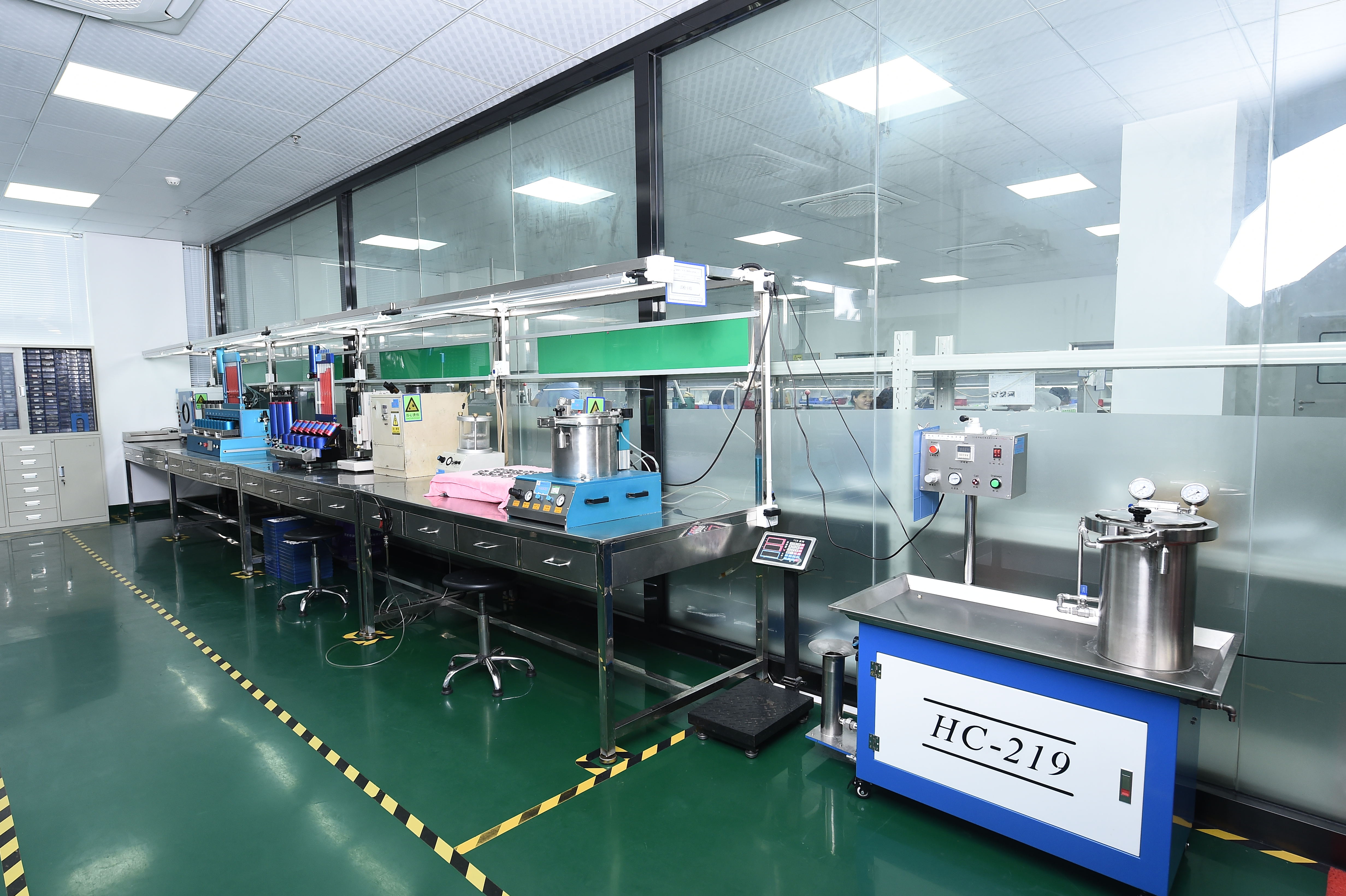
The global independent watch market of 2026 is populated by an incredibly sophisticated consumer demographic. Collectors look far past basic 3D renders; they analyze the tactile kinetic resistance of the bezel against their fingertips, the refractive uniformity of light across a hardened titanium facet, and structural reliability at physical limits.
For micro-brand founders sourcing a dive watch supply chain, price should not be the primary consideration. What deserves more attention is whether the partner has long-term experience in precision watch exterior components, whether they possess professional DFM engineering capabilities, and whether they can offer well-substantiated solutions in tolerance control and material application. These are the foundations that turn a product concept into a reliable finished timepiece.

Baoruihua (Dongguan) Precision Technology Co., Ltd. is a precision watch manufacturer specializing in OEM and ODM watch components, including cases, dials, bracelets, and buckles. We provide stable production, strict quality control, and reliable supply for global watch brands. Contact us to discuss your project.
Building5, No.459 Xiecao Road, Xiegang town, Dongguan, Guangdong
Copyright © 2025 by Baoruihua (Dongguan) Precision Technology Co., Ltd. Privacy Policy
 EN
EN
 Hot News