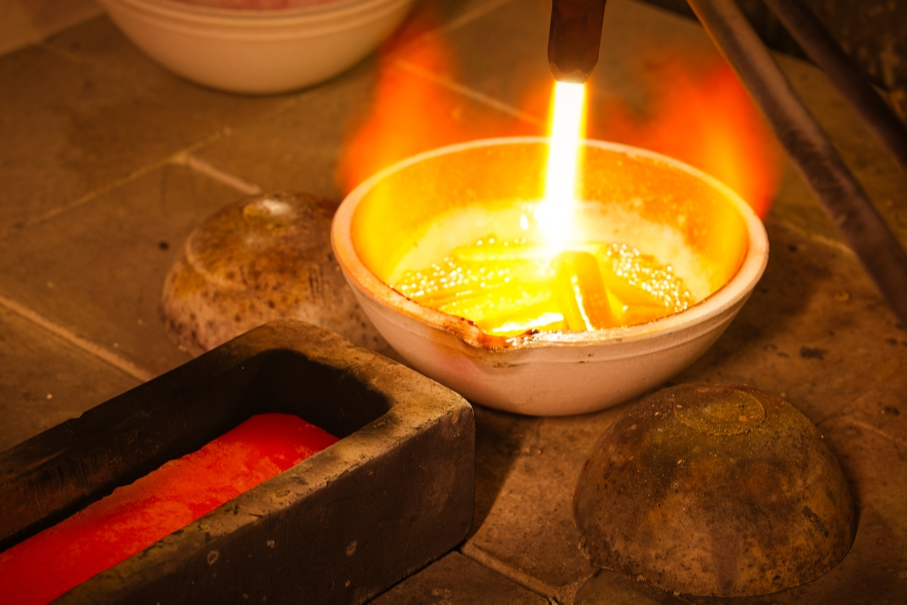
Brass dials tend to last a really long time because they resist oxidation pretty well, especially if they've been given a good lacquer coating. The copper and zinc mix in brass creates this natural protective layer over time that helps fight off damage from the environment. That's why so many watchmakers still use brass for their basic models and mid priced offerings where owners don't want to spend hours maintaining the dial. On the other hand, synthetic sapphire is super hard stuff, right around 9 on that Mohs scale thing, which means it can stand up against most daily wear and tear without getting scratched easily. Brass handles chemicals better though, while sapphire is all about keeping surfaces looking pristine. But there's a catch with sapphire too it can actually crack if hit hard enough. So when picking between these materials, people generally face this dilemma: go with brass for something that stands up to corrosion over years, or choose sapphire if scratch free appearance matters most despite its vulnerability to impacts.
Materials found in nature come with their own set of maintenance challenges that really impact how much something costs to own and how long it lasts. Take mother of pearl dials for instance these are made from actual mollusk shells and look absolutely stunning with their rainbow colors but they're also super fragile. A small bump or drop can actually break them completely, which means getting a whole new dial most of the time. Enamel dials work differently since they're created when powdered glass is fused onto metal surfaces at extremely hot temperatures around 800 degrees Celsius or so. What happens over years of use is that tiny cracks start forming because of all the heating and cooling cycles plus regular wear and tear. These little cracks spread under the glassy surface and without proper care, water might get inside eventually. For both types of dials, special storage conditions matter quite a bit. Enamel in particular does better when kept in places where the temperature stays fairly constant this helps prevent those tiny cracks from getting worse over time.
The art of hand guilloché engraving turns watch faces into works of art, creating those beautiful light catching patterns that only master craftsmen can achieve. It takes well over 100 hours for one dial alone, and results in surface textures no factory machine could ever match. Then there's Grand Feu enameling where artists apply layers of ground glass on metal before heating them to around 800 degrees Celsius. Even the smallest mistake during this delicate process means starting all over again from scratch. What makes these techniques so distinctive? Guilloché has that mathematical precision while enamel gives off this glowing depth almost like molten glass. When heated, the enamel forms tiny crystal structures that trap colors inside, which explains why pieces made this way have been known to stay vibrant for centuries. No wonder collectors pay three times what they would for mass produced dials when something truly handmade enters the market.
The difference between luxury watch dials and those made in factories lies in microscopic finishing techniques. Anglage, or beveling, smooths out the edges around smaller dials at exactly 45 degrees, getting rid of tiny burrs that would otherwise reflect light strangely and make things look blurry. For sunburst finishes, craftsmen rotate blank dials against special abrasive wheels, creating beautiful radial patterns that can only be seen clearly when viewed through a magnifying glass at 10 times normal size. When looking closely at these details, it becomes obvious who took their time versus who cut corners. If the grain patterns are all over the place, that usually means someone was rushing through the work. But when the lines run smoothly without interruption, it shows real attention to detail by hand. Top brands actually check their dials using special fiber optic lights to spot any teeny tiny flaws that might affect how easy it is to read the time. And here's something interesting: watches with dials that survive strict 200 point checks under microscopes tend to hold onto about 40 percent more value after just five years on the market. That proves even though nobody sees these tiny details, they still matter a lot in the long run.
Getting clear function starts with good geometry. Watchmakers use what's called the 12/3/6/9 positioning system to place those main hour markers where they can be seen at a glance. No need to think about it when telling time. Subdials need to line up just right too. A tiny shift, maybe half a millimeter off, and everything looks wrong when viewed through a loupe. That small mistake makes people question the whole watch's quality. Take chronograph counters as an example. They need enough space between them so the face doesn't look cluttered. Designers also play tricks with how things appear. Sometimes they make minute hands longer or adjust numeral weights to fix how empty spaces look on the dial. All these details matter because they keep complex features easy to read while maintaining that beautiful balance we expect from fine watches.
Matte finishes work great at scattering light which helps cut down on glare, making them much easier to read when there's lots of contrast around, especially if someone is wearing their watch outside in bright sun. That's why so many tool watches go for this look. On the flip side, polished surfaces tend to bounce light all over the place, sometimes making it hard to see where the hands actually are when lighting gets really intense. The texture matters too. Grained dial surfaces hide small scratches better than smooth ones do, while those fancy Grand Feu enamel dials have this incredible mirror-like quality that just screams luxury. According to some studies, roughly two thirds of watch collectors seem to connect matte textures with something that will last longer, though people still love glossy finishes because they remind us of top notch craftsmanship. When designing watches, getting the right color contrasts right is super important for quick readability. Think white numbers on dark backgrounds or glowing hands standing out against rich blues. These little details make all the difference when someone needs to check time fast without squinting.
The protective coatings act like an invisible shield against all sorts of damage. They keep moisture out, block harmful UV rays, and stand up to corrosive substances that would otherwise speed up oxidation, cause fading, and create those tiny surface scratches we don't even notice until they're too late. Most manufacturers these days are turning to special clearcoats, including some fancy nanoceramic stuff that really resists scratches. There's also the anti-glare treatments which make sure the dial remains readable whether it's bright outside or dim inside. Before any coating gets approved for production, it goes through rigorous testing standards to ensure it actually works as promised.
Independent studies confirm that dials subjected to controlled-environment testing exhibit 40% less degradation after five years of real-world use. This validation directly safeguards both aesthetics and function–ensuring indices retain luminosity, surfaces resist micro-scratches, and the dial maintains its original character over time.

Baoruihua (Dongguan) Precision Technology Co., Ltd. is a precision watch manufacturer specializing in OEM and ODM watch components, including cases, dials, bracelets, and buckles. We provide stable production, strict quality control, and reliable supply for global watch brands. Contact us to discuss your project.
Building5, No.459 Xiecao Road, Xiegang town, Dongguan, Guangdong
Copyright © 2025 by Baoruihua (Dongguan) Precision Technology Co., Ltd. Privacy Policy
 EN
EN
 Hot News